French
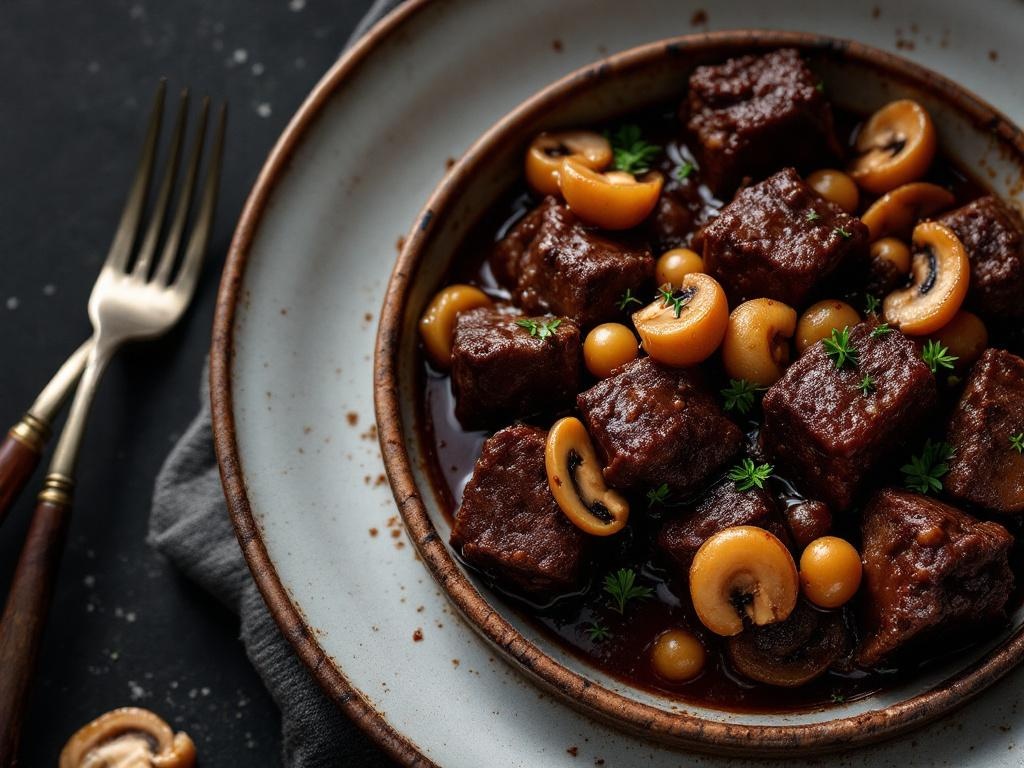
Beef Bourguignon
Pillar I
Ingredients
Serves
6
1.5 kg
beef chuck or beef cheeks
750 ml
Burgundy or Pinot Noir
200 g
lardons
250 g
pearl onions
300 g
button mushrooms
3
carrots
2
yellow onion
6 cloves
garlic
2 tbsp
tomato paste
2 tbsp
all-purpose flour
500 ml
beef stock
1
bouquet garni
2 tbsp each
neutral oil and butter
handful
flat-leaf parsley
Pillar II
Method
8 steps
1.
Marinate beef in wine with carrot chunks, chopped onion, garlic, and bouquet garni for at least 4 hours. Remove beef, pat completely dry — moisture is the enemy of browning.
Technique — The wine marinade denatures surface proteins and allows the wine's aromatic compounds to penetrate the outer meat fibres. The pat-dry step before searing is absolutely critical — any surface moisture converts to steam on contact with the hot pan, dropping the surface temperature below the Maillard threshold (154°C) and producing grey steamed meat instead of a deep mahogany crust.
2.
Strain the marinade, reserving the wine. Discard the vegetables.
Technique — The marinade vegetables have surrendered their compounds to the liquid and are now waterlogged. If cooked further, they contribute bitterness from oxidised polyphenols rather than flavour. The wine, however, now contains all the aromatic compounds they released plus the meat's surface proteins — it is the backbone of the sauce.
3.
Heat oven to 160°C. Brown lardons until crisp, remove. Sear beef in batches in the rendered fat until deeply mahogany, 3–4 minutes per side. Do not crowd the pan.
Technique — Crowding the pan drops its temperature. Each piece of beef releases steam as it heats; when multiple pieces release steam simultaneously, the pan temperature drops below the Maillard threshold and the beef steams grey instead of browning. The fond — the brown material stuck to the pan — is not burnt residue; it is concentrated Maillard compounds that dissolve back into the sauce during deglazing, creating the deepest flavour.
4.
In the same pot, sauté chopped onion until softened. Add tomato paste, cook 2 minutes. Add flour, stir to coat. Pour in reserved wine, scraping up all the fond. Add stock, return beef and lardons. Liquid should come three-quarters up the beef.
Technique — The flour dusted onto the onion and tomato paste forms a roux that thickens the sauce during the braise. Pouring the wine while the heat is on causes it to boil immediately and dissolve all the fond from the pan surface — this is the point of highest flavour extraction and must not be skipped. The three-quarters liquid level allows the top of the beef to braise in steam rather than liquid, creating textural variation.
5.
Bring to a bare simmer. Cover tightly. Transfer to oven. Braise 2.5–3 hours until beef yields completely to a fork.
Technique — The magic number for collagen conversion is approximately 80°C sustained for 6–8 hours, or 160°C oven for 2.5–3 hours. Collagen — the tough connective tissue — converts to gelatin at these temperatures. The resulting gelatin coats every strand of muscle fibre, creating the silky, yielding texture that defines a properly braised dish. Boiling (rather than simmering at 160°C) tightens the proteins and makes the meat stringy and dry.
6.
Sauté pearl onions in butter until golden; glaze with a splash of stock. Sauté mushrooms separately in butter over high heat until browned.
Technique — Pearl onions and mushrooms are not braised with the beef because they would disintegrate after 3 hours. Both need high-heat sautéing to develop their own browning before joining the braise. Mushrooms release up to 90% of their weight in water when heated — they must be cooked in a dry, hot pan in small batches so this water evaporates quickly rather than pooling and causing steaming.
7.
Remove beef. Strain braising liquid into a saucepan, skim fat. Reduce to coating consistency, about 30 minutes. Return beef, pearl onions, and mushrooms.
Technique — The braising liquid is reduced separately so the sauce concentrates without over-cooking the beef. Reducing removes water and increases the ratio of gelatin, flavour compounds, and emulsified fat — converting cooking liquid into a glossy sauce that coats the back of a spoon. The fat skimming removes the excess rendered lard and beef fat that would make the sauce greasy.
8.
Rest 15 minutes before serving. Garnish with parsley. Serve over pommes purée or with crusty bread.
Technique — The 15-minute rest allows proteins in the beef to relax and reabsorb some of the liquid expelled during cooking. Serving immediately after cooking produces drier meat and a watery, pooling sauce. The rest time also allows the sauce to re-coat the beef as it cools slightly from serving temperature to eating temperature.
Pillar III
Quality Hierarchy
Library+
Open The Kitchen to start using this.
Open The KitchenPillar IV
Sensory Tests
No sensory tests recorded yet.
Pillar V
Cross-Cuisine Parallels
Library+ for full grid
No cross-cuisine parallels recorded yet.
Pillar VI
Beverage Pairings
Library+ for named producers
Regional
Burgundy
Domaine Leflaive Bourgogne Blanc
Open The Kitchen to start using this.
Open The KitchenRegional
Mornington Peninsula
Kooyong Estate Pinot Noir Mornington Peninsula
Open The Kitchen to start using this.
Open The KitchenRegional
McMinnville
Nicolas-Jay Kolpakowski Vineyard Pinot Noir McMinnville
Open The Kitchen to start using this.
Open The KitchenPillar VII
Origin & Lineage
Burgundy, France. The technique predates Julia Child's 1961 Mastering the Art of French Cooking by centuries — Burgundy wine was surplus, beef was working stock, and a long braise solved both problems. Child's contribution was translating a peasant dish into American kitchens without condescension. The dish is French in its bones and her interpretation is still the best in English.
Sourcing
Where to find these ingredients
Region: global
Vancouver, BC, CA
3 Cheese & Garlic Medallions — Pasta d'Angelo · Chicken & Roasted Garlic...
Vive le Veg
BC, CA
Green Garlic — Vive le Veg
Tools & Compliance
The working layer
Profession+ for HACCP and Cost