Thai
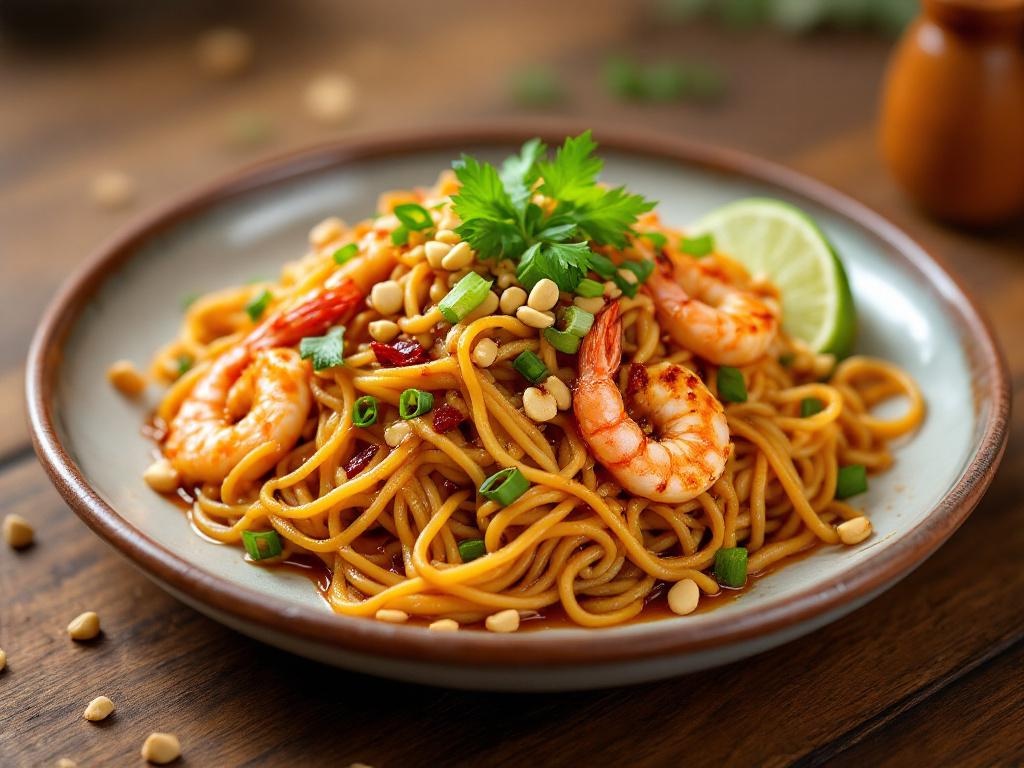
Pad Thai
Pillar I
Ingredients
Serves
2
200 g
flat rice noodles
3 tbsp
tamarind paste (from block)
3 tbsp
fish sauce
2 tbsp
palm sugar
150 g
firm tofu
8
large prawns
2
eggs
150 g
bean sprouts
40 g
garlic chives
2 tbsp
dried shrimp
4
shallots
3 tbsp
lard or neutral oil
50 g
roasted peanuts
1
lime
to taste
dried chilli flakes
Pillar II
Method
6 steps
1.
Make the sauce: dissolve palm sugar in tamarind paste, add fish sauce. The balance should be sour-first, savoury-second, sweet-third. Taste and adjust.
Technique — Pad thai sauce is a three-element balance that must be tasted and corrected before the wok gets hot — adjustment in a screaming hot wok is impossible. Tamarind from a block is essential because commercial concentrate has a different, more intense and sharp acid profile that overwhelms the other flavours. The sour-first priority reflects the Thai palate's hierarchy: acid sharpens the appetite, salt provides depth, sweetness rounds the edges.
2.
Heat wok to screaming hot. Add lard. Fry tofu cubes until golden on all sides, remove and reserve.
Technique — Tofu must be pressed before frying — residual moisture inhibits browning by creating steam at the contact surface. The lard achieves a higher smoke point than most vegetable oils and contributes the subtle animal-fat richness that defines pad thai from street stalls. The tofu is removed and returned at the end — adding it during the noodle stage would cause it to absorb the sauce and lose its textural contrast.
3.
Add shallots and dried shrimp to the wok, stir fry 30 seconds. Add soaked, drained noodles. Pour sauce over and toss quickly — the noodles will stick briefly. This is normal.
Technique — The initial sticking of noodles to the wok surface is not a mistake — it indicates the noodles are making hot contact and beginning to caramelise. Resisting the urge to add liquid at this point leads to the slightly charred, flavourful noodles that characterise good pad thai. The dried shrimp provide concentrated umami through glutamates and inosinates — their flavour is irreplaceable with any fresh prawn or fish sauce substitute.
4.
When noodles begin to colour and sauce is absorbed, push to one side. Crack eggs into the empty side, scramble briefly, then fold noodles over before eggs fully set.
Technique — The egg technique is precise timing. The eggs should be at the scrambled-but-wet stage when the noodles fold over — this produces egg that coats individual noodle strands rather than forming discrete egg pieces. If the eggs fully set before folding, they break into dry chunks. If the noodles fold too early, the eggs remain too wet and don't bind properly.
5.
Add prawns, bean sprouts, garlic chives, and fried tofu. Toss over the highest heat for 30–60 seconds. The wok must smoke — this is the wok hei.
Technique — Wok hei (鑊氣, 'breath of the wok') is the smoky, slightly charred quality produced when the volatile compounds at the wok surface reach above 200°C. A domestic gas burner rarely reaches the temperature of a commercial wok burner. The solution is to cook in smaller batches — this concentrates the heat-to-food ratio — and to resist adding extra liquid, which lowers the temperature.
6.
Serve immediately with crushed peanuts, lime wedges, and extra chilli. In Thailand, fish sauce, sugar, vinegar, and chilli are always provided at the table.
Technique — The table condiments in Thai cooking are not optional accompaniments — they are an essential part of the dish. Each diner adjusts the balance to their personal preference: prik nam pla (chilli in fish sauce), prik dong (chilli in vinegar), sugar, and dried chilli flakes. The dish as served is considered a template, not a finished plate. This philosophy of personalised seasoning is fundamental to Thai food culture.
Pillar III
Quality Hierarchy
Library+
Open The Kitchen to start using this.
Open The KitchenPillar IV
Sensory Tests
No sensory tests recorded yet.
Pillar V
Cross-Cuisine Parallels
Library+ for full grid
No cross-cuisine parallels recorded yet.
Pillar VI
Beverage Pairings
Library+ for named producers
No beverage pairings recorded yet.
Pillar VII
Origin & Lineage
Bangkok, 1930s-40s. Prime Minister Plaek Phibunsongkhram's nationalist campaign to standardise Thai identity included food. Government-distributed recipes promoted this noodle dish as a symbol of Thai modernity and frugality during rice shortage. Street vendors were licensed to sell it at set prices. The result is a 'traditional' dish that was deliberately invented — which makes its global ubiquity either ironic or perfect.
Sourcing
Where to find these ingredients
Region: global
Angel Seafoods
Vancouver, BC, CA
Dried Shrimp — Cantonese (Há Mǐ)
Adelaide, SA, AU
Blood Lime Frozen · Desert Lime Frozen · Finger Lime · Finger Lime (Citrus...
Tools & Compliance
The working layer
Profession+ for HACCP and Cost