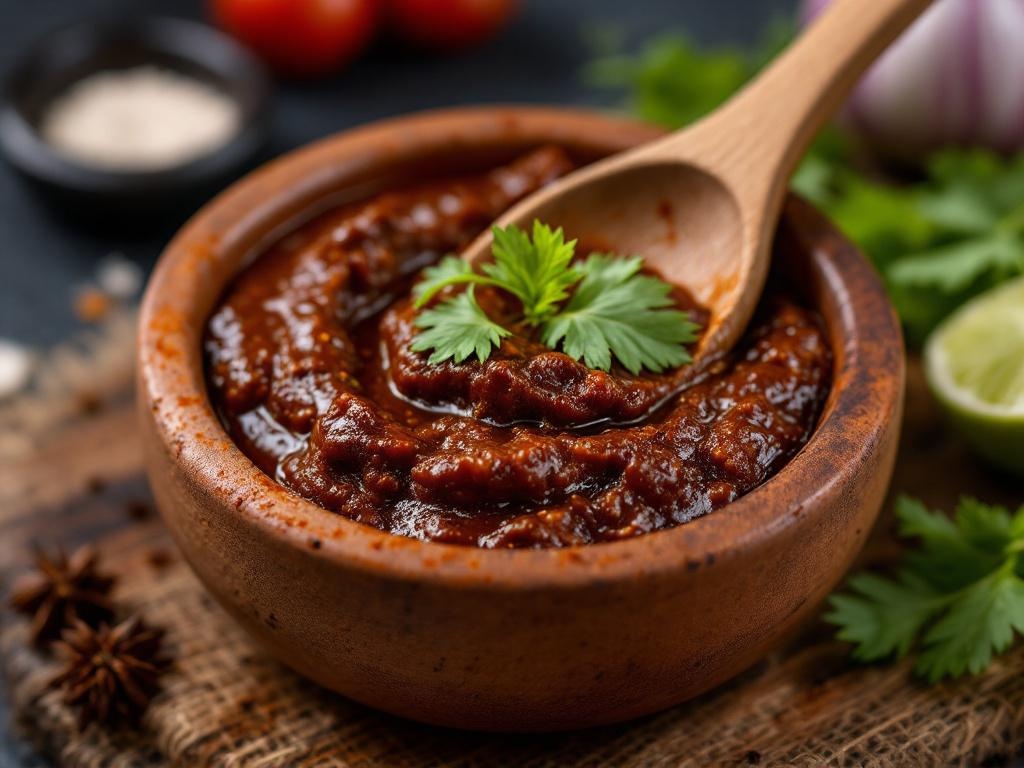
Adobo Sauce
One of 44 entries · Provenance 1000 — Pantry
Mexico — derived from Spanish colonial marinade tradition; widely used across Mexico and Central America
Adobo sauce is one of the most versatile pantry preparations in Mexican cooking — a dark, smoky, mildly spiced paste made from reconstituted dried chillies (typically ancho, mulato, or guajillo), vinegar, garlic, cumin, and oregano. It is the sauce in which chipotle chillies are packed commercially, but the homemade version is richer, more complex, and far more useful as a general-purpose cooking sauce. The process begins with toasting dried chillies, soaking them in hot water until supple, then blending them with garlic, cumin, Mexican oregano, black pepper, and vinegar. The ratio of vinegar is key: enough to provide its characteristic tangy backbone without overwhelming the earthy chilli base. Adobo's uses are almost limitless. Pork shoulder marinated in adobo and slow-roasted becomes cochinita pibil (when wrapped in banana leaf). Chicken thighs rubbed with adobo and grilled develop a caramelised, smoky crust. A spoon stirred into beans deepens them dramatically. Diluted with stock, it becomes a quick braising liquid for any protein. The term 'adobo' derives from the Spanish word for marinade and appears throughout the former Spanish empire — Filipino adobo (a vinegar braise), Puerto Rican adobo (a dry spice blend), and Mexican adobo sauce are related by etymology and the Spanish colonial legacy but are distinctly different preparations. The Mexican version is defined by its dried chilli base and dark mahogany colour.
Earthy, smoky, mildly acidic — dark and complex with dried fruit notes from the chillies
Toast dried chillies briefly before soaking — this deepens their flavour and removes any dustiness Soak chillies in just-boiled water for 20–30 minutes until fully supple before blending The vinegar ratio should balance, not dominate — start with 2 tablespoons and adjust Blend thoroughly — a smooth paste integrates better into sauces and marinades Fry the blended sauce in a little oil before storing — this removes the raw taste and extends shelf life
Over-toasting the chillies — they can become bitter very quickly in a dry pan Using too much vinegar — the sauce should be earthy and smoky, not sharp Skipping the frying step after blending — raw blended adobo lacks depth Using only one chilli type — a blend of ancho, mulato, and guajillo creates more complexity Not straining after blending — a fine mesh removes any remaining skin pieces for a smooth sauce
Kitchen membership opens the full Library.
visual: Dark paste turns fragrant and deepens in color as you fry it in oil — raw adobo smells flat…
Fry the blended sauce in oil after blending. Skip this step and the sauce lacks depth and tastes raw.
- 60ml soy sauce (preferably tamari, gluten-free)
- 60ml apple cider vinegar
- 40ml water
11 ingredients · 12 steps
Common Questions
Why does Adobo Sauce taste the way it does?
Earthy, smoky, mildly acidic — dark and complex with dried fruit notes from the chillies
What are common mistakes when making Adobo Sauce?
Over-toasting the chillies — they can become bitter very quickly in a dry pan Using too much vinegar — the sauce should be earthy and smoky, not sharp Skipping the frying step after blending — raw blended adobo lacks depth Using only one chilli type — a blend of ancho, mulato, and guajillo creates more complexity Not straining after blending — a fine mesh removes any remaining skin pieces for a smooth sauce