Aioli
One of 44 entries · Provenance 1000 — Pantry
Provence, France and Catalonia, Spain — ancient Mediterranean garlic and oil preparation predating modern emulsification science
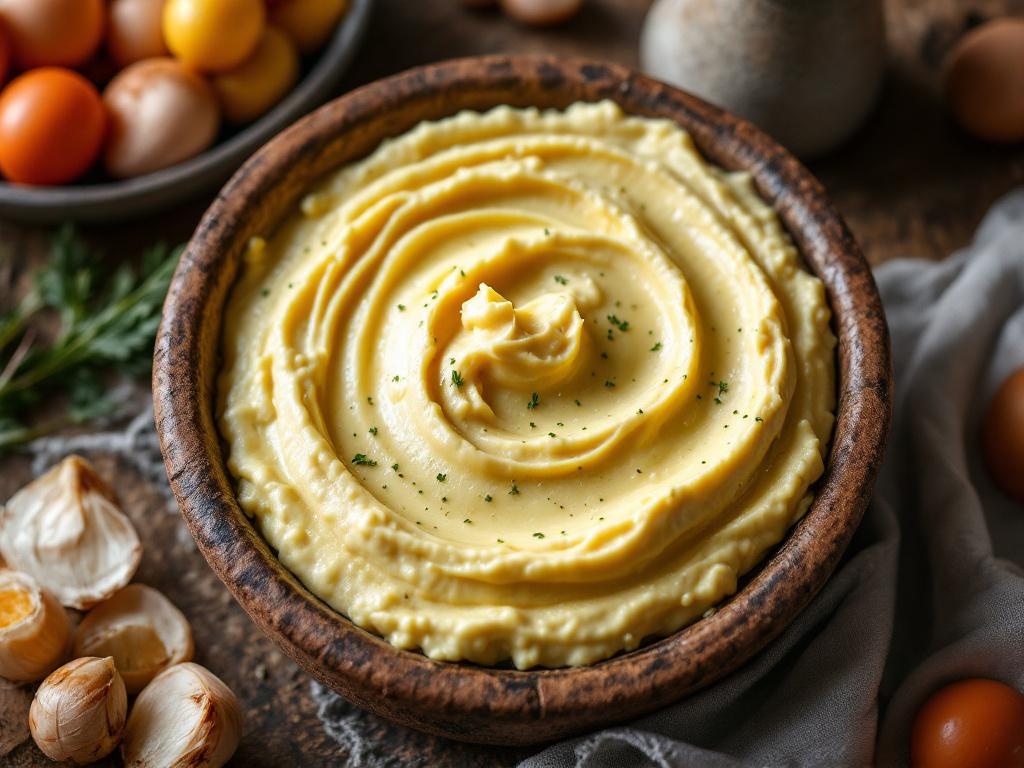
True Provençal aioli — 'all-i-oli' in Catalan, from 'all' (garlic) and 'oli' (oil) — is a pure emulsion of garlic and olive oil with no egg yolk. This distinguishes it from the garlic mayonnaise that most of the world calls aioli: the traditional Provençal preparation uses only garlic, salt, and olive oil, with the garlic's own lecithin and gum compounds providing whatever emulsification occurs. The resulting sauce is unstable, extremely thick, intensely flavoured, and technically demanding to make. The garlic is pounded to a completely smooth paste with coarse salt in a mortar — this step is non-negotiable; any graininess or fibrous texture will prevent proper emulsification. Olive oil is then added a drop at a time while the pestle works continuously to incorporate each drop before the next is added. The result, when successful, is a thick, pale yellow paste with a pungency that authentic Provençal cooks consider completely appropriate. It is eaten not as a condiment but as a full dish: 'Le Grand Aïoli' is a Provençal feast of boiled vegetables, salt cod, boiled eggs, and snails all served with enormous quantities of aioli at the centre of the table. Modern aioli — made with egg yolk for stability — is an easier preparation but a different sauce. Egg yolk provides powerful emulsification, allowing a much higher oil ratio and producing a milder, creamier sauce. This is closer to garlic mayonnaise than traditional aioli, but it is what most restaurants serve.
Fiercely garlicky, olive-oil rich, thick and pungent — the unapologetic garlic sauce of Provence
For traditional aioli: the garlic must be absolutely smooth before oil is added — even one piece of fibrous garlic will break the emulsion For traditional aioli: add oil drop by drop at the absolute beginning — faster addition at the start will break it For modern aioli: use room-temperature egg yolk and oil — cold ingredients don't emulsify Garlic quantity is the cook's decision — traditional aioli is ferociously strong; modern versions are often toned down The mortar method is the reference — blenders produce a lighter, more aerated result
Adding oil too quickly at the start — this is the primary cause of emulsion failure Using cold oil or cold garlic — temperature differentials cause emulsion failure Not pounding the garlic completely smooth for traditional aioli Using extra-light or neutral oil — the flavour of good olive oil is essential to proper aioli Adding lemon juice too early — acid should come at the end when the emulsion is stable
Kitchen membership opens the full Library.
visual: Garlic pounds to completely smooth paste with no graininess or fibre — this absolute smoothness is what your pestle…
One piece of fibrous garlic will break the emulsion — the sauce splits.
- 4 large egg yolks (room temperature)
- 6 garlic cloves, minced to a fine paste
- 250 ml extra virgin olive oil (room temperature)
6 ingredients · 11 steps
Common Questions
Why does Aioli taste the way it does?
Fiercely garlicky, olive-oil rich, thick and pungent — the unapologetic garlic sauce of Provence
What are common mistakes when making Aioli?
Adding oil too quickly at the start — this is the primary cause of emulsion failure Using cold oil or cold garlic — temperature differentials cause emulsion failure Not pounding the garlic completely smooth for traditional aioli Using extra-light or neutral oil — the flavour of good olive oil is essential to proper aioli Adding lemon juice too early — acid should come at the end when the emulsion is stable