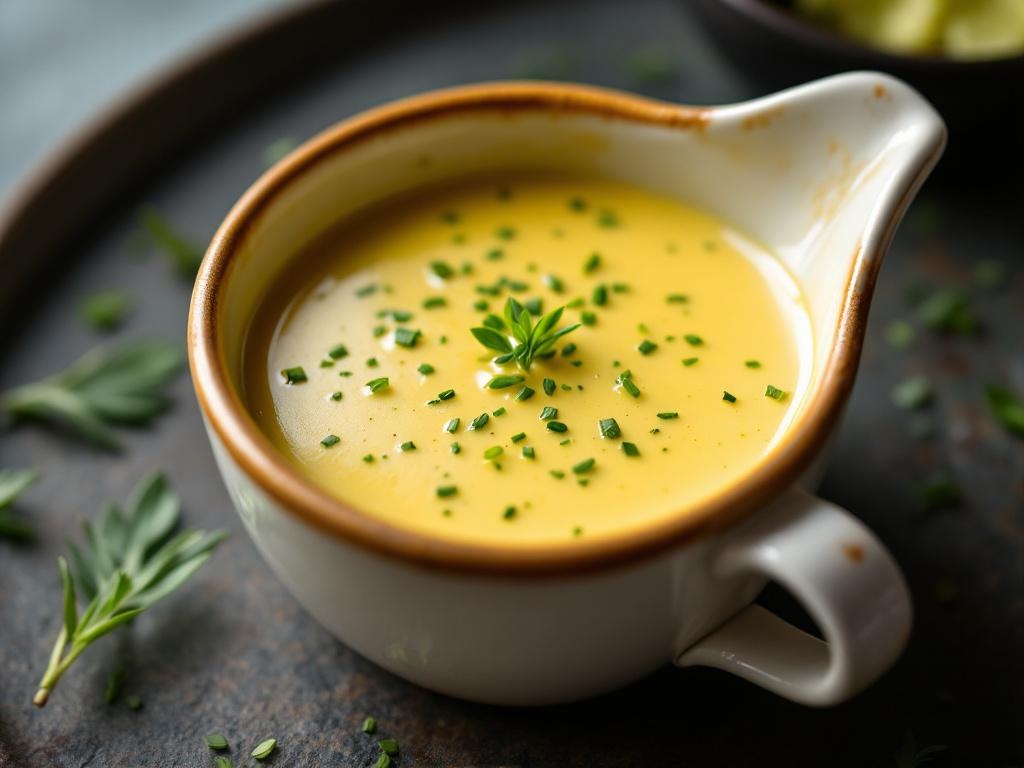
Bearnaise Sauce
One of 25 entries · Provenance 1000 — French
Paris, 1836. Created at the Pavillon Henri IV restaurant in Saint-Germain-en-Laye, outside Paris, and named after the region of Bearn in southwestern France — the birthplace of Henri IV. The sauce's association with steak is so strong that ordering steak without Bearnaise at a French brasserie feels incomplete.
Bearnaise is hollandaise with a tarragon-shallot reduction instead of the plain reduction. It is the sauce of the steakhouse — the sauce that has defined the relationship between charred beef and creamy, tarragon-scented butter for 150 years. The technique is identical to hollandaise; the flavour is its own category.
- Argentine chimichurri (fresh herb sauce with vinegar for grilled beef — the New World parallel, same herb-acid-fat structure); Peruvian uchucuta (walnut and herb sauce for grilled meat); Australian cafe de Paris butter (herb-compound butter for steak — the simpler, solid-fat version of Bearnaise's concept).
Saint-Estephe or Pauillac from Bordeaux — the structured tannins of Cabernet Sauvignon-dominant Bordeaux and the tarragon in Bearnaise have a documented affinity. Both have a herbal, leafy quality. Alternatively, a Pessac-Leognan Blanc alongside the sauce itself.
-
Domaine de la Romanée-Conti
DRC La Romanée-Conti Grand Cru
regional
DRC La Romanée-Conti Grand Cru expresses the pinot noir character central to this technique's original context, rendered through Vosne-Romanée terroir.(unverified)
-
Domaine de la Romanée-Conti
DRC La Tâche Grand Cru
regional
DRC La Tâche Grand Cru expresses the pinot noir character central to this technique's original context, rendered through Vosne-Romanée terroir.(unverified)
-
Marcel Lapierre
Marcel Lapierre Morgon
regional
Marcel Lapierre Morgon expresses the gamay character central to this technique's original context, rendered through Beaujolais terroir.(unverified)
-
Château du Moulin-à-Vent
Château du Moulin-à-Vent Rochegrès
regional
Château du Moulin-à-Vent Rochegrès expresses the gamay character central to this technique's original context, rendered through Moulin-à-Vent terroir.(unverified)
-
CheckMate Artisanal Winery
CheckMate Queen Taken Chardonnay
regional
CheckMate Queen Taken Chardonnay expresses the chardonnay character central to this technique's original context, rendered through Okanagan Valley terroir.(unverified)
-
Domaine Leflaive
Leflaive Le Montrachet Grand Cru
regional
Leflaive Le Montrachet Grand Cru expresses the chardonnay character central to this technique's original context, rendered through Puligny-Montrachet terroir.(unverified)
-
Quilceda Creek Vintners
Cabernet Sauvignon
regional
Cabernet Sauvignon expresses the cabernet sauvignon character central to this technique's original context, rendered through Red Mountain terroir.(unverified)
-
Leonetti Cellar
Cabernet Sauvignon
regional
Cabernet Sauvignon expresses the cabernet sauvignon character central to this technique's original context, rendered through Walla Walla Valley terroir.(unverified)
The reduction: white wine vinegar, dry white wine, finely chopped shallot, black peppercorns, and fresh tarragon stems. Reduce by three-quarters — the deep, concentrated reduction is the flavour foundation of the sauce Strain the reduction — the tarragon stems and shallot are discarded; only the aromatic liquid remains The sabayon and butter addition follow the exact hollandaise technique: 4 yolks cooked over a bain-marie with the reduction until ribbons form, then clarified butter added in a slow stream while whisking Fresh tarragon chopped finely and added at the end (never during cooking) — the heat destroys the delicate anise flavour of tarragon. The final tarragon is what makes it Bearnaise Season with a small pinch of cayenne and a squeeze of lemon at the end — the cayenne should be barely detectable, just a background warmth Temperature maintenance: serve at 55-60C. Bearnaise held at room temperature for more than 20 minutes begins to break and the tarragon loses its freshness
Over-reducing the tarragon: a bitter, over-reduced tarragon produces a sharp, harsh sauce Adding fresh tarragon too early: the heat destroys the anise character Sauce too cold: Bearnaise that has cooled below 50C thickens unpleasantly and the butter begins to separate
Kitchen membership opens the full Library.
- 60 ml white wine vinegar
- 30 ml dry white wine
- 2 shallots — minced
12 ingredients · 8 steps
Common Questions
Why does Bearnaise Sauce taste the way it does?
Saint-Estephe or Pauillac from Bordeaux — the structured tannins of Cabernet Sauvignon-dominant Bordeaux and the tarragon in Bearnaise have a documented affinity. Both have a herbal, leafy quality. Alternatively, a Pessac-Leognan Blanc alongside the sauce itself.
What are common mistakes when making Bearnaise Sauce?
Over-reducing the tarragon: a bitter, over-reduced tarragon produces a sharp, harsh sauce Adding fresh tarragon too early: the heat destroys the anise character Sauce too cold: Bearnaise that has cooled below 50C thickens unpleasantly and the butter begins to separate
What dishes are similar to Bearnaise Sauce?
Argentine chimichurri (fresh herb sauce with vinegar for grilled beef — the New World parallel, same herb-acid-fat structure); Peruvian uchucuta (walnut and herb sauce for grilled meat); Australian cafe de Paris butter (herb-compound butter for steak — the simpler, solid-fat version of Bearnaise's concept).