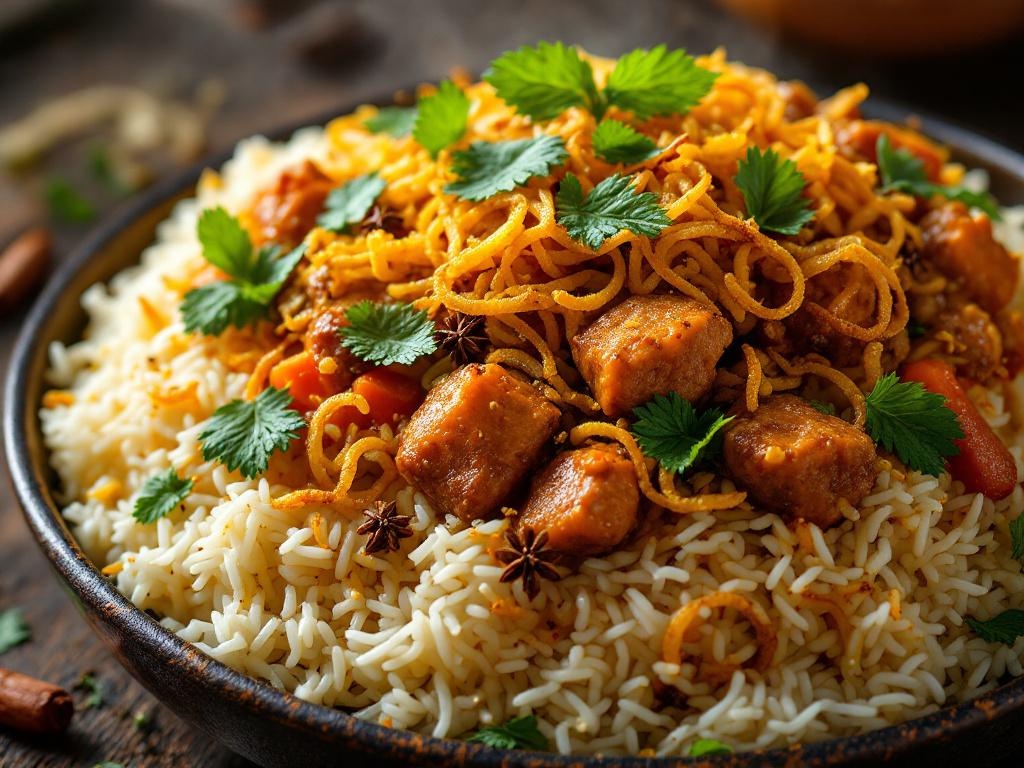
Biryani
One of 60 entries · Provenance 1000 — Indian
The Indian subcontinent, via Persia. Biryani derives from the Persian word birian (fried before cooking). The dish was brought to India with the Mughal Empire and developed distinctly in the royal kitchens of Hyderabad, Lucknow, Kolkata, and Malabar. Each city has a distinct style.
Biryani is the great rice dish of the Indian subcontinent — layers of fragrant Basmati, marinated protein, saffron, fried onion, and whole spices sealed and cooked together in a final steam (dum) that unifies the flavours. Hyderabadi dum biryani (the kacchi style — raw marinated meat cooked with the rice simultaneously) and Lucknowi biryani (the pakki style — cooked meat layered with cooked rice) represent the two traditions. Both are complex, multiple-hour preparations.
- Persian polo (layered rice with protein — the direct ancestor); Uzbek plov (Central Asian layered rice with lamb — the Silk Road parallel); Moroccan rfissa (saffron-scented chicken and lentil over flatbread — the North African parallel).
Raita (yoghurt with cucumber and cumin) is the structural accompaniment, not a condiment. For wine: a Viognier from the northern Rhone (Condrieu) whose apricot-peach, floral character mirrors the saffron and rose water notes in biryani. For non-wine: cold pomegranate juice.
Basmati rice: aged Basmati (minimum 1 year old, 2 years preferred) soaked for 30 minutes, parboiled in generously salted, spiced water until 70% cooked — with whole spices (cloves, cardamom, cinnamon, bay) The marinated protein: lamb shoulder, chicken thighs, or large prawns marinated overnight with yoghurt, fried onion (birista), ginger-garlic paste, and biryani spice mix (cumin, coriander, garam masala, Kashmiri chilli) Fried onions (birista): thinly sliced onions fried slowly in oil until deep golden and crisp — about 40 minutes. These are the sweetness and texture backbone of biryani Saffron milk: Kashmiri saffron dissolved in warm milk, drizzled over the top layer of rice before sealing Dum cooking: the pot is sealed with dough (atta) or foil and cooked over very low heat with a heavy pan on top (to distribute weight) for 20-25 minutes — the steam trapped inside cooks the rice to completion Do not stir: the layers must remain distinct when serving — each portion should show the white rice, the saffron-gold rice, and the brown protein layers
Over-cooking the rice before the dum: if the rice is more than 70% cooked before layering, it becomes mushy during the dum steam Not enough birista: the fried onions provide the sweetness that counterbalances the spiced protein — use them generously Not sealing the pot properly: steam escaping during the dum means the rice finishes unevenly
Kitchen membership opens the full Library.
- 400g basmati rice — aged, soaked 30 min
- 600g lamb shoulder — cut into 3cm cubes
- 150g onion — 2 medium, sliced thin
20 ingredients · 8 steps
Common Questions
Why does Biryani taste the way it does?
Raita (yoghurt with cucumber and cumin) is the structural accompaniment, not a condiment. For wine: a Viognier from the northern Rhone (Condrieu) whose apricot-peach, floral character mirrors the saffron and rose water notes in biryani. For non-wine: cold pomegranate juice.
What are common mistakes when making Biryani?
Over-cooking the rice before the dum: if the rice is more than 70% cooked before layering, it becomes mushy during the dum steam Not enough birista: the fried onions provide the sweetness that counterbalances the spiced protein — use them generously Not sealing the pot properly: steam escaping during the dum means the rice finishes unevenly
What dishes are similar to Biryani?
Persian polo (layered rice with protein — the direct ancestor); Uzbek plov (Central Asian layered rice with lamb — the Silk Road parallel); Moroccan rfissa (saffron-scented chicken and lentil over flatbread — the North African parallel).