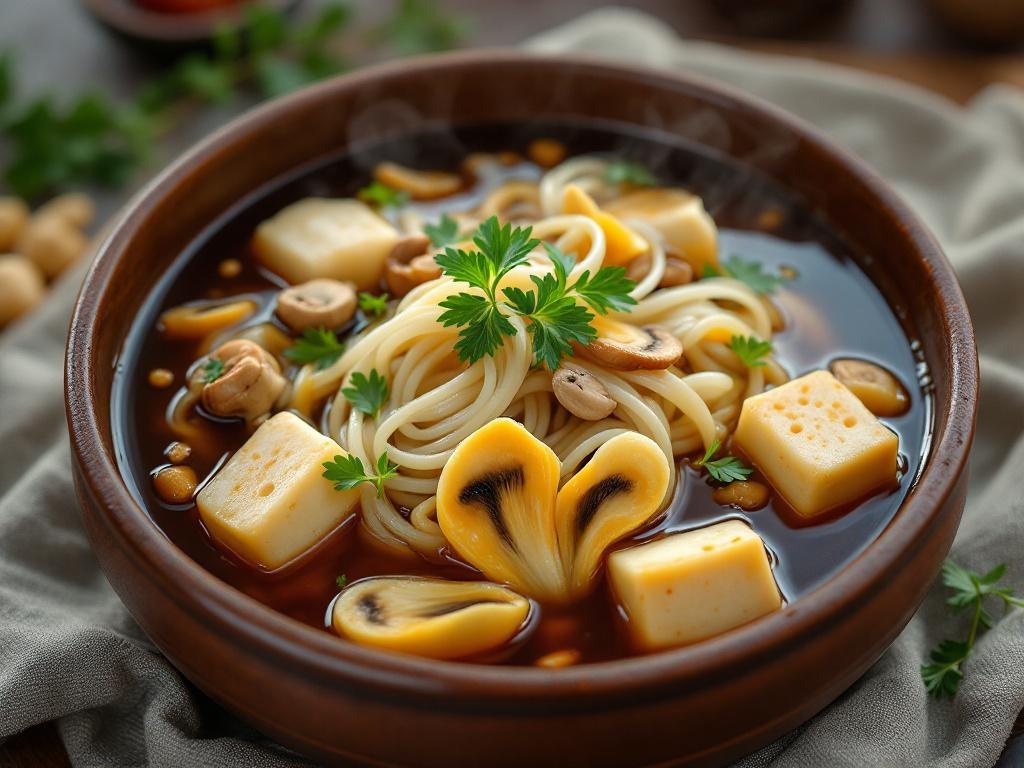
Buddha's Delight (Luohan Zhai — 罗汉斋)
Chinese Buddhist monastery tradition — institutionalised across China, particularly in Chan Buddhist temples; lunar new year tradition across the Chinese diaspora
Luohan zhai is the great Chinese vegetarian banquet dish — a stew of up to eighteen ingredients, each with symbolic meaning, eaten on the first day of the Lunar New Year to purify the body and invite good fortune for the year ahead. It is a dish of Buddhist origin, served in monasteries across China for centuries, where the prohibition on meat, garlic, and onion made elaborate combinations of preserved and fresh plant ingredients the highest culinary art. The ingredients list is long by design: fresh and dried tofu products (tofu skin, dried tofu, fried tofu puffs), glass noodles, wood ear mushrooms, lily buds, ginkgo nuts, bamboo shoots, lotus root, dried bean curd sticks, shiitake mushrooms, snow peas, and napa cabbage are standard components. Each is prepared separately — some soaked overnight, some blanched — and combined in a master broth of soy sauce, oyster sauce (or vegetarian equivalent), sesame oil, and rock sugar, then simmered slowly until unified. The genius of the dish is textural: no two ingredients share the same texture, and together they create a complexity that makes meat irrelevant. The dish is better the next day when the flavours have melded further.
- Minestrone (Italian — multi-vegetable broth dish)
- Pot-au-Feu (French — slow-combined stew)
- Irishstew (British — layered single-pot)
- Dal Makhani (Indian — pulse-centred slow cook)
deeply savoury, multi-textured, soy-rich, subtly sweet, umami
Soak dried ingredients separately and at correct times — wood ear mushrooms need 30 min, lily buds need 20 min, dried beancurd sticks need 1 hour Do not overcook delicate ingredients — add glass noodles last as they cook in under 3 minutes Layer flavours through a combination of soy, sesame, and a small amount of sweetness The dish should be richly sauced but not soupy — reduce if necessary Season at the end: the dried ingredients release salt as they rehydrate Use vegetarian oyster sauce or mushroom sauce to maintain the Buddhist character
Adding all ingredients simultaneously — different textures require different cook times Using thin soy sauce alone — the dish needs the body of oyster sauce and the sweetness of rock sugar Not soaking dried ingredients long enough — they remain tough and don't release their flavour Over-salting before the dried ingredients have rehydrated and released their salt Cooking the glass noodles too early — they absorb all the liquid and become mushy Skipping the tofu skin (fu zhu) — it provides the essential silky-chewy component
Revolutionary Chinese Cookbook — Fuchsia Dunlop
Kitchen membership opens the full Library.
visual: Glass noodles turn translucent and tender in under 3 minutes — add them last or they dissolve into paste.
Glass noodles turn translucent and tender in under 3 minutes — add them last or they dissolve into paste.
- 200g shiitake mushrooms — thick caps, halved
- 150g button mushrooms — halved
- 100g wood ear fungus — rehydrated, torn into bite-sized pieces
21 ingredients · 12 steps
Common Questions
Why does Buddha's Delight (Luohan Zhai — 罗汉斋) taste the way it does?
deeply savoury, multi-textured, soy-rich, subtly sweet, umami
What are common mistakes when making Buddha's Delight (Luohan Zhai — 罗汉斋)?
Adding all ingredients simultaneously — different textures require different cook times Using thin soy sauce alone — the dish needs the body of oyster sauce and the sweetness of rock sugar Not soaking dried ingredients long enough — they remain tough and don't release their flavour Over-salting before the dried ingredients have rehydrated and released their salt Cooking the glass noodles too early — they absorb all the liquid and become mushy Skipping the tofu skin (fu zhu) — it provides the essential silky-chewy component
What dishes are similar to Buddha's Delight (Luohan Zhai — 罗汉斋)?
Minestrone (Italian — multi-vegetable broth dish), Pot-au-Feu (French — slow-combined stew), Irishstew (British — layered single-pot)