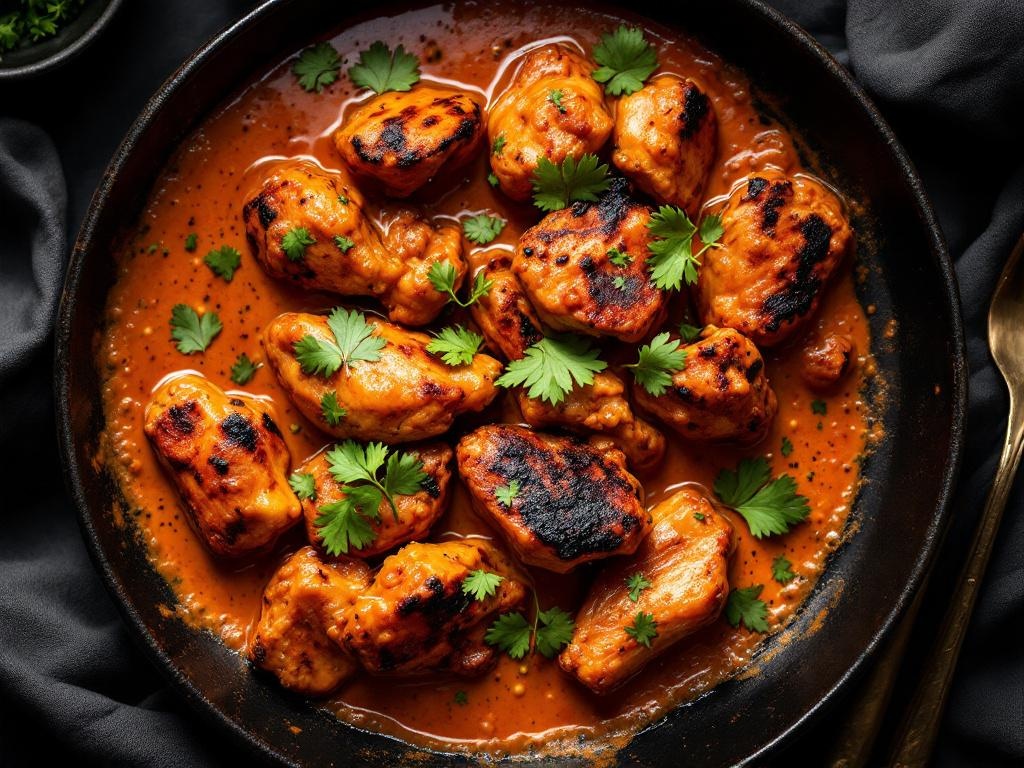
Butter Chicken
One of 60 entries · Provenance 1000 — Indian
Delhi, India, 1950. Moti Mahal restaurant, Daryaganj. Kundan Lal Gujral (who invented tandoor chicken) and later his descendent Kundan Lal Jaggi created the sauce to use leftover tandoor chicken. The dish spread globally through the Indian diaspora and became the best-known Indian dish internationally.
Murgh Makhani (butter chicken) was invented in 1950 at Moti Mahal restaurant in Delhi by Kundan Lal Gujral and his disciple Kundan Lal Jaggi. Leftover tandoor-cooked chicken was combined with a tomato-cream-butter sauce to prevent it from drying out. The result was the most internationally exported Indian dish. The sauce — makhani sauce — is simultaneously mild, rich, slightly tangy (from the tomato), and sweet (from the butter and cream). The chicken must be tandoor-style: charred at the surface, tender within.
- Persian fesenjan (walnut and pomegranate chicken — the Persian palace cooking that influenced Mughal cuisine that influenced Delhi cooking); Tikka masala (the British adaptation of butter chicken — slightly tangier, less buttery); Iranian khoresh (slow-cooked, aromatic sauce over rice — the Persian structural parallel).
A dry, off-dry Riesling Spatlese from the Mosel — the slight sweetness buffers the mild chilli heat and matches the tomato-cream richness. Or a cold Kingfisher lager — the Indian beer that has been consumed alongside butter chicken since the dish was invented.
Chicken: boneless thighs, marinated twice. First marinade: yoghurt, lemon juice, salt — 30 minutes. Second marinade: yoghurt, Kashmiri chilli powder (for colour, not heat), ginger-garlic paste, cumin, garam masala, and oil — overnight Kashmiri chilli powder: a specific variety producing deep red colour with mild heat — not cayenne, not standard chilli powder. The colour of makhani sauce comes from Kashmiri chilli, not from added colouring Cook the chicken under the grill or in a very hot oven (250C) until the surface is deeply coloured with char spots — the char is essential for the Moti Mahal flavour The makhani sauce: onion, ginger, garlic, tomatoes, whole spices (cardamom, cloves, cinnamon) — all simmered together and blended to a smooth paste Finish with butter and cream: once the tomato base is simmered and blended, add cold diced butter off heat in cubes, then cream — stirring continuously. The butter must not melt into oil; it must emulsify into the sauce Kasuri methi (dried fenugreek leaves) crushed between the palms and stirred in at the end — this is the signature flavour note of authentic makhani sauce
Skipping the char on the chicken: the smoky, charred surface provides the complexity that makhani sauce alone cannot achieve Not adding kasuri methi: this single ingredient provides the distinctive bittersweet finish of authentic butter chicken Using too much cream: the dish should taste of tomato and butter with cream as a supporting note, not as the primary flavour
Kitchen membership opens the full Library.
- 600 g chicken breast, cut into 3 cm cubes
- 200 g plain yogurt, full-fat
- 30 g ginger-garlic paste
16 ingredients · 9 steps
Common Questions
Why does Butter Chicken taste the way it does?
A dry, off-dry Riesling Spatlese from the Mosel — the slight sweetness buffers the mild chilli heat and matches the tomato-cream richness. Or a cold Kingfisher lager — the Indian beer that has been consumed alongside butter chicken since the dish was invented.
What are common mistakes when making Butter Chicken?
Skipping the char on the chicken: the smoky, charred surface provides the complexity that makhani sauce alone cannot achieve Not adding kasuri methi: this single ingredient provides the distinctive bittersweet finish of authentic butter chicken Using too much cream: the dish should taste of tomato and butter with cream as a supporting note, not as the primary flavour
What dishes are similar to Butter Chicken?
Persian fesenjan (walnut and pomegranate chicken — the Persian palace cooking that influenced Mughal cuisine that influenced Delhi cooking); Tikka masala (the British adaptation of butter chicken — slightly tangier, less buttery); Iranian khoresh (slow-cooked, aromatic sauce over rice — the Persian structural parallel).