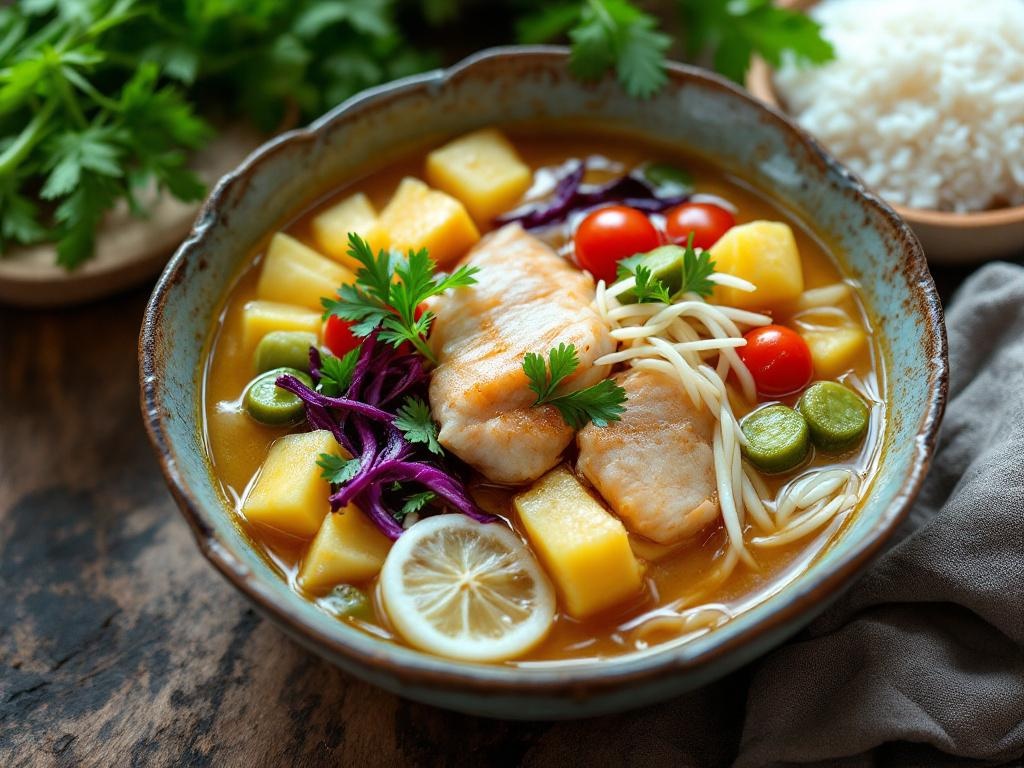
Canh Chua
One of 9 entries · Provenance 1000 — Vietnamese
Mekong Delta, Southern Vietnam. Canh chua reflects the abundance of the Mekong Delta — freshwater fish, pineapple, tamarind, and tropical vegetables. It is the archetypal meal of Southern Vietnamese families, eaten daily with rice.
Canh chua (sour soup) is a Southern Vietnamese soup of sweet-sour tamarind broth with fish (catfish or snakehead), pineapple, tomato, okra, elephant ear taro stem, and bean sprouts. The defining character is the simultaneous sweet-sour-savoury balance — the tamarind provides the sour note, sugar and pineapple provide sweetness, fish sauce provides the salinity, and the freshwater fish provides the protein. This is the home cooking of the Mekong Delta.
- Thai tom yam (sour spicy soup — the Thai hot-and-sour parallel); Filipino sinigang (tamarind sour soup with pork or shrimp — the Philippine cousin using the same tamarind foundation); Cambodian somlar machu (sour soup — the Cambodian parallel).
Steamed jasmine rice alongside — canh chua is always served with rice, the soup spooned over or alongside as part of a Vietnamese family meal spread. A cold Tiger lager or lime-leaf iced tea for the summer Mekong Delta version.
Tamarind: wet tamarind paste soaked in hot water and strained — provides the signature sourness. The tamarind must be Vietnamese tamarind (less sweet than Thai tamarind) Catfish or snakehead fish: freshwater fish fillets or whole cut pieces. The flesh must be firm enough to hold during the brief cook — white fish fillets are an acceptable substitute The aromatics: shallots and garlic fried in oil first, then the tamarind water, fish sauce, and sugar added and brought to a simmer The vegetables: pineapple chunks and tomato added first (they need more cooking time), then okra and taro stem (10 minutes), then bean sprouts (last 2 minutes) The fish: added in the last 5 minutes of cooking — freshwater fish is delicate and over-cooking produces a dry, flaking result Garnish: fresh Vietnamese perilla, rice paddy herb (ngò ôm), and sliced bird's eye chilli — the fresh herbs are added at the table, not during cooking
Over-cooking the fish: the fish should be just set — it will continue cooking in the hot broth after the heat is turned off Imbalanced sweet-sour: taste continuously — the tamarind should be present but the sweetness of the pineapple should balance it Skipping the fresh herbs: the ngò ôm (rice paddy herb) is specific to this soup — it has a citrusy, herbal quality that is its defining finish
Kitchen membership opens the full Library.
- 300g catfish or snakehead fillets
- 400ml coconut milk
- 200g fresh tamarind paste
10 ingredients · 7 steps
Common Questions
Why does Canh Chua taste the way it does?
Steamed jasmine rice alongside — canh chua is always served with rice, the soup spooned over or alongside as part of a Vietnamese family meal spread. A cold Tiger lager or lime-leaf iced tea for the summer Mekong Delta version.
What are common mistakes when making Canh Chua?
Over-cooking the fish: the fish should be just set — it will continue cooking in the hot broth after the heat is turned off Imbalanced sweet-sour: taste continuously — the tamarind should be present but the sweetness of the pineapple should balance it Skipping the fresh herbs: the ngò ôm (rice paddy herb) is specific to this soup — it has a citrusy, herbal quality that is its defining finish
What dishes are similar to Canh Chua?
Thai tom yam (sour spicy soup — the Thai hot-and-sour parallel); Filipino sinigang (tamarind sour soup with pork or shrimp — the Philippine cousin using the same tamarind foundation); Cambodian somlar machu (sour soup — the Cambodian parallel).