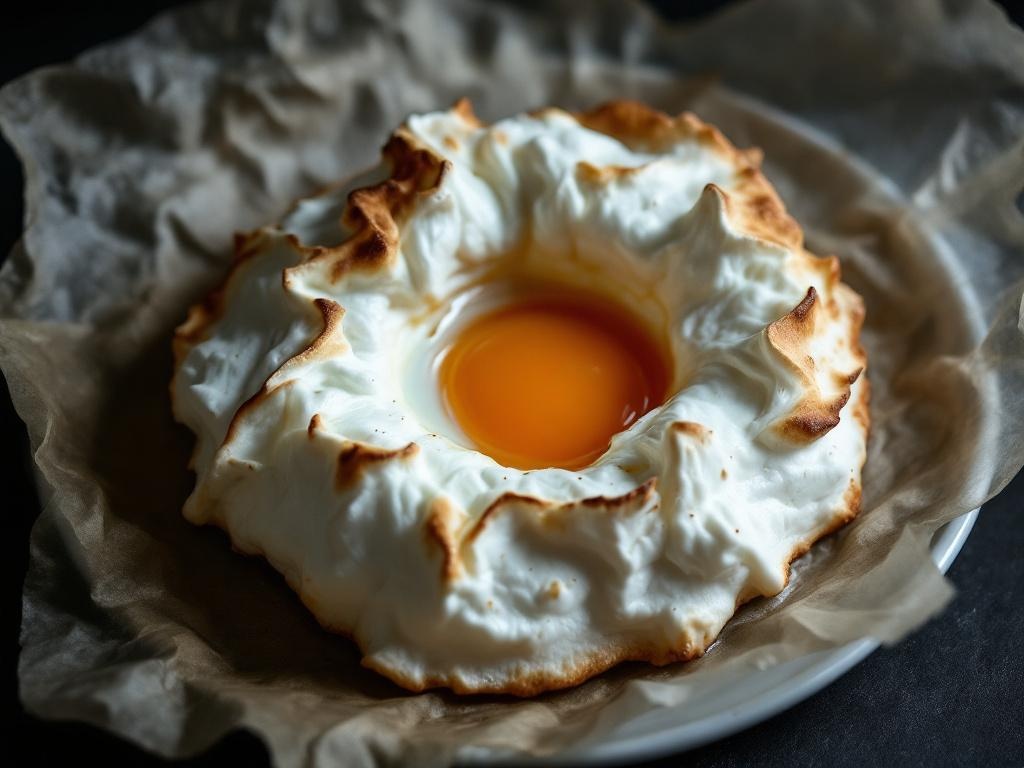
Cloud Eggs (Separated White and Yolk — French Oeufs en Neige Origin)
One of 50 entries · Provenance 1000 — Viral
French classical — oeufs à la neige; modern viral format via Instagram and Pinterest 2017
Cloud eggs went viral on Instagram and Pinterest in 2017, appearing as whipped egg white nests with a golden yolk baked into the centre. While the aesthetic seemed novel, the technique draws directly from the classic French preparation oeufs à la neige — eggs in snow — in which whites are whipped and poached or baked, with the yolk as centrepiece. The viral version simplified this to a home oven format, and the result, when done correctly, is a genuinely interesting textural experience: crisp-edged meringue-like white exterior, soft airy centre, and a warm, barely-set yolk. The method requires separating eggs without any yolk contamination in the whites — even a trace of fat will prevent proper aeration. The whites are whipped to stiff peaks with a pinch of cream of tartar and salt. The peaks must be truly stiff: when the bowl is inverted, the whites should not move. Soft or medium peaks produce a cloud that collapses in the oven. Fold-in additions at this stage are optional but improve the final result: finely grated Parmesan, crumbled prosciutto, finely minced chives, or herbs. These should be folded very gently with a silicone spatula to avoid deflating the whites. The nests are spooned onto a parchment-lined baking sheet in mounds with a well pressed into the centre using the back of a spoon. The nests bake at 450°F for 3 minutes to set the exterior, then the yolks are carefully lowered into the wells and the eggs return to the oven for another 3 minutes — this gives a set white with a runny yolk. An additional minute produces a medium-set yolk. The critical error most home cooks make is baking too long: the whites toughen and the yolk overcooks from the ambient heat.
Airy savoury meringue, rich runny yolk, Parmesan salt, herb freshness
Ensure complete yolk-free separation — even a trace of fat prevents proper aeration Whip whites to truly stiff peaks with cream of tartar — medium peaks collapse in the oven Fold additions very gently — over-folding deflates the whites and loses the cloud structure Bake whites first for 3 minutes before adding the yolk to prevent overcooking the yolk Remove from oven when yolk appears barely set — residual heat will continue cooking
Whipping whites to only soft or medium peaks — the nest collapses during baking Adding the yolk at the beginning with the whites rather than partway through baking Using wet or greasy equipment which prevents the whites from whipping properly Over-folding additions into the whites — the cloud loses its aerated structure Baking at too low a temperature — the exterior does not set before the centre becomes rubbery
Kitchen membership opens the full Library.
visual: Whites whip to stiff peaks that hold their shape without collapsing when you lift the whisk — no soft…
Whites whip to stiff peaks that hold their shape without collapsing when you lift the whisk — no soft or medium peaks.
- 4 large eggs (Bresse or pasture-raised), separated into whites and yolks
- 30 g granulated sugar, divided (25 g for whites + 5 g for yolks)
- 5 ml whole milk
7 ingredients · 11 steps
Common Questions
Why does Cloud Eggs (Separated White and Yolk — French Oeufs en Neige Origin) taste the way it does?
Airy savoury meringue, rich runny yolk, Parmesan salt, herb freshness
What are common mistakes when making Cloud Eggs (Separated White and Yolk — French Oeufs en Neige Origin)?
Whipping whites to only soft or medium peaks — the nest collapses during baking Adding the yolk at the beginning with the whites rather than partway through baking Using wet or greasy equipment which prevents the whites from whipping properly Over-folding additions into the whites — the cloud loses its aerated structure Baking at too low a temperature — the exterior does not set before the centre becomes rubbery