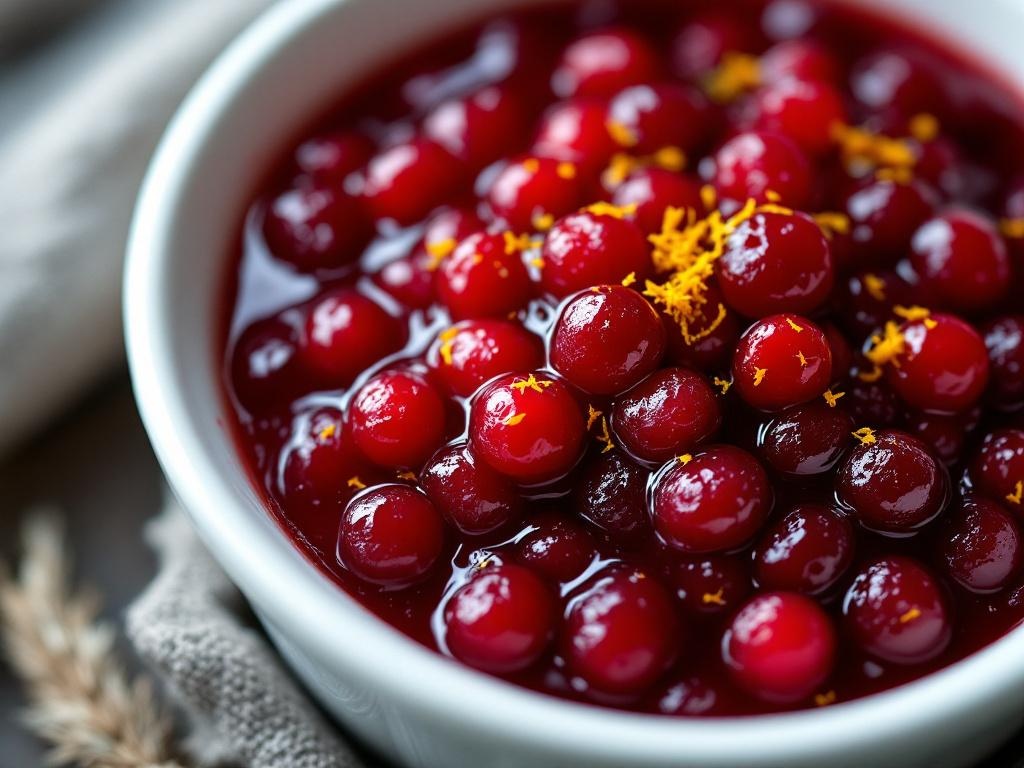
Cranberry Sauce (Thanksgiving — Fresh vs. Canned)
One of 69 entries · Provenance 1000 — Seasonal
North America; cranberries are indigenous to eastern North America; the Wampanoag people introduced cranberries to the Pilgrims; cranberry sauce as we know it documented from c. 1663; the canned version introduced by Ocean Spray c. 1941.
Cranberry sauce occupies a unique position in the American Thanksgiving canon: it is simultaneously the dish most people make from scratch (it takes 10 minutes) and the dish for which there is genuine, unironic devotion to the canned version (with its distinctive ridges from the can preserved as a point of pride). The fresh version is a revelation: cranberries (a distinctly North American fruit, native to the continent) cooked briefly with sugar and orange zest until the berries pop and the sauce sets naturally from the fruit's extraordinary pectin content. The result — bright red, slightly bitter, intensely flavoured — is one of the most vivid condiments in any cuisine, and it transforms turkey, stuffing, and leftover sandwiches alike. Understanding cranberry sauce means understanding that the fruit's natural acidity and pectin make it almost impossible to make badly, and that even the worst home attempt is significantly better than the canned version.
Fresh cranberries only — frozen is acceptable (same fruit, simply frozen at peak); the flavour difference between fresh/frozen and canned is categorical The ratio: 350g cranberries to 150g sugar and 120ml liquid (water, orange juice, or a combination) — this is the classic balance Cook only until the berries pop and the sauce begins to thicken — 10–12 minutes; the pectin in the berries does all the thickening Season with orange zest — the citrus note is essential; it lifts the sauce from simply tart to complex Chill completely before serving — hot cranberry sauce is thin and unappealing; chilling allows the pectin to set the sauce Taste and adjust: cranberries vary in tartness; start with less sugar and add more to taste
Overcooking — the cranberry sauce turns from vibrant red to a dull burgundy with an over-cooked flavour Too much sugar — the tartness is the point; the sugar should balance, not eliminate, the natural bitterness Serving hot — it needs to chill; warm cranberry sauce is liquid and lacks the proper set texture No orange — the orange component is structural; it integrates with the cranberry flavour in a way that makes the sauce greater than its parts Adding too much liquid — the berries release significant liquid as they pop; excess added liquid produces a sauce that doesn't set
Kitchen membership opens the full Library.
visual: Berries pop and sauce begins to thicken — stop cooking. Chilled sauce clings to the spoon, bright red, slightly…
Berries pop and sauce begins to thicken — stop cooking. Overcook by minutes and the sauce turns dull burgundy with stale flavour.
- 340g fresh cranberries (or frozen, thawed)
- 250g caster sugar
- 120ml water
9 ingredients · 8 steps
Common Questions
What are common mistakes when making Cranberry Sauce (Thanksgiving — Fresh vs. Canned)?
Overcooking — the cranberry sauce turns from vibrant red to a dull burgundy with an over-cooked flavour Too much sugar — the tartness is the point; the sugar should balance, not eliminate, the natural bitterness Serving hot — it needs to chill; warm cranberry sauce is liquid and lacks the proper set texture No orange — the orange component is structural; it integrates with the cranberry flavour in a way that makes the sauce greater than its parts Adding too much liquid — the berries release significant liquid as they pop; excess added liquid produces a sauce that doesn't set