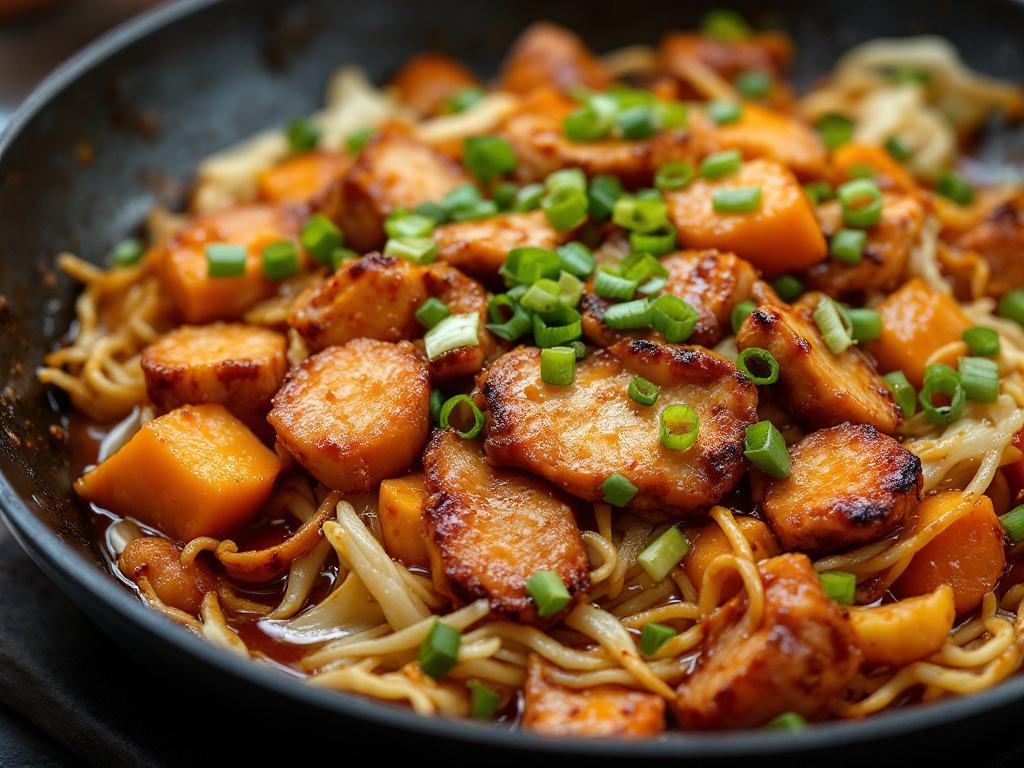
Dakgalbi
One of 20 entries · Provenance 1000 — Korean
Chuncheon, Gangwon Province, South Korea. Dakgalbi was developed in Chuncheon in the 1960s and became the signature dish of the city. The Chuncheon Myeong-dong Dakgalbi Street (a dedicated street of dakgalbi restaurants) is one of South Korea's most famous food destinations.
Dakgalbi (spicy stir-fried chicken) is Chuncheon's most famous dish — thinly sliced chicken thighs marinated in a gochujang-based sauce, stir-fried with sweet potato, cabbage, rice cakes (tteok), and green onion in a wide, flat pan at the table. The sauce caramelises in the hot pan and coats every element — the sweet potato softens, the cabbage wilts and sweetens, and the rice cakes become chewy and sauce-saturated. Finished by frying rice directly in the remaining sauce (bokkeum bap).
- Sichuan mala chicken stir-fry (spicy chicken with fermented bean paste — the Chinese parallel); Thai larb gai (spiced minced chicken — the Thai spiced chicken tradition); Japanese tori no teriyaki (teriyaki-glazed chicken — the Japanese sweet-savoury glazed chicken parallel).
Korean lager (Hite or Cass) or makgeolli (milky rice wine) — dakgalbi is a drinking food (anju) in Korean culture. The spicy, fatty, caramelised chicken and the cold, refreshing beer are the Chuncheon pairing.
Chicken thighs: boneless, skinless, sliced thin (5mm) across the grain. Thighs are essential — breasts dry out in the high-heat stir-fry The marinade: gochujang, gochugaru (both required), soy sauce, sesame oil, sugar, garlic, ginger, and a small amount of doenjang for depth. Marinate for minimum 2 hours, ideally overnight Garae-tteok (rice cakes): soaked in cold water for 30 minutes to soften before adding to the pan The flat pan: a cast iron skillet or Korean dakgalbi pan (shallow, round, with a flat base). The wide surface area allows the sauce to caramelise rather than steam The cook: chicken in first, then sweet potato, then cabbage and tteok. The vegetables are added in order of cooking time Bokkeum bap finale: after the chicken and vegetables are eaten, add cooked rice to the pan with the residual sauce and stir-fry until the rice is coated and slightly crispy
Chicken breasts: dry out and become tough in the high-heat stir-fry. Thighs only Cooking all elements simultaneously: different ingredients have different cooking times — stagger the additions Not making bokkeum bap: the fried rice finale in the residual sauce is the best part of the meal
Kitchen membership opens the full Library.
- 700g chicken thigh, cut into 3cm pieces
- 150g gochujang (Korean red chili paste)
- 45ml soy sauce
14 ingredients · 6 steps
Common Questions
Why does Dakgalbi taste the way it does?
Korean lager (Hite or Cass) or makgeolli (milky rice wine) — dakgalbi is a drinking food (anju) in Korean culture. The spicy, fatty, caramelised chicken and the cold, refreshing beer are the Chuncheon pairing.
What are common mistakes when making Dakgalbi?
Chicken breasts: dry out and become tough in the high-heat stir-fry. Thighs only Cooking all elements simultaneously: different ingredients have different cooking times — stagger the additions Not making bokkeum bap: the fried rice finale in the residual sauce is the best part of the meal
What dishes are similar to Dakgalbi?
Sichuan mala chicken stir-fry (spicy chicken with fermented bean paste — the Chinese parallel); Thai larb gai (spiced minced chicken — the Thai spiced chicken tradition); Japanese tori no teriyaki (teriyaki-glazed chicken — the Japanese sweet-savoury glazed chicken parallel).