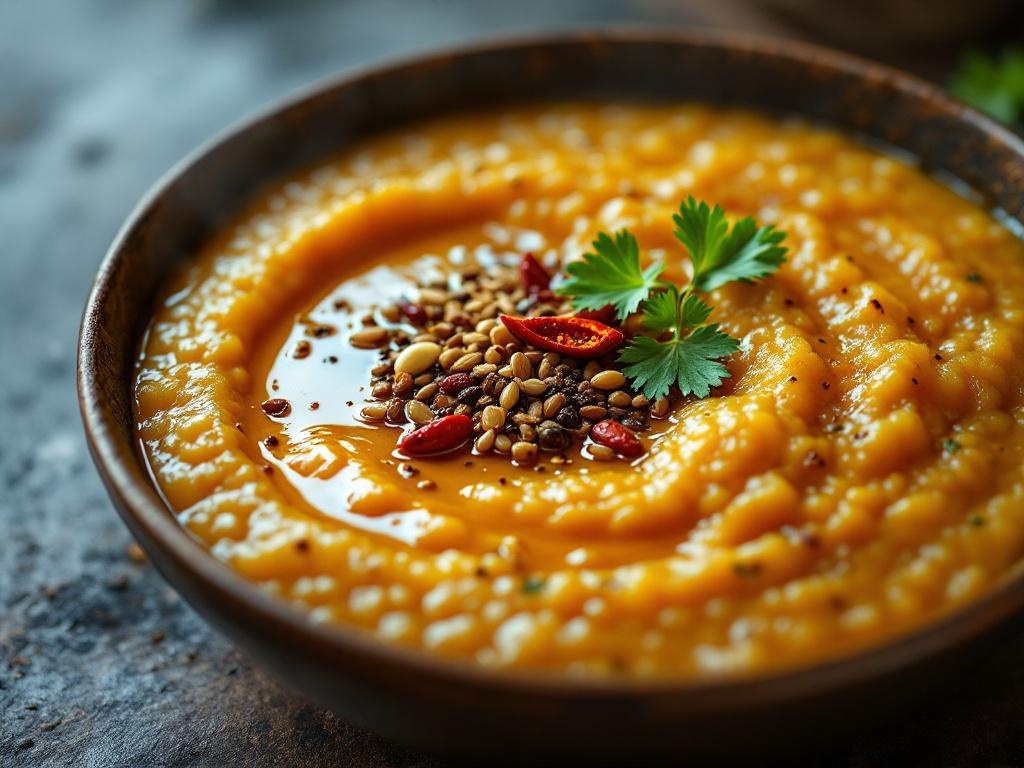
Dal
One of 60 entries · Provenance 1000 — Indian
India, documented from the Vedic period. Dal has been central to Indian cooking for more than 3,000 years and is the foundational protein source across socioeconomic boundaries. Dal makhani was invented at Moti Mahal restaurant in Delhi, the same kitchen that produced butter chicken.
Dal is the daily protein of most of India — lentils cooked to a thick, yielding porridge, finished with a tarka (tempering) of whole spices bloomed in ghee or oil poured sizzling over the surface at service. The tarka is the moment the dal transforms from sustaining to extraordinary. Dal makhani (black lentil dal with butter and cream, the restaurant standard) and Dal tadka (yellow split lentils with a sharp tarka) represent the two poles.
- Ethiopian misir wat (lentils spiced with berbere — the North African parallel); Egyptian ful medames (slow-cooked fava beans with tarka — the Middle Eastern twin); Turkish mercimek corbasi (red lentil soup — the Turkish version of the same lentil-with-spiced-oil tradition).
Masala chai — the traditional Indian meal companion. Or a cold Kingfisher alongside a dal-roti combination. Dal makhani specifically: a dry, fruity red wine from Karnataka or Maharashtra (Sula Dindori Reserve Shiraz) has become an appropriate modern Indian pairing.
Dal makhani: whole black urad lentils (not split) soaked overnight, then pressure-cooked or slow-cooked for 8 hours until completely broken down and creamy. This dish cannot be rushed Dal tadka: toor dal (split pigeon peas) or chana dal (split chickpeas) cooked until soft, then finished with a sharp ginger-tomato-spice tarka The tarka: in a separate small pan, heat ghee (not oil) until very hot. Add whole cumin seeds (they should sizzle immediately), then dried red chillies, then asafoetida (hing), then sliced garlic. Pour immediately over the surface of the dal Kasuri methi (dried fenugreek): crumbled into dal makhani at the end — the bitter, aromatic note that defines the dish Salt added only when the lentils are fully cooked: salt added to cooking lentils toughens the skins and prevents complete softening The final finish for dal makhani: butter and cream stirred in off heat, as for butter chicken makhani sauce
Under-cooking: the lentils must be completely soft throughout — any remaining hardness means the dal needs more time Weak tarka: the ghee in the tarka pan must be screaming hot before the spices go in. Warm ghee produces a flat, steamed flavour; hot ghee produces an aromatic bloom Adding salt too early: toughens the lentil skins
Kitchen membership opens the full Library.
- 200 g red lentils (masoor dal), soaked overnight and drained
- 800 ml water
- 4 g turmeric powder
15 ingredients · 9 steps
Common Questions
Why does Dal taste the way it does?
Masala chai — the traditional Indian meal companion. Or a cold Kingfisher alongside a dal-roti combination. Dal makhani specifically: a dry, fruity red wine from Karnataka or Maharashtra (Sula Dindori Reserve Shiraz) has become an appropriate modern Indian pairing.
What are common mistakes when making Dal?
Under-cooking: the lentils must be completely soft throughout — any remaining hardness means the dal needs more time Weak tarka: the ghee in the tarka pan must be screaming hot before the spices go in. Warm ghee produces a flat, steamed flavour; hot ghee produces an aromatic bloom Adding salt too early: toughens the lentil skins
What dishes are similar to Dal?
Ethiopian misir wat (lentils spiced with berbere — the North African parallel); Egyptian ful medames (slow-cooked fava beans with tarka — the Middle Eastern twin); Turkish mercimek corbasi (red lentil soup — the Turkish version of the same lentil-with-spiced-oil tradition).