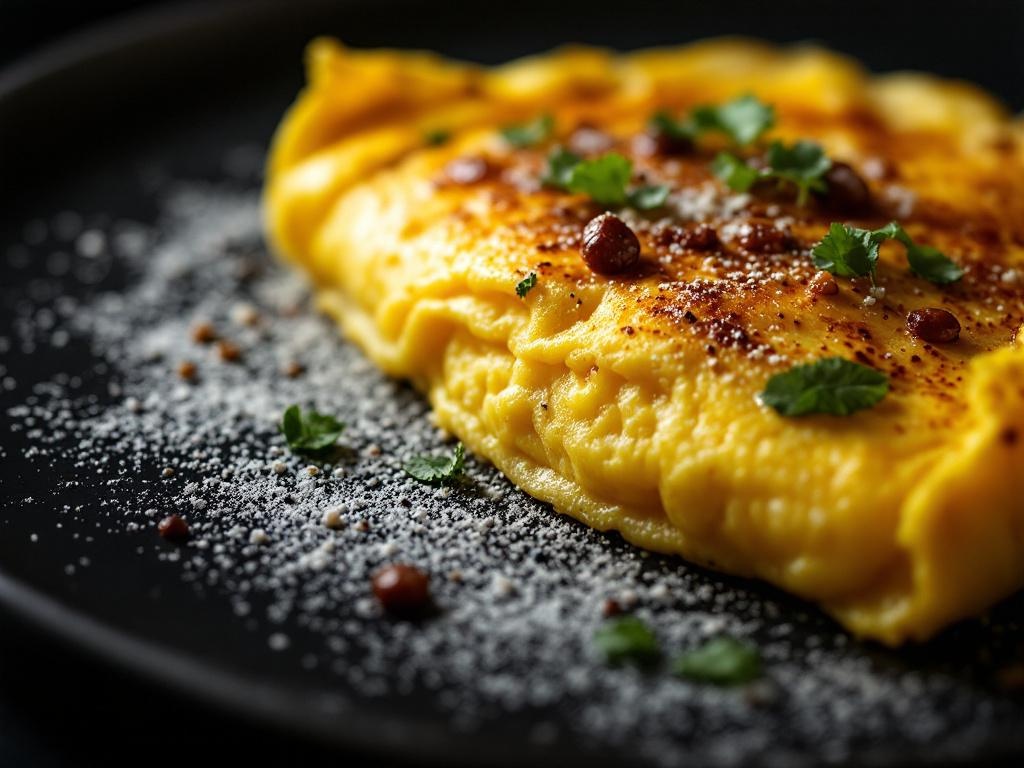
French Omelette
One of 25 entries · Provenance 1000 — French
France. The technique of the rolled omelette is quintessentially French — Auguste Escoffier, Ferdinand Point, and Paul Bocuse all treated the perfect omelette as the true test of a cook's skill. Jacques Pepin's television demonstrations of the technique are the definitive modern reference.
The French omelette is the benchmark of kitchen skill. Three eggs, good butter, a hot pan, 90 seconds. The exterior should be pale, unbrowned, uncracked. The interior should be barely set — baveuse (wet, silky) in the French chef's ideal. The technique — rapid circular stirring with a fork followed by a roll-and-flip — is learned, not intuited. This is the first dish a French chef's apprentice must master.
- Japanese tamagoyaki (layered rolled egg omelette — the Japanese version of the same rolled-egg discipline); Spanish tortilla espanola (thick, set egg and potato cake — the opposite approach to the same ingredient); Iranian kuku sabzi (herb-packed egg frittata — the Middle Eastern interpretation of egg as vehicle for flavour).
A cold glass of Chablis alongside a plain omelette with fine herbs (chives, tarragon, chervil, flat-leaf parsley). The mineral acidity of Chablis cuts through the butter and egg. For a filled omelette (Gruyere, ham, mushrooms duxelles): a white Burgundy from Macon.
-
Domaine de la Romanée-Conti
DRC La Romanée-Conti Grand Cru
regional
DRC La Romanée-Conti Grand Cru expresses the pinot noir character central to this technique's original context, rendered through Vosne-Romanée terroir.(unverified)
-
Domaine de la Romanée-Conti
DRC La Tâche Grand Cru
regional
DRC La Tâche Grand Cru expresses the pinot noir character central to this technique's original context, rendered through Vosne-Romanée terroir.(unverified)
-
Marcel Lapierre
Marcel Lapierre Morgon
regional
Marcel Lapierre Morgon expresses the gamay character central to this technique's original context, rendered through Beaujolais terroir.(unverified)
-
Château du Moulin-à-Vent
Château du Moulin-à-Vent Rochegrès
regional
Château du Moulin-à-Vent Rochegrès expresses the gamay character central to this technique's original context, rendered through Moulin-à-Vent terroir.(unverified)
-
CheckMate Artisanal Winery
CheckMate Queen Taken Chardonnay
regional
CheckMate Queen Taken Chardonnay expresses the chardonnay character central to this technique's original context, rendered through Okanagan Valley terroir.(unverified)
-
Domaine Leflaive
Leflaive Le Montrachet Grand Cru
regional
Leflaive Le Montrachet Grand Cru expresses the chardonnay character central to this technique's original context, rendered through Puligny-Montrachet terroir.(unverified)
-
Quilceda Creek Vintners
Cabernet Sauvignon
regional
Cabernet Sauvignon expresses the cabernet sauvignon character central to this technique's original context, rendered through Red Mountain terroir.(unverified)
-
Leonetti Cellar
Cabernet Sauvignon
regional
Cabernet Sauvignon expresses the cabernet sauvignon character central to this technique's original context, rendered through Walla Walla Valley terroir.(unverified)
Three eggs per omelette, beaten with a fork just until combined — not whisked to a foam. Beat only enough to combine yolks and whites thoroughly Pan: a 20cm non-stick or well-seasoned omelette pan. The pan must be clean and free of any residue or the eggs will stick in the wrong places Butter: 15g unsalted butter over high heat — when the foam subsides and the butter is turning golden at the edges (beurre noisette stage), add the eggs immediately Rapid fork technique: as soon as the eggs hit the pan, begin rapid small circular motions with a fork held flat against the base of the pan while simultaneously shaking the pan back and forth over the burner When the eggs are almost set but still visibly liquid in places (about 45 seconds), stop moving and tilt the pan handle upward at 30 degrees Roll: use the fork to roll the far edge of the omelette over itself, then use the pan edge to assist a second fold — the omelette should emerge as a neat cylinder, pale yellow, seamless
Browning the outside: a French omelette should be pale — the moment it colours, it is overcooked inside Over-beating the eggs: foam incorporates air bubbles that become holes in the set omelette Not hot enough: the pan must be hot enough that the eggs begin to set immediately on contact — testing with a drop of water (it should evaporate in 1 second)
Kitchen membership opens the full Library.
- 3 large eggs — room temperature
- 15 g unsalted butter
- 5 ml water or cream
6 ingredients · 8 steps
Common Questions
Why does French Omelette taste the way it does?
A cold glass of Chablis alongside a plain omelette with fine herbs (chives, tarragon, chervil, flat-leaf parsley). The mineral acidity of Chablis cuts through the butter and egg. For a filled omelette (Gruyere, ham, mushrooms duxelles): a white Burgundy from Macon.
What are common mistakes when making French Omelette?
Browning the outside: a French omelette should be pale — the moment it colours, it is overcooked inside Over-beating the eggs: foam incorporates air bubbles that become holes in the set omelette Not hot enough: the pan must be hot enough that the eggs begin to set immediately on contact — testing with a drop of water (it should evaporate in 1 second)
What dishes are similar to French Omelette?
Japanese tamagoyaki (layered rolled egg omelette — the Japanese version of the same rolled-egg discipline); Spanish tortilla espanola (thick, set egg and potato cake — the opposite approach to the same ingredient); Iranian kuku sabzi (herb-packed egg frittata — the Middle Eastern interpretation of egg as vehicle for flavour).