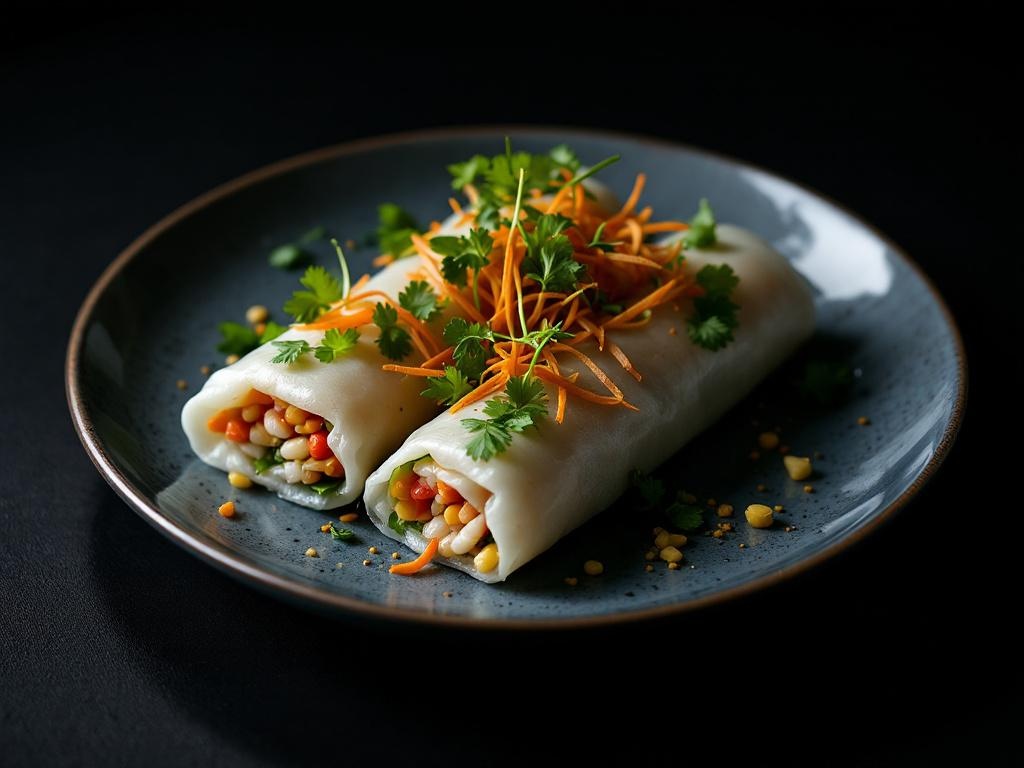
Goi Cuon (Vietnamese Spring Rolls — Tet Preparation)
One of 69 entries · Provenance 1000 — Seasonal
Vietnam; goi cuon (literally 'salad rolls') are a Southern Vietnamese tradition; their association with Tet is cultural rather than strictly traditional, as they represent freshness, sharing, and communal preparation.
Goi cuon — Vietnamese fresh spring rolls — are made throughout the year but are particularly associated with Tet and celebratory meals. Unlike the fried spring roll, goi cuon are assembled fresh at the table — rice paper wrappers softened in water, filled with shrimp, pork, rice vermicelli, lettuce, fresh herbs (mint, coriander, perilla), and cucumber, then rolled into a translucent cylinder that reveals the colourful filling through the wrapper. The preparation is simultaneously simple and technically precise: the rice paper must be softened just enough (too short and it cracks; too long and it tears), the filling must be arranged in the correct order and proportion (the shrimp along the transparent wrapper side for visual presentation), and the roll must be sealed tightly enough to hold its shape when cut. For Tet, the table preparation of goi cuon together is both a practical way to feed a crowd and a social ritual.
Rice paper softened in warm (not cold) water for 5–7 seconds — just until pliable but still firm; over-softened wrappers tear immediately Work on a damp surface — the wrapper sticks to dry surfaces; a damp tea towel or a damp cutting board is essential Layer filling from the bottom up: shrimp first (face down, toward the wrapper for visual effect), then lettuce, noodles, herbs — the order determines the visual presentation Roll tightly from the bottom, fold sides in, continue rolling — the tighter the roll, the better it holds when cut Assemble immediately before serving — goi cuon dry out and become chewy within 20 minutes of assembly The dipping sauce (nuoc cham — fish sauce, lime, sugar, garlic, chilli) is as important as the roll itself
Over-softened rice paper — tears immediately when trying to roll; remove from water while still slightly firm Working on a dry surface — wrappers stick and tear; always use a damp surface Over-filling — too much filling prevents proper rolling and the wrapper bursts at the seam Assembling too far ahead — the wrappers dry and become unpleasantly chewy; assemble at service Under-seasoned filling — the filling inside needs seasoning; a bland interior produces a dull roll regardless of the dipping sauce
Kitchen membership opens the full Library.
visual: Rice paper softens in warm water 5–7 seconds — still slightly firm, not limp. Damp surface prevents sticking. Shrimp…
Rice paper softens in warm water 5–7 seconds — still slightly firm, not limp. Over-softened wrappers tear immediately; under-softened ones crack. Assemble at service or…
- 8 sheets rice paper (bánh tráng nướng)
- 200g cooked shrimp (16/20 count), halved lengthwise
- 100g pork shoulder, cooked, sliced thin
13 ingredients · 8 steps
Common Questions
What are common mistakes when making Goi Cuon (Vietnamese Spring Rolls — Tet Preparation)?
Over-softened rice paper — tears immediately when trying to roll; remove from water while still slightly firm Working on a dry surface — wrappers stick and tear; always use a damp surface Over-filling — too much filling prevents proper rolling and the wrapper bursts at the seam Assembling too far ahead — the wrappers dry and become unpleasantly chewy; assemble at service Under-seasoned filling — the filling inside needs seasoning; a bland interior produces a dull roll regardless of the dipping sauce