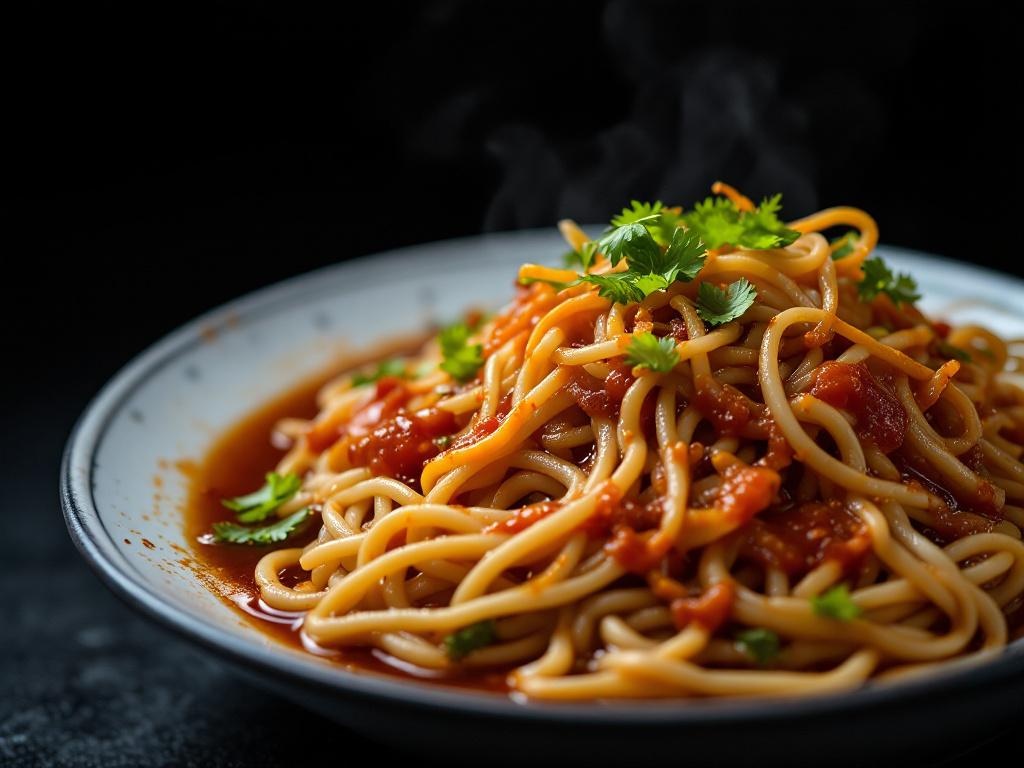
Naengmyeon
One of 20 entries · Provenance 1000 — Korean
Pyongyang (North Korea) and Hamhung (North Korea) — the two traditional regional styles. Mul naengmyeon (in broth) is the Pyongyang style; bibim naengmyeon (in gochujang sauce, no broth) is the Hamhung style. Both became national Korean dishes after the Korean War, when North Korean refugees brought the tradition South.
Naengmyeon (cold noodles) is Korea's summer dish — thin, chewy buckwheat and sweet potato noodles in an ice-cold, slightly tart beef broth, topped with half a hard-boiled egg, julienned cucumber, pear, and a slice of beef. The broth should be deeply flavoured, cold enough to have ice crystals, and slightly sour. The noodles have a unique springy, semi-translucent texture from the buckwheat. It is traditionally eaten in summer and after Korean BBQ.
- Japanese hiyashi chuka (cold ramen in sesame-soy sauce — the Japanese cold noodle equivalent); Chinese liangpi (cold wheat starch noodles in chilli-sesame sauce — the Northern Chinese cold noodle parallel); Vietnamese bun bo hue cold (cold rice noodle salad — the Vietnamese cold noodle version).
Traditionally eaten after Korean BBQ (the cold broth after the hot, fatty meat) or in the height of summer. Dongchimi (radish water kimchi) liquid is the traditional naengmyeon broth base in some preparations.
The naengmyeon noodles: dried buckwheat and sweet potato starch noodles — these specific noodles have an elastic, chewy, slightly translucent quality that regular noodles cannot replicate The broth (mul naengmyeon): chilled beef broth, seasoned with soy, sugar, rice vinegar, and mustard. The broth must be cold enough to have small ice crystals — serve with ice cubes if needed The tang: the sourness in naengmyeon comes from rice vinegar added to the chilled broth. The sour-sweet balance is the critical seasoning note Noodle cooking: boil the noodles for 3-4 minutes, then immediately transfer to ice water and rinse aggressively until the noodles are completely cold and separated Toppings: half hard-boiled egg, julienned cucumber, sliced Asian pear, sliced cold beef (from the broth), and a small amount of gochugaru Mustard and vinegar: served on the side for the diner to season further at the table
Warm broth: naengmyeon must be served in ice-cold broth — room temperature defeats the purpose of the dish Under-rinsing the noodles: the noodles continue cooking in their own heat unless shocked in ice water and rinsed immediately Over-vinegaring the broth before serving: the sour note should be present but the diner should add more to their taste at the table
Kitchen membership opens the full Library.
- 400g buckwheat noodles (naengmyeon) — dried
- 2 litres beef stock (dasima and beef bone base, chilled)
- 200g beef brisket — tcooked, thinly sliced
10 ingredients · 6 steps
Common Questions
Why does Naengmyeon taste the way it does?
Traditionally eaten after Korean BBQ (the cold broth after the hot, fatty meat) or in the height of summer. Dongchimi (radish water kimchi) liquid is the traditional naengmyeon broth base in some preparations.
What are common mistakes when making Naengmyeon?
Warm broth: naengmyeon must be served in ice-cold broth — room temperature defeats the purpose of the dish Under-rinsing the noodles: the noodles continue cooking in their own heat unless shocked in ice water and rinsed immediately Over-vinegaring the broth before serving: the sour note should be present but the diner should add more to their taste at the table
What dishes are similar to Naengmyeon?
Japanese hiyashi chuka (cold ramen in sesame-soy sauce — the Japanese cold noodle equivalent); Chinese liangpi (cold wheat starch noodles in chilli-sesame sauce — the Northern Chinese cold noodle parallel); Vietnamese bun bo hue cold (cold rice noodle salad — the Vietnamese cold noodle version).