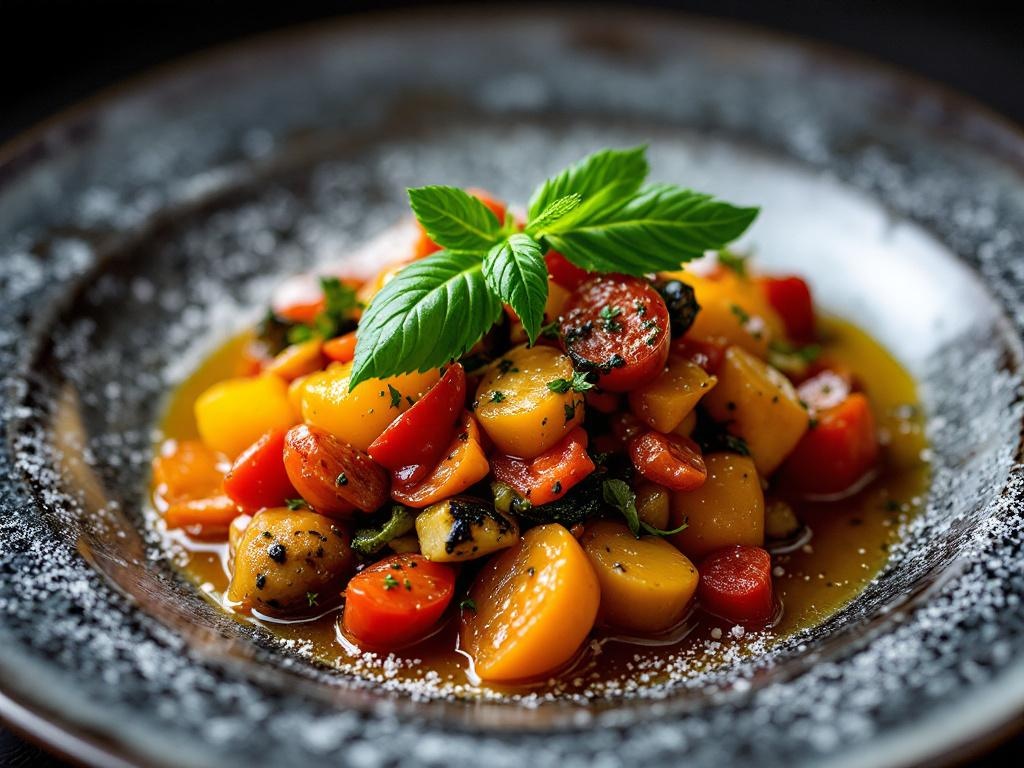
Ratatouille
One of 25 entries · Provenance 1000 — French
Provence, France. The name derives from the Provencal word ratatolha. The dish was originally a summer preparation by Provencal farmers using surplus garden vegetables — a cucina povera preparation elevated by the quality of Provencal olive oil and summer tomatoes.
Provencal ratatouille at its best is a sequence of individually cooked vegetables that are combined only at the end, each vegetable still holding its character. The stewed, grey, mushy version — all vegetables cooked together in one pot — is not ratatouille at its best. The confit byaldi version (roasted vegetable slices arranged in overlapping scales) is visually spectacular but a different dish. The definitive version is the Provencal summer preparation: tomato, zucchini, eggplant, capsicum, onion, each cooked separately in olive oil.
- Catalan samfaina (same vegetable combination in Catalonia — some argue this is the origin); Italian caponata (Sicilian cooked eggplant and vegetable dish in sweet-sour dressing — related concept); Turkish imambayildi (slow-cooked eggplant with tomato and onion — the Ottoman ancestor of the concept).
Rose from Provence — specifically a Bandol rose, the most serious rose wine in France, with enough structure and red-fruit depth to match the complexity of the individually cooked vegetables. Or a Cotes de Provence rose for a lighter option. Always Provencal.
-
Château d'Esclans
Château d'Esclans Garrus Côtes de Provence Rosé
regional
Château d'Esclans Garrus Côtes de Provence Rosé shares the Provence terroir that defined this technique's original context.(unverified)
-
Henri Bardouin
Henri Bardouin Pastis
regional
Henri Bardouin Pastis shares the Provence terroir that defined this technique's original context.(unverified)
-
Château Miraval
Château Miraval Côtes de Provence Rosé
regional
Château Miraval Côtes de Provence Rosé shares the Provence terroir that defined this technique's original context.(unverified)
-
Domaine Ott
Domaine Ott Clos Mireille Rose Cotes de Provence AOC
regional
Domaine Ott Clos Mireille Rose Cotes de Provence AOC shares the Cotes de Provence terroir that defined this technique's original context.(unverified)
-
Chateau d'Esclans Whispering Angel
Whispering Angel Rose Cotes de Provence AOC
regional
Whispering Angel Rose Cotes de Provence AOC shares the Cotes de Provence terroir that defined this technique's original context.(unverified)
-
Château d'Esclans
Château d'Esclans Whispering Angel Rosé
regional
Château d'Esclans Whispering Angel Rosé shares the Côtes de Provence AOC terroir that defined this technique's original context.(unverified)
-
Château d'Esclans
Château d'Esclans Rock Angel Rosé
regional
Château d'Esclans Rock Angel Rosé shares the Côtes de Provence AOC terroir that defined this technique's original context.(unverified)
-
Nicolas-Jay
Nicolas-Jay Kolpakowski Vineyard Pinot Noir McMinnville
regional
Nicolas-Jay Kolpakowski Vineyard Pinot Noir McMinnville expresses the pinot noir character central to this technique's original context, rendered through McMinnville terroir.(unverified)
Eggplant first: salt, press, and fry separately in 1cm of olive oil until deep golden — this step cannot be merged with other vegetables Capsicum (bell pepper): char directly over flame until blackened, then steam in a bag for 10 minutes and peel — this produces a sweet, smoky flavour and removes the tough skin Zucchini: pan-fry in rounds in olive oil until lightly golden on each side Tomatoes: San Marzano DOP, peeled and quartered (not canned — fresh, in-season tomatoes only), briefly cooked in olive oil with garlic Onions: slowly caramelised separately in olive oil Combine all components in the pan for the final 10 minutes with fresh thyme, basil, and more olive oil — the flavours marry without the vegetables losing their individual character
Cooking all vegetables together from the start: the result is a uniformly mushy stew rather than a composed dish of distinct-textured components Skipping the eggplant salting: the eggplant retains bitterness and excess moisture Using out-of-season tomatoes: the entire dish depends on peak-season tomatoes
Kitchen membership opens the full Library.
- 1 globe eggplant — 300g, cut into 2cm cubes
- 2 medium zucchini — 300g, cut into 2cm cubes
- 2 large red bell peppers — 350g, cut into 2cm cubes
13 ingredients · 8 steps
Common Questions
Why does Ratatouille taste the way it does?
Rose from Provence — specifically a Bandol rose, the most serious rose wine in France, with enough structure and red-fruit depth to match the complexity of the individually cooked vegetables. Or a Cotes de Provence rose for a lighter option. Always Provencal.
What are common mistakes when making Ratatouille?
Cooking all vegetables together from the start: the result is a uniformly mushy stew rather than a composed dish of distinct-textured components Skipping the eggplant salting: the eggplant retains bitterness and excess moisture Using out-of-season tomatoes: the entire dish depends on peak-season tomatoes
What dishes are similar to Ratatouille?
Catalan samfaina (same vegetable combination in Catalonia — some argue this is the origin); Italian caponata (Sicilian cooked eggplant and vegetable dish in sweet-sour dressing — related concept); Turkish imambayildi (slow-cooked eggplant with tomato and onion — the Ottoman ancestor of the concept).