Arancini
One of 70 entries · Provenance 1000 — Italian
Sicily. The Arab influence on Sicilian cooking is visible here — saffron-rice balls coated and fried mirror Arab ma'amoul and the tradition of rice coated in aromatic sauces that arrived with the Arab conquest of Sicily in the 9th century. The name means little oranges.
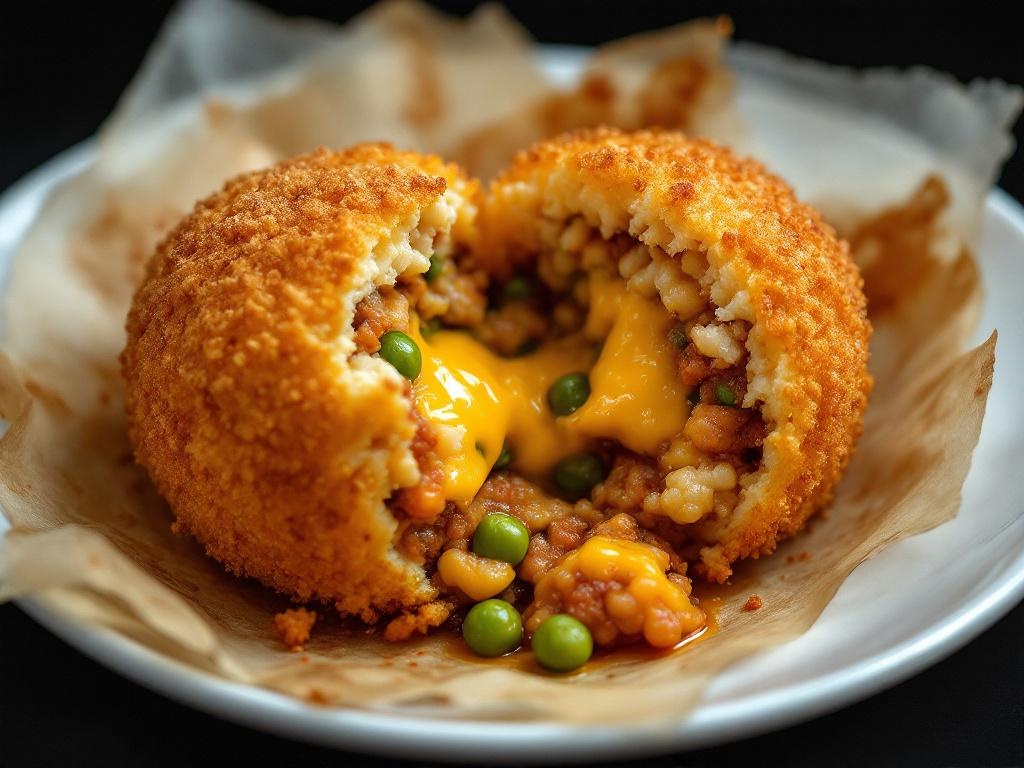
Arancini (Sicily) or arancine (Palermo) — breaded, fried rice balls with a molten core. The exterior should shatter at first bite: a deep amber shell of fine breadcrumbs. The interior should be bound, yielding risotto rice surrounding a core of ragu, peas, and melting caciocavallo or provola. The shape is a cone in Palermo (representing Mount Etna); a sphere in Messina. The disagreement is fundamental.
- Japanese onigiri (compressed rice ball — same concept of shaped rice as a vehicle, but raw rather than fried); Spanish croquetas (bechamel-filled, breaded, fried — same triple-crumb technique with a different filling); Middle Eastern kibbeh (cracked wheat shell with meat filling, deep-fried — structural parallel).
Cerasuolo di Vittoria DOCG from Sicily — Italy's only DOCG in Sicily, a blend of Nero d'Avola and Frappato producing a bright, cherry-red wine with enough structure to match the ragu filling and enough freshness to cut the fried exterior.
Risotto-style rice base: Vialone Nano or Carnaroli cooked with saffron-infused broth, finished with butter and Parmigiano — this is the same base as risotto, cooked to slightly firmer than al dente so it holds together when shaped Cool the rice completely before shaping — hot rice cannot be shaped and falls apart when crumbed The filling: beef and pork mince ragu with peas, braised to a thick, dry consistency — a wet ragu will make the arancini collapse during frying Provola or caciocavallo as the melting cheese in the core — mozzarella contains too much water and steams rather than melts to a pull Triple coating: rice ball, then flour, then beaten egg, then fine dried breadcrumbs. The flour ensures the egg adheres; the egg ensures the breadcrumb adheres Fry at 180C in deep neutral oil — the interior is already cooked, so the frying time is only enough to colour and crisp the exterior (4-5 minutes)
Wet ragu filling: causes arancini to crack and leak during frying Shaping warm rice: the rice must be fully chilled to compact properly Frying at too low a temperature: the arancini absorb oil rather than forming a crisp crust
Kitchen membership opens the full Library.
- 300 g Arborio rice — Carnaroli if available
- 750 ml chicken stock — homemade preferred, hot
- 80 ml dry white wine — Pinot Grigio
13 ingredients · 9 steps
Common Questions
Why does Arancini taste the way it does?
Cerasuolo di Vittoria DOCG from Sicily — Italy's only DOCG in Sicily, a blend of Nero d'Avola and Frappato producing a bright, cherry-red wine with enough structure to match the ragu filling and enough freshness to cut the fried exterior.
What are common mistakes when making Arancini?
Wet ragu filling: causes arancini to crack and leak during frying Shaping warm rice: the rice must be fully chilled to compact properly Frying at too low a temperature: the arancini absorb oil rather than forming a crisp crust
What dishes are similar to Arancini?
Japanese onigiri (compressed rice ball — same concept of shaped rice as a vehicle, but raw rather than fried); Spanish croquetas (bechamel-filled, breaded, fried — same triple-crumb technique with a different filling); Middle Eastern kibbeh (cracked wheat shell with meat filling, deep-fried — structural parallel).