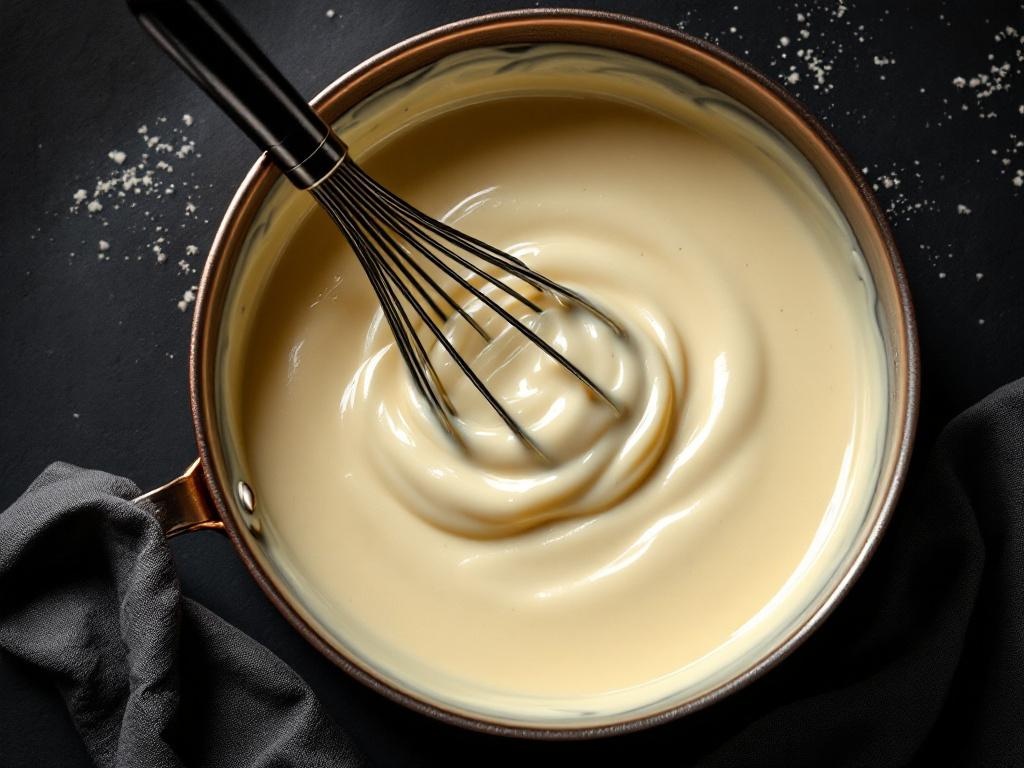
Bechamel Sauce
One of 25 entries · Provenance 1000 — French
France. Named after Louis de Bechamel, steward to Louis XIV, though versions of flour-thickened milk sauce appear in Italian Renaissance cookbooks (balsamella). The French codified it as one of the five mother sauces in Auguste Escoffier's Le Guide Culinaire (1903).
Bechamel is one of the five French mother sauces. It is flour-thickened milk — a roux cooked in equal weight butter and flour, then milk added gradually while whisking to prevent lumps. Correctly made bechamel is silky, smooth, and flavoured only with white onion, bay leaf, nutmeg, and a whisper of white pepper. It is the foundation of lasagna, moussaka, croque monsieur, and cauliflower gratin.
- Italian balsamella (the identical sauce, used in lasagna and baked pasta); Greek aspri saltsa (white sauce for moussaka — identical technique); The sauce's role as a binding agent in layered baked dishes is universal across European cuisines.
Bechamel is a building block, not a standalone dish — it is present in dishes that have their own pairing logic. For moussaka: Nemea Agiorgitiko. For lasagna: Chianti Classico. For croque monsieur: Chablis or a cold Alsatian Pinot Gris.
-
Domaine de la Romanée-Conti
DRC La Romanée-Conti Grand Cru
regional
DRC La Romanée-Conti Grand Cru expresses the pinot noir character central to this technique's original context, rendered through Vosne-Romanée terroir.(unverified)
-
Domaine de la Romanée-Conti
DRC La Tâche Grand Cru
regional
DRC La Tâche Grand Cru expresses the pinot noir character central to this technique's original context, rendered through Vosne-Romanée terroir.(unverified)
-
Marcel Lapierre
Marcel Lapierre Morgon
regional
Marcel Lapierre Morgon expresses the gamay character central to this technique's original context, rendered through Beaujolais terroir.(unverified)
-
Château du Moulin-à-Vent
Château du Moulin-à-Vent Rochegrès
regional
Château du Moulin-à-Vent Rochegrès expresses the gamay character central to this technique's original context, rendered through Moulin-à-Vent terroir.(unverified)
-
CheckMate Artisanal Winery
CheckMate Queen Taken Chardonnay
regional
CheckMate Queen Taken Chardonnay expresses the chardonnay character central to this technique's original context, rendered through Okanagan Valley terroir.(unverified)
-
Domaine Leflaive
Leflaive Le Montrachet Grand Cru
regional
Leflaive Le Montrachet Grand Cru expresses the chardonnay character central to this technique's original context, rendered through Puligny-Montrachet terroir.(unverified)
-
Quilceda Creek Vintners
Cabernet Sauvignon
regional
Cabernet Sauvignon expresses the cabernet sauvignon character central to this technique's original context, rendered through Red Mountain terroir.(unverified)
-
Leonetti Cellar
Cabernet Sauvignon
regional
Cabernet Sauvignon expresses the cabernet sauvignon character central to this technique's original context, rendered through Walla Walla Valley terroir.(unverified)
Equal weight butter and flour (60g each per litre of milk) — this ratio produces a medium bechamel. For a thicker bechamel (souffle, croquette), increase to 90g each Cook the roux over medium heat for 2 minutes after the flour and butter are combined — this eliminates the raw flour taste that is the most common fault in bechamel Add the milk gradually: the first 100ml is added to the hot roux and whisked vigorously to form a thick paste, then each subsequent addition is added gradually — this prevents lumps The milk must be warm (heated to 60C) before adding to the roux — cold milk creates lumps because it contracts the hot starch Infuse the milk: one small white onion studded with a clove and bay leaf, simmered in the milk for 10 minutes then removed — this is the classical French technique Season at the end: salt, white pepper (not black — black pepper creates visible specks in the white sauce), and freshly grated nutmeg
Not cooking the roux: the raw flour taste is irreversible once the sauce is assembled Adding cold milk: creates lumps that cannot always be whisked out Over-seasoning with nutmeg: the nutmeg should be a background note, not the dominant flavour
Kitchen membership opens the full Library.
- 40 g unsalted butter
- 40 g all-purpose flour
- 500 ml whole milk — warmed
6 ingredients · 8 steps
Common Questions
Why does Bechamel Sauce taste the way it does?
Bechamel is a building block, not a standalone dish — it is present in dishes that have their own pairing logic. For moussaka: Nemea Agiorgitiko. For lasagna: Chianti Classico. For croque monsieur: Chablis or a cold Alsatian Pinot Gris.
What are common mistakes when making Bechamel Sauce?
Not cooking the roux: the raw flour taste is irreversible once the sauce is assembled Adding cold milk: creates lumps that cannot always be whisked out Over-seasoning with nutmeg: the nutmeg should be a background note, not the dominant flavour
What dishes are similar to Bechamel Sauce?
Italian balsamella (the identical sauce, used in lasagna and baked pasta); Greek aspri saltsa (white sauce for moussaka — identical technique); The sauce's role as a binding agent in layered baked dishes is universal across European cuisines.