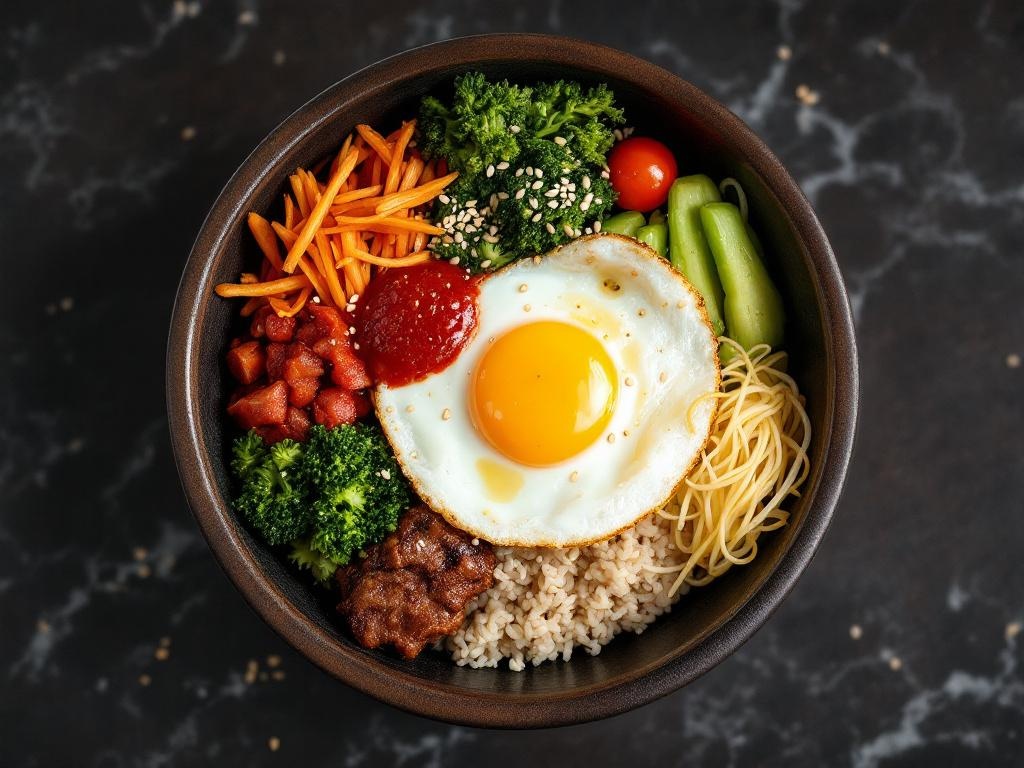
Bibimbap
One of 20 entries · Provenance 1000 — Korean
Korea. Bibimbap appears in Korean texts from the late Joseon period. The dish is believed to derive from the tradition of mixing leftover banchan (side dishes) into rice at the end of a meal. The Jeonju bibimbap (from North Jeolla Province) is considered the definitive version.
Bibimbap (mixed rice) is Korea's most internationally known dish — a bowl of warm short-grain rice topped with individually seasoned vegetables (namul), a fried egg, gochujang (fermented chilli paste), and sesame oil, all mixed together at the table. The components must be prepared separately; the mixing is what creates the dish. Dolsot bibimbap (in a hot stone pot) develops a crispy rice crust at the base — the most prized version.
- Japanese donburi (rice bowl with toppings — the same bowl format, different toppings and seasonings); Taiwanese lu rou fan (braised pork belly rice bowl — the Taiwanese bowl tradition); Hawaiian poke bowl (composed rice bowl — the contemporary American bowl derived from similar principles).
Sikhye (sweet rice punch) or barley tea (boricha) — the traditional Korean table beverages alongside bibimbap. Or a glass of Korean makgeolli (milky rice wine) for the evening version.
Short-grain Korean rice: cooked slightly firmer than usual — it will soften when mixed with the warm toppings The namul (seasoned vegetables): each vegetable prepared and seasoned separately. Standard selection: spinach (blanched and seasoned with sesame oil, garlic, soy), bean sprouts (blanched with sesame oil and salt), julienned carrots (sautéed briefly), zucchini (sautéed with garlic and sesame), mushrooms (shiitake or oyster, sautéed with soy) The egg: for dolsot — cracked directly onto the rice in the hot stone pot and the lid closed briefly. For regular bibimbap — fried sunny-side up Gochujang: the fermented chilli paste is the binding sauce — mixed into the bowl along with sesame oil just before eating. The ratio is personal but start with 1 tablespoon per bowl Sesame oil: drizzled over everything at the last moment — the aroma is a defining characteristic Dolsot technique: lightly oil the stone pot, add a layer of rice, place toppings, then heat over medium-high until the rice sizzles and a crust forms at the base
Pre-mixing before serving: the visual presentation of the unmixed bowl is part of the experience — it arrives unmixed and is mixed at the table Skipping individual vegetable seasoning: vegetables thrown in together produce a confused flavour — each namul has its own seasoning Cold stone pot for dolsot: the pot must be heated before adding the rice or no crust forms
Kitchen membership opens the full Library.
- 200 g short-grain sushi rice
- 240 ml water
- 15 ml rice vinegar
19 ingredients · 7 steps
Common Questions
Why does Bibimbap taste the way it does?
Sikhye (sweet rice punch) or barley tea (boricha) — the traditional Korean table beverages alongside bibimbap. Or a glass of Korean makgeolli (milky rice wine) for the evening version.
What are common mistakes when making Bibimbap?
Pre-mixing before serving: the visual presentation of the unmixed bowl is part of the experience — it arrives unmixed and is mixed at the table Skipping individual vegetable seasoning: vegetables thrown in together produce a confused flavour — each namul has its own seasoning Cold stone pot for dolsot: the pot must be heated before adding the rice or no crust forms
What dishes are similar to Bibimbap?
Japanese donburi (rice bowl with toppings — the same bowl format, different toppings and seasonings); Taiwanese lu rou fan (braised pork belly rice bowl — the Taiwanese bowl tradition); Hawaiian poke bowl (composed rice bowl — the contemporary American bowl derived from similar principles).