Bruschetta
One of 70 entries · Provenance 1000 — Italian
Central Italy (Tuscany, Umbria, Lazio). The name derives from bruscare — to toast over coals. Historically the dish was a way to taste a new olive oil harvest — the toast was the vehicle for the oil, with tomato and garlic as secondary flavourings.
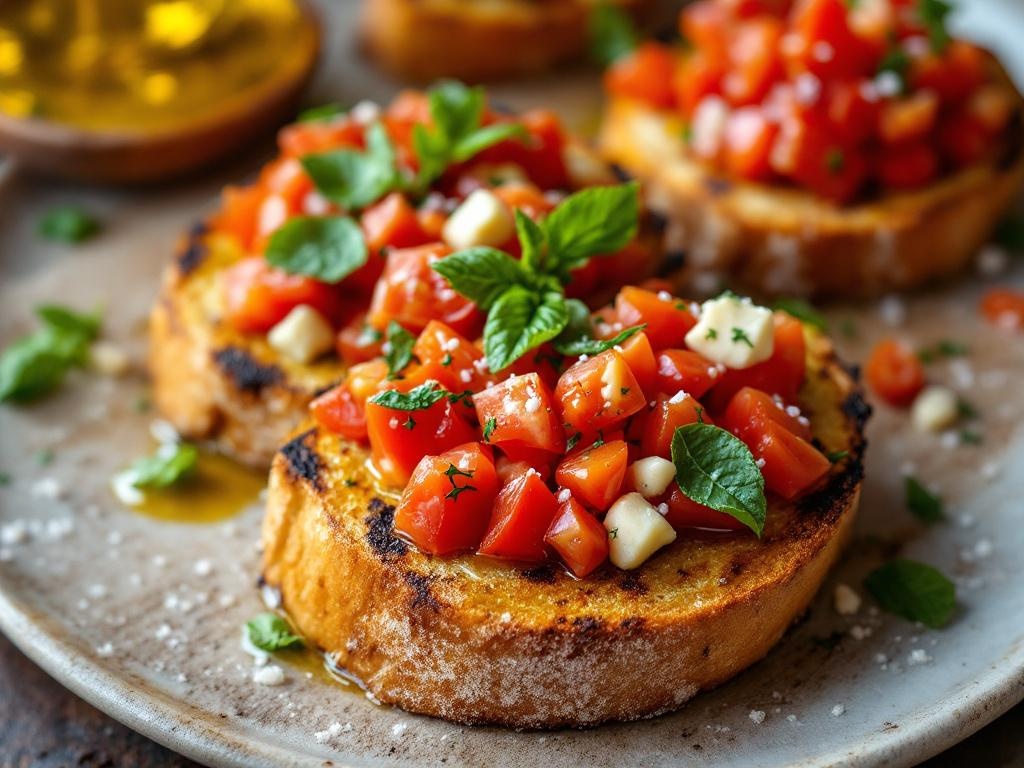
Bruschetta is toasted bread rubbed with raw garlic, drenched in your best extra virgin olive oil, and finished with ripe tomatoes. The bread is everything — a wide-crumbed, substantial loaf like pane di Altamura or a Tuscan salt-free pane sciocco. The tomatoes should be in peak season. The olive oil should be peppery, green, and freshly pressed if possible. This is not a canape — it is a meal when done correctly.
- Spanish pan con tomate (bread rubbed with tomato and olive oil — simpler and arguably the origin; Catalonian tradition with the same logic); Greek dakos (dried barley rusk soaked with tomato and topped with feta — same concept in a drier climate); Moroccan khobz with chermoula (grilled bread with herb-based oil).
Vermentino from Tuscany (Bolgheri) or Sardinia — the dry, herb-edged acidity matches the tomato and olive oil. Or a simple Trebbiano d'Abruzzo as the summer aperitivo companion. The simplicity of the dish demands a simple wine.
Bread: a substantial, open-crumbed loaf toasted directly over flame or under the grill until deeply charred in spots — the char is intentional, contributing bitterness that balances the sweet tomato The garlic rub: cut a raw clove in half, rub cut-side down over the hot toast surface while it is still warm. One clove per slice. The abrasive toast surface grates the garlic into the bread — not a smear, a scent Olive oil quality: use the finest cold-pressed extra virgin olive oil available — this is a dish where oil quality is immediately detectable. The oil should be peppery and green, not flat and buttery Tomatoes: San Marzano, Datterini, or high-summer Costoluto Fiorentino — seeded and roughly diced, seasoned with sea salt 10 minutes before serving to draw out juice, dressed with olive oil and torn basil Season the tomatoes separately: salt, oil, and basil on the tomatoes, then spoon onto the bread at the last moment — pre-assembled bruschetta soaks through and becomes soggy
Soft bread: bruschetta requires structural integrity — soft bread collapses under the tomato juice Pre-assembling too early: the tomato liquid soaks the toast within 2 minutes — assemble only at the moment of serving Poor olive oil: this is one of very few dishes where inferior oil cannot be hidden
Kitchen membership opens the full Library.
- 8 slices sourdough bread — 1 cm thick
- 80 ml extra virgin olive oil — first cold-pressed
- 4 cloves garlic — whole
8 ingredients · 7 steps
Common Questions
Why does Bruschetta taste the way it does?
Vermentino from Tuscany (Bolgheri) or Sardinia — the dry, herb-edged acidity matches the tomato and olive oil. Or a simple Trebbiano d'Abruzzo as the summer aperitivo companion. The simplicity of the dish demands a simple wine.
What are common mistakes when making Bruschetta?
Soft bread: bruschetta requires structural integrity — soft bread collapses under the tomato juice Pre-assembling too early: the tomato liquid soaks the toast within 2 minutes — assemble only at the moment of serving Poor olive oil: this is one of very few dishes where inferior oil cannot be hidden
What dishes are similar to Bruschetta?
Spanish pan con tomate (bread rubbed with tomato and olive oil — simpler and arguably the origin; Catalonian tradition with the same logic); Greek dakos (dried barley rusk soaked with tomato and topped with feta — same concept in a drier climate); Moroccan khobz with chermoula (grilled bread with herb-based oil).