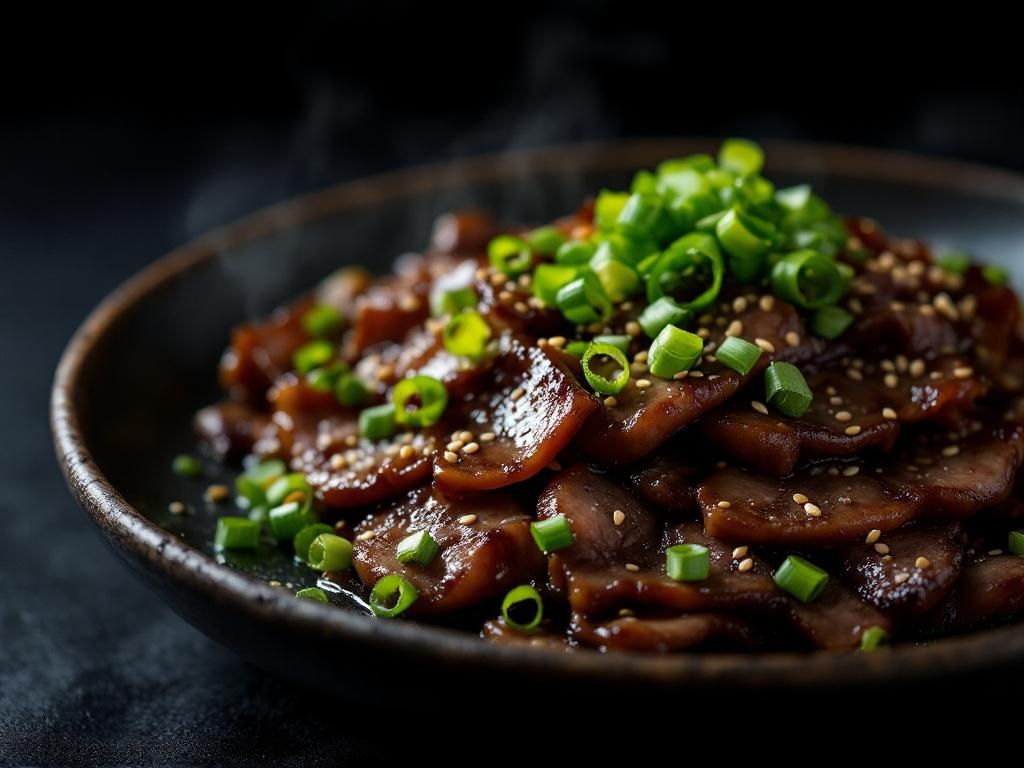
Bulgogi
One of 20 entries · Provenance 1000 — Korean
Korea. Bulgogi is documented in Korean texts from the Goguryeo period (37 BCE – 668 CE), originally as maekjeok (grilled skewered meat). The modern bulgogi with soy-based marinade developed in the Joseon Dynasty period. It became South Korea's most internationally recognised dish through the Korean diaspora.
Bulgogi (fire meat) is thinly sliced beef — rib-eye or sirloin — marinated in soy sauce, pear, sesame oil, garlic, and sugar, then quickly grilled or pan-cooked over high heat. The pear (or Asian pear) contains enzymes that tenderise the beef and add a natural sweetness. The result should be tender, juicy, caramelised at the edges, and sweet-savoury. It is the most accessible of Korean barbecue preparations.
- Japanese yakiniku (grilled meat — the Japanese version, influenced by Korean barbecue tradition); Mongolian barbecue (grilled meat with sweet-savoury sauces — the Central Asian ancestor); Vietnamese bo nuong (grilled beef with lemongrass — the Vietnamese grilled beef parallel).
Doenjang jjigae (fermented soybean soup) and a bottle of Jinro soju — the standard Korean restaurant combination. Or ssam (lettuce wraps) with cold Korean lager.
Beef rib-eye or sirloin: partially frozen, then sliced to 2-3mm thickness against the grain — thin slicing is essential for the quick-cook technique The marinade: soy sauce, Asian pear (grated — the proteolytic enzymes tenderise the beef), sesame oil, garlic, ginger, sugar, and black pepper. Marinate for minimum 30 minutes, ideally 4 hours The pear: grated Asian pear (or Korean pear) releases juice that both tenderises and sweetens — it is not optional High heat: the beef must hit a screaming hot surface — a cast iron skillet or grill. The thin slices cook in 1-2 minutes total Do not crowd: cook in small batches. The moisture from the marinade steams the beef if the pan is crowded Serve with ssam (lettuce wraps): whole butter lettuce leaves, with ssamjang (fermented soybean and chilli paste), sliced garlic, and kimchi for wrapping
Thick slices: bulgogi that is not thinly sliced cannot caramelise at the edges before over-cooking in the centre Crowding the pan: the marinade releases steam, the beef turns grey rather than caramelising Skipping the pear: the enzymatic tenderisation is what gives bulgogi its characteristic tender, silky texture
Kitchen membership opens the full Library.
- 800 g beef ribeye or sirloin, thinly sliced against grain (3 mm)
- 60 ml soy sauce
- 30 ml mirin
13 ingredients · 7 steps
Common Questions
Why does Bulgogi taste the way it does?
Doenjang jjigae (fermented soybean soup) and a bottle of Jinro soju — the standard Korean restaurant combination. Or ssam (lettuce wraps) with cold Korean lager.
What are common mistakes when making Bulgogi?
Thick slices: bulgogi that is not thinly sliced cannot caramelise at the edges before over-cooking in the centre Crowding the pan: the marinade releases steam, the beef turns grey rather than caramelising Skipping the pear: the enzymatic tenderisation is what gives bulgogi its characteristic tender, silky texture
What dishes are similar to Bulgogi?
Japanese yakiniku (grilled meat — the Japanese version, influenced by Korean barbecue tradition); Mongolian barbecue (grilled meat with sweet-savoury sauces — the Central Asian ancestor); Vietnamese bo nuong (grilled beef with lemongrass — the Vietnamese grilled beef parallel).