Carnitas
One of 59 entries · Provenance 1000 — Mexican
Michoacan, Mexico. Carnitas is the pride of Michoacan cuisine — the state is named after the copper cooking vessels traditionally used to make carnitas in enormous batches. At a proper carnitas stand, the pork is displayed in trays by cut — lonja (loin), maciza (shoulder), cueritos (skin), buche (stomach) — and the customer selects.
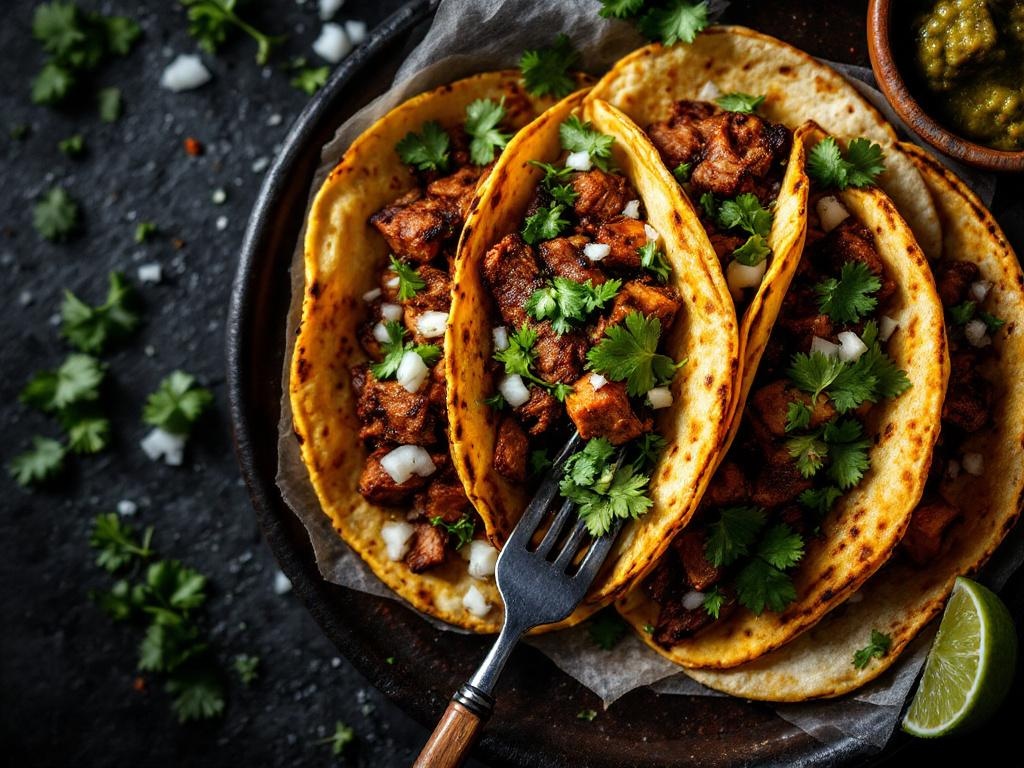
Carnitas (little meats) are pork shoulder or butt cooked slowly in pork lard until completely yielding, then crisped in their own fat. The Michoacan tradition — the defining regional style — uses citrus (orange and lime), garlic, and milk. The texture is simultaneously crisp on the exterior and yielding within. Served in corn tortillas with salsa verde, diced onion, coriander, and lime.
- French confit de canard (same slow-cook-in-fat technique applied to duck); Chinese dong po rou (slow-braised pork belly — the Chinese long-cooked pork parallel); Puerto Rican pernil (slow-roasted pork shoulder with adobo — the Caribbean version).
Modelo Especial or a fresh lime and salt michelada — the bright Mexican lager and the crispy, fatty pork are natural companions. Or a mezcal joven with a squeeze of lime.
Pork butt (bone-in): the fat renders during the slow cook and becomes the cooking medium. Leaner cuts will not produce the same result Michoacan method: submerge the pork in lard, cook at 160-170C for 3-4 hours until the pork is completely yielding and a fork enters without resistance Aromatics in the lard: orange segments, lime peel, garlic, bay leaf, and a cup of whole milk (the milk proteins brown during cooking and contribute depth) The crisp: increase heat to 185-190C for the final 20-30 minutes, basting frequently. The exterior should develop deep golden, crispy patches Pull, not chop: break the cooked pork into irregular chunks with two forks — the varying sizes create texture contrast Season immediately after pulling: the hot, just-pulled pork absorbs seasoning differently than cooled pork
Using lean cuts: the fat is essential for both the flavour and the final crisping Not reaching full tenderness before crisping: the pork must be completely yielding before the temperature is increased Over-chopping: fine-chopped carnitas lose the textural contrast of small crispy pieces against larger yielding chunks
Kitchen membership opens the full Library.
- 1.2 kg pork shoulder, skin-on, cut into 8 cm chunks
- 10 g sea salt
- 5 g black pepper, freshly ground
12 ingredients · 8 steps
Common Questions
Why does Carnitas taste the way it does?
Modelo Especial or a fresh lime and salt michelada — the bright Mexican lager and the crispy, fatty pork are natural companions. Or a mezcal joven with a squeeze of lime.
What are common mistakes when making Carnitas?
Using lean cuts: the fat is essential for both the flavour and the final crisping Not reaching full tenderness before crisping: the pork must be completely yielding before the temperature is increased Over-chopping: fine-chopped carnitas lose the textural contrast of small crispy pieces against larger yielding chunks
What dishes are similar to Carnitas?
French confit de canard (same slow-cook-in-fat technique applied to duck); Chinese dong po rou (slow-braised pork belly — the Chinese long-cooked pork parallel); Puerto Rican pernil (slow-roasted pork shoulder with adobo — the Caribbean version).