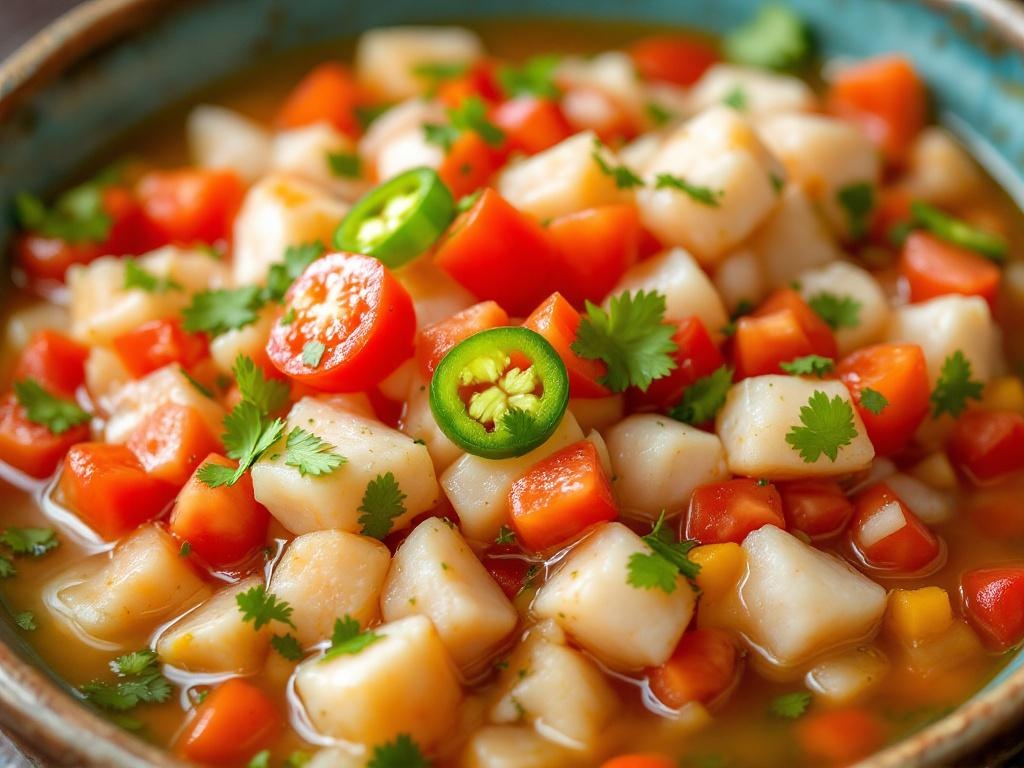
Ceviche
One of 59 entries · Provenance 1000 — Mexican
Pacific coast of Mexico (Sinaloa, Nayarit, Jalisco). Mexican ceviche is distinct from Peruvian ceviche — the Mexican version is more vegetable-forward and less acidic, typically using tomato which the Peruvian version does not. Both traditions derive from pre-Columbian fish preservation techniques using local acid fruits.
Mexican ceviche differs from Peruvian leche de tigre ceviche — the Mexican version uses tomato, coriander, onion, and jalapeño alongside the lime-'cured' fish, producing a fresher, lighter, more herb-forward result. The acid 'cooks' the proteins in the fish without heat, denaturing them to a firm, opaque texture. The ceviche should be eaten within 30 minutes of preparation — beyond that, the fish becomes rubbery from over-acidification.
- Peruvian ceviche (the cousin — more intense lime, leche de tigre as a beverage, less tomato); Filipino kinilaw (raw fish in coconut vinegar and ginger — the Southeast Asian acid-cured fish parallel); Tahitian poisson cru (raw fish in coconut milk and lime — the Pacific Islands version).
Michelada or cold Pacifico Clara — the Mexican Pacific coast ceviche experience. The salty, beer-based Michelada mirrors the saline quality of the cured fish. Or fresh coconut water for the non-alcoholic pairing.
White fish: sea bass (corvina), snapper, or halibut — firm, fresh, skinless fillets cut into 1.5cm cubes Fresh lime juice: squeezed to order — the acid from bottled lime juice is different and produces an inferior result. Enough juice to fully submerge the fish cubes The cure: fish in lime juice for 15-20 minutes, turning once — at 15 minutes the exterior is opaque and firm; the interior has a slight translucency (the Mexican preference). For full cook-through, 30 minutes The dressing: finely diced white onion, seeded jalapeño (minced), ripe tomato (seeded and diced), fresh coriander — added after the fish has cured Season at the end: the lime juice is salty from the sea proteins leaching out — taste before adding any additional salt Tostadas: the ceviche is served on tostadas (flat-fried corn tortillas) at the table, or with tortilla chips and hot sauce
Over-curing: more than 30 minutes makes the fish rubbery — there is a narrow window of perfection Using frozen fish: fresh fish has different texture and the cure behaves differently on previously frozen protein Adding tomato and coriander during the cure: they become acidified and lose their freshness — add only after the fish has cured
Kitchen membership opens the full Library.
- 600g firm white fish — sea bass or halibut, cut into 2cm cubes
- 150ml fresh lime juice — Peruvian or Mexican limes
- 100ml fresh orange juice
13 ingredients · 9 steps
Common Questions
Why does Ceviche taste the way it does?
Michelada or cold Pacifico Clara — the Mexican Pacific coast ceviche experience. The salty, beer-based Michelada mirrors the saline quality of the cured fish. Or fresh coconut water for the non-alcoholic pairing.
What are common mistakes when making Ceviche?
Over-curing: more than 30 minutes makes the fish rubbery — there is a narrow window of perfection Using frozen fish: fresh fish has different texture and the cure behaves differently on previously frozen protein Adding tomato and coriander during the cure: they become acidified and lose their freshness — add only after the fish has cured
What dishes are similar to Ceviche?
Peruvian ceviche (the cousin — more intense lime, leche de tigre as a beverage, less tomato); Filipino kinilaw (raw fish in coconut vinegar and ginger — the Southeast Asian acid-cured fish parallel); Tahitian poisson cru (raw fish in coconut milk and lime — the Pacific Islands version).