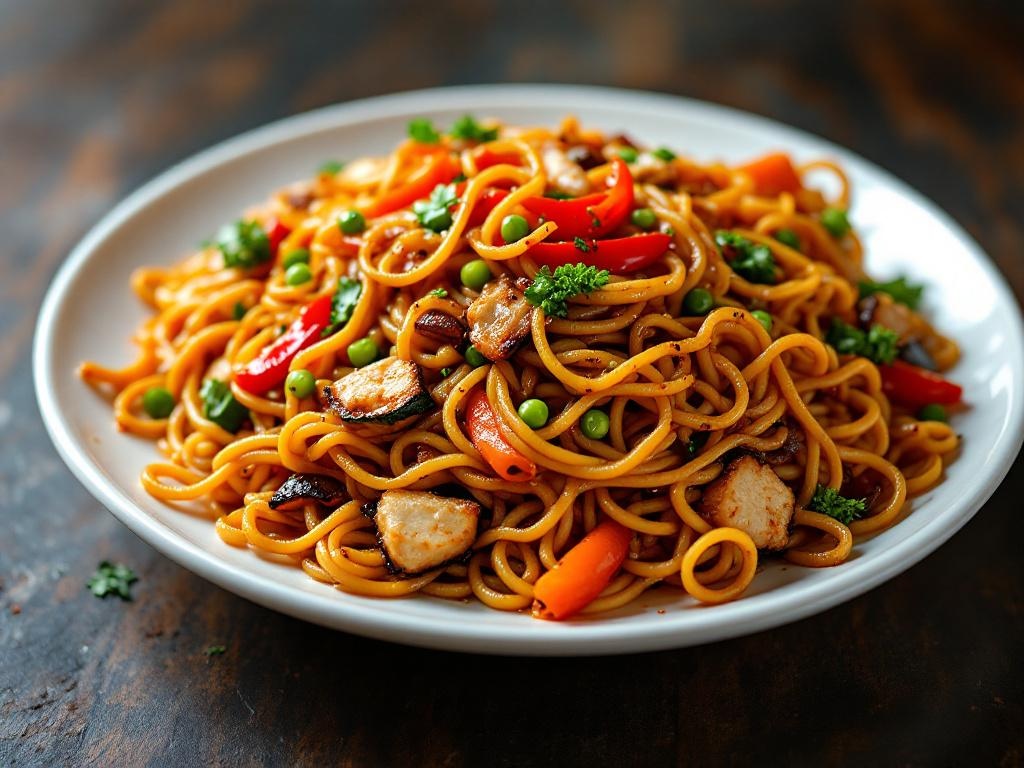
Chow Mein
China, Cantonese cooking tradition. The term chow mein entered English through Cantonese immigrants in California in the 19th century. The American version (soft noodles with vegetables) diverges significantly from the Chinese original.
Chow mein (chao mian — stir-fried noodles) is egg noodles stir-fried at high heat with vegetables, protein, and a simple soy-oyster sauce. The noodles should have char in places; the vegetables should retain crunch. Cantonese crispy chow mein (the noodles fried until a crispy patty, then topped with sauced protein) is the elevated version.
Tsingtao lager. This is a casual, everyday dish — the wine list is not relevant.
{"Hong Kong-style egg noodles (thin, fresh): blanched 2 minutes, then rinsed with cold water and dried on a cloth","Wok at maximum heat: the noodles must char on contact with the wok","The sauce: oyster sauce, light soy, dark soy, sesame oil, and a small amount of sugar — pre-mixed","Bean sprouts and Chinese chives added last: they wilt in 30 seconds and should retain some crunch","For the crispy version: par-cooked noodles spread in a lightly oiled wok, pressed flat, and cooked undisturbed at medium heat for 5 minutes until the base is golden — then flipped"}
RECIPE: Serves: 4 | Prep: 25 min | Total: 30 min --- 400 g Chinese egg noodles (lo mein), fresh or day-old 60 ml vegetable oil, divided 300 g protein (shrimp, chicken breast, or pork), cut into 1 cm pieces 200 g Napa cabbage, cut into 2 cm pieces 150 g carrots, julienned 100 g shiitake mushrooms, sliced 4 garlic cloves, minced 15 g fresh ginger, minced 3 scallions, white and green parts separated, cut into 3 cm lengths 60 ml soy sauce 30 ml oyster sauce 15 ml sesame oil 120 ml chicken stock 10 g Tellicherry black pepper, freshly ground 15 g cornstarch, slurried with 30 ml water --- 1. Blanch noodles in boiling salted water for 2 minutes (if fresh) or 4 minutes (if day-old); drain and toss with 10 ml vegetable oil to prevent sticking. 2. Heat 30 ml oil in a wok over high heat until smoking; stir-fry protein for 2 minutes until nearly cooked, then push to the side. 3. Add garlic and ginger to empty space, stir-fry for 30 seconds until fragrant; toss with protein. 4. Add cabbage, carrots, mushrooms, and white scallion parts; stir-fry for 2 minutes until vegetables are just tender-crisp. 5. Push all ingredients to the side, add remaining 20 ml oil to center, then add noodles and toss constantly for 2 minutes until heated through. 6. Whisk together soy sauce, oyster sauce, sesame oil, stock, and black pepper; pour over noodles and toss to coat evenly. 7. Add cornstarch slurry and toss constantly for 1 minute until sauce thickens and coats noodles. 8. Fold in green scallion parts off heat; serve immediately in a warm serving bowl. The moment where chow mein lives or dies is the char — specifically the noodle surface contact with the hot wok. Press the noodles flat, resist tossing for 20 seconds, then toss. Repeat. Each press-and-rest cycle develops char on a different surface.
{"Wet noodles: excess water on the noodles prevents charring and produces a steamed result","Over-crowding the wok: the temperature drops and the noodles steam","Too much sauce: the noodles should be coated, not swimming"}
Common Questions
Why does Chow Mein taste the way it does?
Tsingtao lager. This is a casual, everyday dish — the wine list is not relevant.
What are common mistakes when making Chow Mein?
{"Wet noodles: excess water on the noodles prevents charring and produces a steamed result","Over-crowding the wok: the temperature drops and the noodles steam","Too much sauce: the noodles should be coated, not swimming"}
What dishes are similar to Chow Mein?
Pad See Ew (flat rice noodles, same char technique — the Thai parallel); Japanese yakisoba (stir-fried wheat noodles — the Japanese version); Singapore noodles (thin rice vermicelli with curry powder — a related stir-fried noodle tradition).