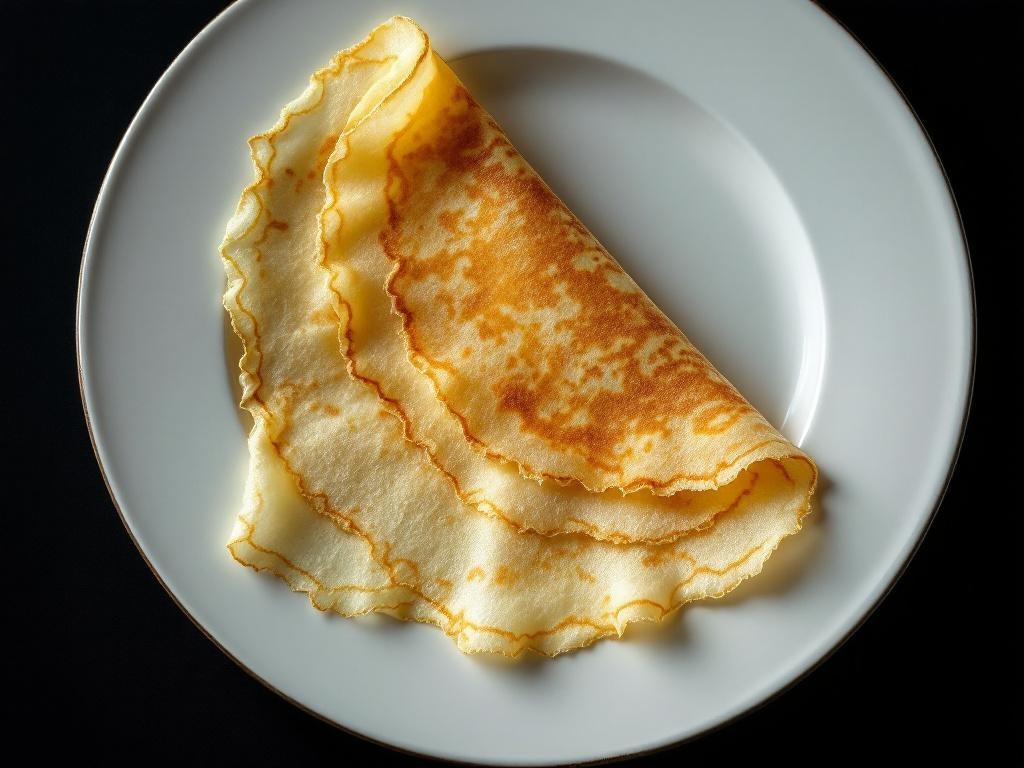
Crepes
One of 25 entries · Provenance 1000 — French
Brittany, France (Bretagne). Crepes and galettes (the buckwheat version) are the traditional food of Brittany, where buckwheat was the primary grain. Crepe Suzette (orange-buttered, flambeed crepe) is a Parisian restaurant tradition from the Belle Epoque.
A crepe is the thinnest possible pancake — the batter almost water-thin, the pan screaming hot, the result a translucent lace of egg and flour that takes 60 seconds to cook. The discipline is in the rest — the batter must rest for at least 30 minutes before cooking, which allows the gluten to relax and the flour to fully hydrate, producing a more pliable, less rubbery crepe.
- Hungarian palacsintas (identical technique, usually filled with jam and sour cream); Indian dosa (fermented rice and lentil batter crepe — the same thin, hot-pan technique in a different ingredient tradition); Ethiopian injera (fermented teff batter flatbread — the thin, porous logic of a barely-set batter).
Breton hard cider (cidre bouche) for the Breton galette experience — the apple ferment and light tanin of dry Breton cider cuts through the richness of cheese and ham. For sweet crepes: Muscat de Beaumes-de-Venise with a touch of honey and orange zest.
-
Domaine de la Romanée-Conti
DRC La Romanée-Conti Grand Cru
regional
DRC La Romanée-Conti Grand Cru expresses the pinot noir character central to this technique's original context, rendered through Vosne-Romanée terroir.(unverified)
-
Domaine de la Romanée-Conti
DRC La Tâche Grand Cru
regional
DRC La Tâche Grand Cru expresses the pinot noir character central to this technique's original context, rendered through Vosne-Romanée terroir.(unverified)
-
Marcel Lapierre
Marcel Lapierre Morgon
regional
Marcel Lapierre Morgon expresses the gamay character central to this technique's original context, rendered through Beaujolais terroir.(unverified)
-
Château du Moulin-à-Vent
Château du Moulin-à-Vent Rochegrès
regional
Château du Moulin-à-Vent Rochegrès expresses the gamay character central to this technique's original context, rendered through Moulin-à-Vent terroir.(unverified)
-
CheckMate Artisanal Winery
CheckMate Queen Taken Chardonnay
regional
CheckMate Queen Taken Chardonnay expresses the chardonnay character central to this technique's original context, rendered through Okanagan Valley terroir.(unverified)
-
Domaine Leflaive
Leflaive Le Montrachet Grand Cru
regional
Leflaive Le Montrachet Grand Cru expresses the chardonnay character central to this technique's original context, rendered through Puligny-Montrachet terroir.(unverified)
-
Quilceda Creek Vintners
Cabernet Sauvignon
regional
Cabernet Sauvignon expresses the cabernet sauvignon character central to this technique's original context, rendered through Red Mountain terroir.(unverified)
-
Leonetti Cellar
Cabernet Sauvignon
regional
Cabernet Sauvignon expresses the cabernet sauvignon character central to this technique's original context, rendered through Walla Walla Valley terroir.(unverified)
Batter: 125g plain flour, 3 eggs, 300ml whole milk, 15g melted butter, pinch of salt — whisked smooth, then strained, then rested at room temperature for 30 minutes minimum Pan: a seasoned crepe pan or non-stick frying pan, preheated over medium-high heat until a drop of batter sizzles and sets immediately on contact Butter in the pan between crepes — just enough to coat the surface, wiped out with a paper towel between each crepe Ladle volume: exactly enough batter to coat the base in one thin layer — typically 50-60ml for a 24cm pan. Too little and there are holes; too much and the crepe is thick The tilt-and-swirl: pour the batter with the pan tilted at 45 degrees and swirl immediately in one fluid motion to coat the base evenly before the batter sets Cook until the edges are golden and lifting, then flip once (30 seconds on the second side) — do not press, do not over-cook
Skipping the rest: rested batter produces noticeably more pliable, smooth crepes Too thick: a ladleful rather than a minimal coating produces a pancake, not a crepe Cooking on too-low heat: the batter spreads too slowly, the crepe is thick and pale
Kitchen membership opens the full Library.
- 250 ml whole milk
- 125 ml water
- 100 g all-purpose flour
8 ingredients · 9 steps
Common Questions
Why does Crepes taste the way it does?
Breton hard cider (cidre bouche) for the Breton galette experience — the apple ferment and light tanin of dry Breton cider cuts through the richness of cheese and ham. For sweet crepes: Muscat de Beaumes-de-Venise with a touch of honey and orange zest.
What are common mistakes when making Crepes?
Skipping the rest: rested batter produces noticeably more pliable, smooth crepes Too thick: a ladleful rather than a minimal coating produces a pancake, not a crepe Cooking on too-low heat: the batter spreads too slowly, the crepe is thick and pale
What dishes are similar to Crepes?
Hungarian palacsintas (identical technique, usually filled with jam and sour cream); Indian dosa (fermented rice and lentil batter crepe — the same thin, hot-pan technique in a different ingredient tradition); Ethiopian injera (fermented teff batter flatbread — the thin, porous logic of a barely-set batter).