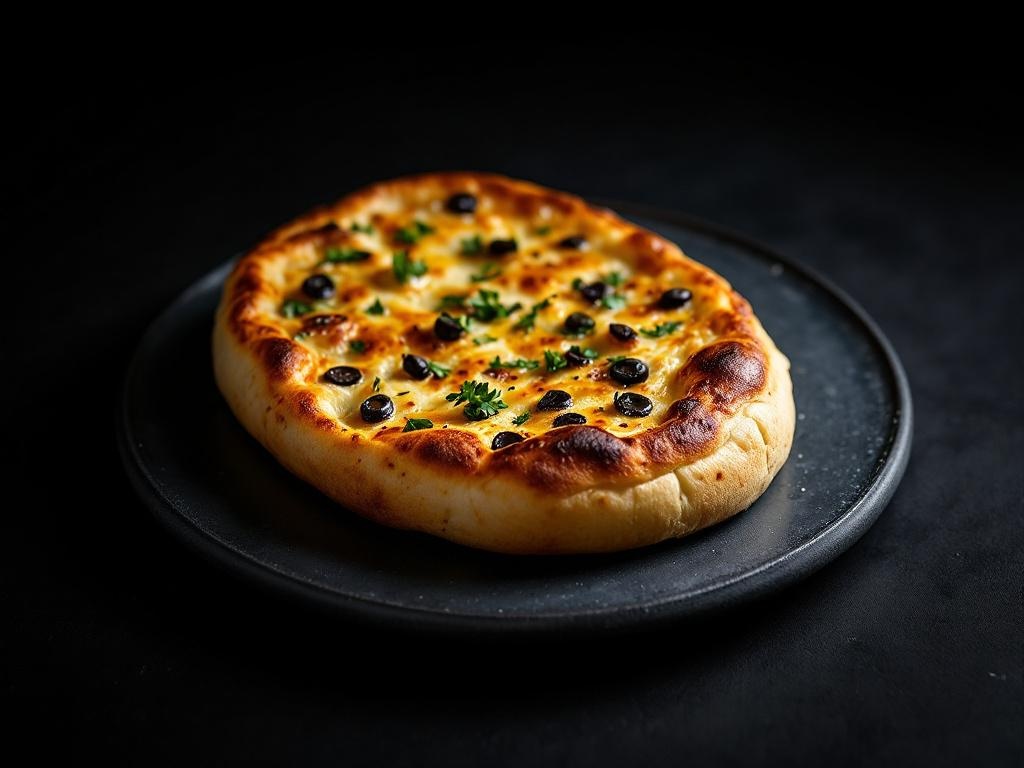
Focaccia
One of 70 entries · Provenance 1000 — Italian
Genoa, Liguria. Focaccia Genovese (fugassa in Ligurian dialect) is protected by Genoese authorities as a traditional preparation. Ligurian bakers sell it warm from the oven as breakfast, with or without mortadella, or simply plain.
Focaccia Genovese: a thick, olive oil-drenched flatbread with a blistered, golden top, an open crumb, and a base that is simultaneously crisp and yielding. The key is a high-hydration dough (80%), a long cold ferment, and enough olive oil in the pan that the base fries rather than bakes. The dimples are made not to hold oil but to prevent the top from blistering unevenly during baking.
- Turkish borek base dough (high-fat, layered flatbread with olive oil); Middle Eastern man'ouche (flatbread baked with olive oil and za'atar — same olive-oil-drenched philosophy); Greek lagana (the flatbread of Clean Monday, olive oil-rich and dimpled).
Vermentino from Liguria eaten warm from the oven at 10am in Genoa is the authentic experience. For a meal focaccia: Pigato from Albenga, the most mineral of Ligurian whites, alongside focaccia with olives and rosemary.
High hydration (80%): the wet dough creates a very open, airy crumb — the dough is too wet to knead conventionally and should be worked by stretch-and-fold 48-hour cold ferment: as with pizza, time builds flavour compounds and extensibility that a same-day dough lacks Generous olive oil in the pan: the pan should have 4 tablespoons of olive oil before the dough goes in — the base literally fries in this oil during baking Stretch gently into the oiled pan and leave to relax for 45 minutes before dimpling — fighting the dough tears it; the rest allows the gluten to relax Dimple with oiled fingers pressing all the way to the pan base — the dimples create uniform blistering and provide channels for the brine to pool Brine: 50ml warm water, 50ml olive oil, 1 teaspoon salt — pour over the dimpled surface immediately before baking at 230C for 20-25 minutes
Under-oiling the pan: insufficient oil produces a focaccia that bakes rather than fries — the base will not have the crisp-yielding contrast Not allowing sufficient proof time in the pan: the focaccia should be visibly puffy and billowing before it goes in the oven Dimpling cold dough: the dough tears — it must be relaxed to room temperature and extensible before dimpling
Kitchen membership opens the full Library.
- 500 g bread flour — Italian Type 0 (doppio zero), such as Antimo Caputo Tipo 0
- 325 ml water — room temperature
- 10 g sea salt
7 ingredients · 9 steps
Common Questions
Why does Focaccia taste the way it does?
Vermentino from Liguria eaten warm from the oven at 10am in Genoa is the authentic experience. For a meal focaccia: Pigato from Albenga, the most mineral of Ligurian whites, alongside focaccia with olives and rosemary.
What are common mistakes when making Focaccia?
Under-oiling the pan: insufficient oil produces a focaccia that bakes rather than fries — the base will not have the crisp-yielding contrast Not allowing sufficient proof time in the pan: the focaccia should be visibly puffy and billowing before it goes in the oven Dimpling cold dough: the dough tears — it must be relaxed to room temperature and extensible before dimpling
What dishes are similar to Focaccia?
Turkish borek base dough (high-fat, layered flatbread with olive oil); Middle Eastern man'ouche (flatbread baked with olive oil and za'atar — same olive-oil-drenched philosophy); Greek lagana (the flatbread of Clean Monday, olive oil-rich and dimpled).