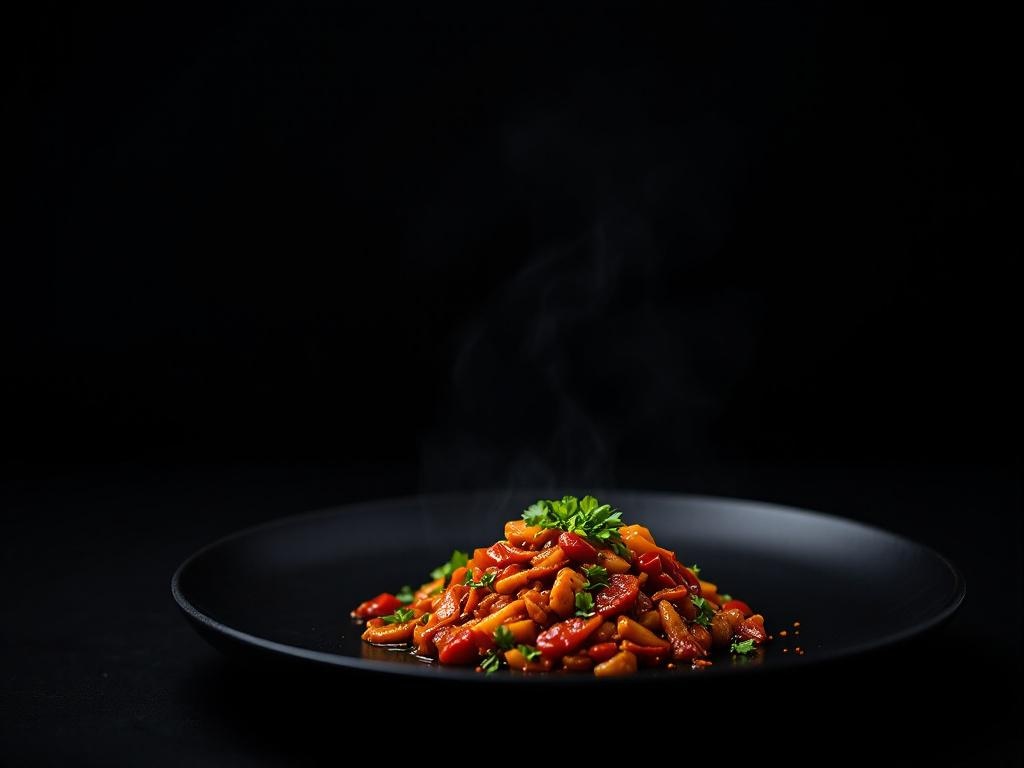
Gochujang (Korean Fermented Chilli Paste — Ratio and Use)
Korean, with documented history from the 16th century after chillies arrived from the Americas via Japan. Traditional production centred in the Sunchang region of North Jeolla Province, which maintains gochujang as a protected regional product.
Gochujang is one of the great fermented condiments of the world — a thick, brick-red Korean paste made from gochugaru (Korean red chilli flakes), fermented soybean powder, glutinous rice, salt, and water that undergoes months of outdoor fermentation in traditional onggi earthenware pots. The result is a paste of remarkable complexity: fiercely spiced, deeply savoury from the fermented soy, subtly sweet from the rice, and umami-rich in a way that raw chilli paste can never achieve. Traditional gochujang is made in the months before summer, packed into onggi pots, sealed with a cloth cover to allow airflow, and left to ferment in the sun for months. The heat, the microbial activity, and the raw ingredients combine to produce a paste that is simultaneously hot, sweet, sour, and deeply umami — what Koreans call the 'fifth taste' that underpins the entire flavour profile of Korean cuisine. Commercial gochujang approximates this through shorter fermentation periods and adjusted ratios. In Korean cooking, gochujang is used in three ways: as a condiment (served at the table and mixed into bibimbap); as a marinade base (combined with sesame oil, garlic, and sugar for galbi or bulgogi-style preparations); and as a cooking paste (fried in oil with aromatics — the base of sauces like tteokbokki and sundubu jjigae). Frying gochujang in oil is the critical technique: like frying tomato paste or doubanjiang, it removes rawness and develops depth. Raw gochujang in sauces can taste flat; fried gochujang is transformative. Gochujang has entered global cooking as a versatile hot-sweet-savoury paste that works beyond Korean cuisine — in pasta sauces, marinades, vinaigrettes, and dips.
Spicy, sweet, deeply savoury, and umami-rich — a fermented complexity that raw chilli pastes cannot replicate
Fry gochujang in oil before using in cooked sauces — this eliminates rawness and develops depth Balance the heat with sweetness — rice syrup or honey softens the aggression for Western palates and Korean tradition alike Use proper Korean gochugaru if making from scratch — Hungarian paprika does not replicate the flavour Combine with sesame oil and garlic for the standard marinade base For the deepest flavour, rest the prepared sauce or marinade for at least 30 minutes
RECIPE: GOCHUJANG (Korean Fermented Chilli Paste — Ratio and Use) Yield: 1 kg | Fermentation: 6–12 weeks --- 500 g glutinous rice flour 200 g Korean red chilli flakes (gochugaru) — coarse grade 150 g malt barley powder (yeotkireum) or koji powder 100 g sea salt 50 g honey or rice syrup (optional, for acceleration) 250 ml water (room temperature) --- 1. Toast glutinous rice flour in a dry pan over medium heat for 2–3 minutes, stirring constantly, until fragrant; cool completely. 2. Combine toasted rice flour, chilli flakes, malt powder, and sea salt in a large glass or ceramic vessel; whisk to distribute evenly. 3. Add water in three additions, folding gently with a wooden spoon until a thick, uniform paste forms — no lumps. 4. Cover loosely with cheesecloth secured with twine; place in a cool, dark location (15–20°C ideal). 5. Stir vigorously once every 2–3 days for the first 2 weeks, breaking surface mold if present — this is normal. 6. Reduce stirring to weekly after week 2; fermentation complete when paste darkens and develops complex umami (6–12 weeks depending on temperature). 7. Transfer to sterilised jars; store refrigerated (extends shelf life indefinitely) or at room temperature in cool climates. --- USE: 1 tbsp (20 g) per person as base for marinades, bibimbap, or Korean fried chicken; blooms in hot oil or vinegar for sauce applications. GOCHUJANG (Korean Fermented Chilli Paste) Yield: 500 ml jar | Fermentation: 3–12 months --- 200 g glutinous rice powder 100 g gochugaru (Korean red chilli flakes — Taekyung or equivalent) 100 g soy sauce (low-sodium Korean, naturally fermented) 50 g sea salt 30 ml mirin (hon-mirin, no additives) 10 g koji spores (Aspergillus oryzae — optional, for faster fermentation) --- 1. Toast glutinous rice powder in a dry pan over medium heat for 3–4 minutes, stirring constantly, until nutty and pale gold; cool completely. 2. Combine cooled rice powder, gochugaru, sea salt, and koji spores (if using) in a sterilized glass jar. 3. Stir in soy sauce and mirin until fully incorporated; mixture should resemble thick wet sand. 4. Pack mixture firmly into jar, pressing to eliminate air pockets; cover with cheesecloth and secure with elastic. 5. Ferment at 15–20°C (59–68°F) for minimum 3 months, stirring weekly; longer fermentation (6–12 months) develops deeper umami and complexity. 6. Transfer to airtight container once fermentation is complete; refrigerate to arrest fermentation. RATIO: 40% chilli flakes : 40% rice base : 20% salt/seasoning. Use 1–2 tbsp per sauce, marinade, or stew base. Gochujang butter: equal weights of softened butter and gochujang, whisked — a compound butter of incredible versatility For bibimbap sauce: gochujang, sesame oil, sugar, garlic, rice wine vinegar — stir until smooth Tteokbokki (rice cake dish) requires the paste to be fried in the sauce liquid for at least 5 minutes before adding the rice cakes Gochujang glazes for chicken or pork: dilute with honey, soy, and sesame oil; brush and grill Freezes well — freeze tablespoon portions for on-demand access
Using raw gochujang directly in cooked sauces without frying it first — loses much of its depth Overusing — gochujang is potent; a tablespoon goes a long way Substituting sriracha or other fresh chilli sauces — they are not fermented and lack the complexity Ignoring the sweetness balance — gochujang without a sugar element can be harsh Assuming all gochujang is the same — heat levels and quality vary enormously between brands
Common Questions
Why does Gochujang (Korean Fermented Chilli Paste — Ratio and Use) taste the way it does?
Spicy, sweet, deeply savoury, and umami-rich — a fermented complexity that raw chilli pastes cannot replicate
What are common mistakes when making Gochujang (Korean Fermented Chilli Paste — Ratio and Use)?
Using raw gochujang directly in cooked sauces without frying it first — loses much of its depth Overusing — gochujang is potent; a tablespoon goes a long way Substituting sriracha or other fresh chilli sauces — they are not fermented and lack the complexity Ignoring the sweetness balance — gochujang without a sugar element can be harsh Assuming all gochujang is the same — heat levels and quality v