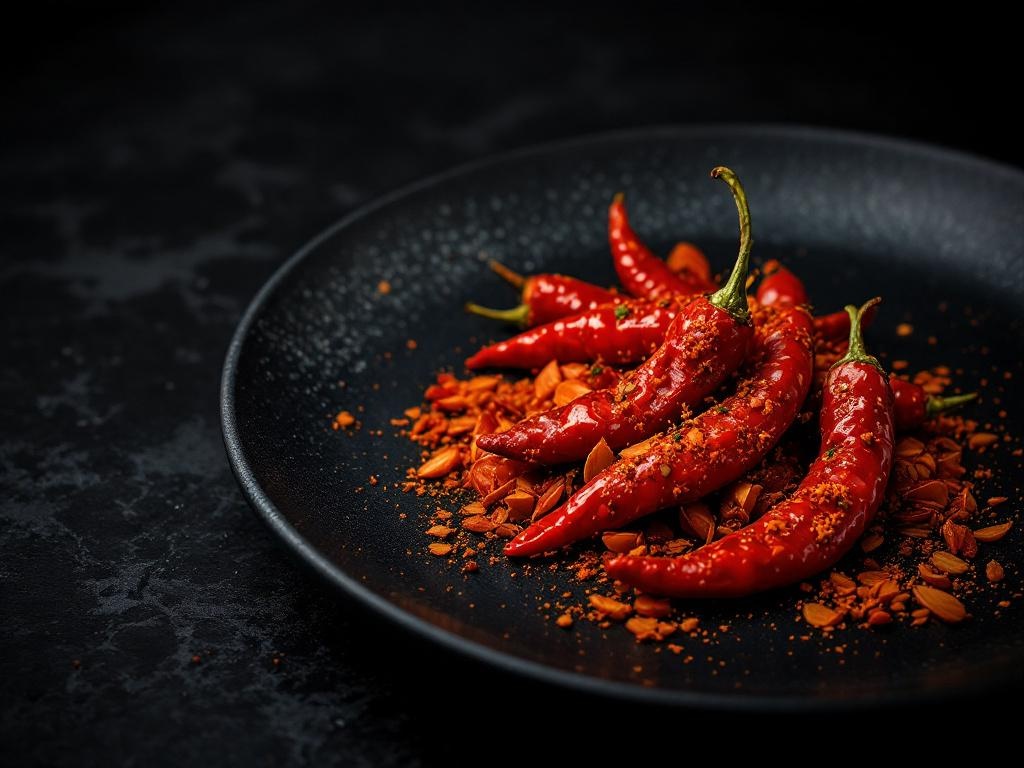
Harissa (North African — Dried Chilli Paste, Rose Petal Version)
Tunisian in origin, though used across North Africa and the Levant. Tunisia is the epicentre of harissa culture, where it is eaten daily and has protected status in UNESCO's Intangible Cultural Heritage.
Harissa is North Africa's foundational chilli paste — a deeply seasoned combination of dried red chillies, garlic, cumin, coriander, caraway, and olive oil that is as central to Tunisian cooking as it is to Moroccan and Libyan cuisines. It is a universal flavouring: stirred into soups and couscous, spread on bread, spooned over eggs, used as a marinade for lamb, and deployed as a finishing condiment alongside tagines and grilled meats. The base construction is consistent across the region: dried chillies (traditionally the Baklouti chilli from Tunisia) are soaked in hot water, drained, then pounded or blended with garlic, the aromatic spice trio of cumin, coriander, and caraway, salt, and olive oil. The result should be a thick, deeply coloured paste — not a liquid sauce — with intense heat, warmth from the spices, and a slight smokiness from the dried chillies. The caraway distinguishes North African harissa from any other chilli paste in the world. The rose harissa version — harissa warda — is the Tunisian refinement that has become popular internationally: dried rose petals and sometimes rose water are added to the basic paste, creating a sauce with the same fundamental heat and spice but with a floral, perfumed quality that makes it extraordinary with lamb, roasted vegetables, and dairy. The rose is not decorative — it contributes a genuine aromatic dimension that softens the aggression of the chilli. Commercial harissa (tubes and tins) varies enormously in quality — some are little more than tomato paste with chilli. The real thing, made from scratch with quality dried chillies, is a completely different preparation with a depth that no commercial version approaches.
Deep, hot, and warmly spiced with cumin and caraway — a North African chilli paste of remarkable complexity
Use dried chillies, not fresh — the dried flavour is essential, providing depth without the brightness of fresh Caraway is the North African signature — it cannot be omitted without losing the regional character Soak dried chillies in hot water for 20–30 minutes to fully rehydrate before processing The paste must be thick, not liquid — olive oil is added for consistency, not to thin For rose harissa, use dried rose petals — fresh roses have too much water and the wrong intensity
RECIPE: Yield: 200ml paste | Prep: 25 min | Total: 40 min (plus drying time if making from fresh chillies) --- 60g dried red chillies (Aleppo, Guajillo, or North African varieties preferred), deseeded and roughly torn 25g roasted unsalted almonds 3 garlic cloves, peeled 8g caraway seed, toasted 4g ground coriander 2g dried rose petals (culinary-grade, optional but traditional) 60ml extra-virgin olive oil 15ml fresh lemon juice 4g sea salt 1g Tellicherry black pepper 2g paprika (sweet or hot, to preference) --- 1. Toast dried chilli pieces in a dry skillet over low heat 2–3 minutes until fragrant; do not burn. 2. Soak toasted chillies in 100ml hot water for 10 minutes until softened; drain, reserving 30ml soaking liquid. 3. Toast caraway seed in the same skillet over low heat 2 minutes until fragrant; grind coarsely in a mortar. 4. Toast almonds in the skillet 3–4 minutes until light golden; cool slightly. 5. Combine softened chillies, toasted almonds, garlic, toasted caraway, ground coriander, rose petals if using, and reserved soaking liquid in a food processor; pulse until a coarse paste forms. 6. Transfer to a bowl; whisk together olive oil, lemon juice, paprika, salt, and black pepper. 7. Fold dressing into chilli paste until fully incorporated and smooth; taste and adjust salt, lemon juice, and heat to preference. 8. Store in a sealed jar, covered with a thin layer of olive oil, refrigerated, up to 2 weeks; bring to room temperature before serving with couscous, grilled meats, or bread. For the best colour, use a combination of guajillo (sweet) and dried bird's eye (heat) chillies Toast caraway and cumin separately before grinding — caraway burns faster than cumin Harissa keeps under olive oil in the refrigerator for 2–3 weeks; replenish the oil surface after each use A spoonful of harissa melted into butter and tossed with roasted potatoes is one of the simplest great preparations For a smoky version, add a small amount of smoked paprika or char one of the dried chillies briefly over flame
Using only fresh chillies — produces a bright but one-dimensional sauce without the dried chilli depth Omitting caraway — produces a generic chilli paste rather than authentic harissa Adding too much olive oil — makes the paste loose and oily rather than a proper paste Not toasting the spices — untoasted cumin, coriander, and caraway lack aromatic complexity Using commercial harissa as a reference point — it bears little resemblance to the real preparation
Common Questions
Why does Harissa (North African — Dried Chilli Paste, Rose Petal Version) taste the way it does?
Deep, hot, and warmly spiced with cumin and caraway — a North African chilli paste of remarkable complexity
What are common mistakes when making Harissa (North African — Dried Chilli Paste, Rose Petal Version)?
Using only fresh chillies — produces a bright but one-dimensional sauce without the dried chilli depth Omitting caraway — produces a generic chilli paste rather than authentic harissa Adding too much olive oil — makes the paste loose and oily rather than a proper paste Not toasting the spices — untoasted cumin, coriander, and caraway lack aromatic complexity Using commercial harissa as a reference