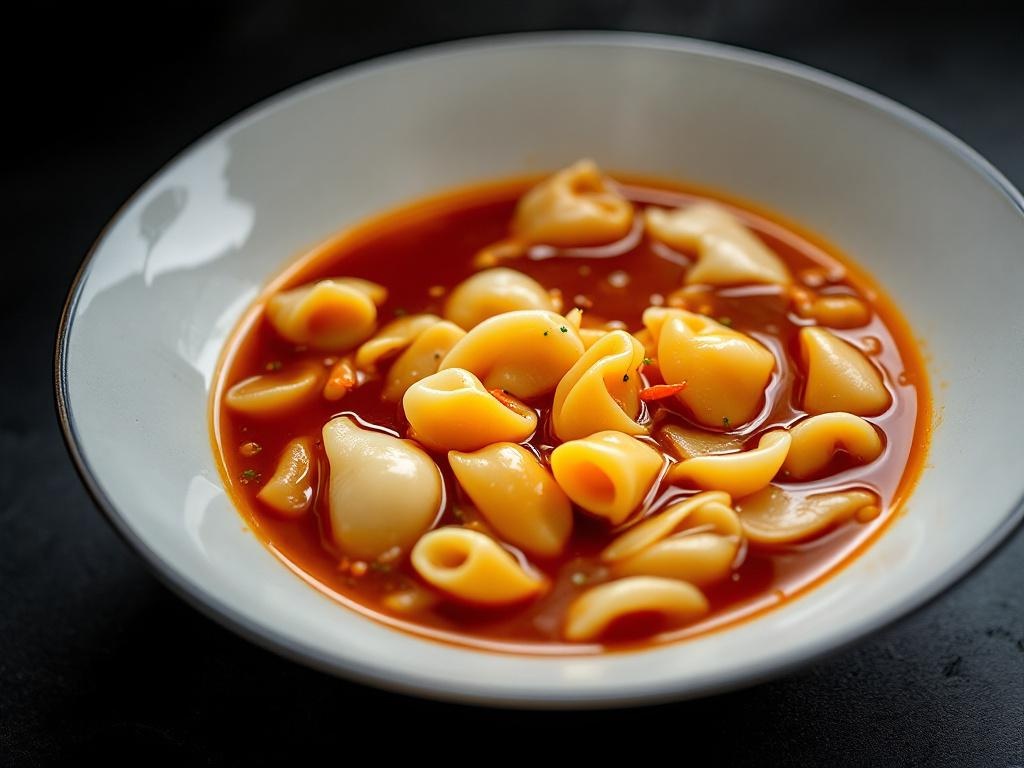
Hot and Sour Soup
Northern China (Sichuan and Huaiyang traditions both claim it). The soup appears in various regional Chinese cookbooks from the Song Dynasty (960-1279). In Sichuan, the heat comes from chilli as well as pepper; in northern Chinese versions (the internationally known standard), white pepper is the only heat source.
Hot and sour soup (suan la tang) is the perfect balance of sour, hot, salty, and savoury — vinegar-acidulated pork broth with silken tofu, wood ear mushrooms, bamboo shoots, lily buds, and egg. The heat comes from white pepper, not chilli, and the sourness from Chinkiang (black) vinegar. The soup should be tightly thickened with cornstarch — it should coat a spoon without being gluey.
Hot and sour soup is typically a starter in a Chinese meal — the beverage follows the main course pairing. As a standalone: jasmine tea, or warm Shaoxing wine.
{"The broth: pork or chicken stock as the base — not water. The protein richness of the broth provides the structure for the vinegar and pepper to work against","Wood ear mushrooms (mu er) and lily buds (jin zhen): soaked in warm water, then shredded. These two dried ingredients are the textural signature of the soup","Bamboo shoots: canned or fresh, julienned — adds crunch","Egg drizzle: beaten egg drizzled into the simmering soup in a thin stream while stirring in circles — this creates the characteristic wispy egg ribbons throughout the soup","Cornstarch slurry: added to the soup at the end to thicken — the consistency should coat the back of a spoon with a 2mm layer","Final balance: Chinkiang black vinegar (added off heat to preserve the volatile acidity), ground white pepper — the heat comes from the white pepper, not chilli"}
RECIPE: Serves: 4 | Prep: 12 min | Total: 20 min --- 1L chicken or pork stock 100g pork loin — sliced thin 75g bamboo shoots — julienned 60g wood ear mushrooms — rehydrated, sliced 2 tbsp Chinkiang vinegar 15ml soy sauce 1 tsp white pepper — freshly ground 1 egg — beaten 20g cornstarch — mixed with 40ml water 2 scallions — sliced 5g sesame oil --- 1. Bring stock to a rolling boil in a large pot; add pork slices and cook 2 minutes until just cooked through. 2. Add bamboo shoots and wood ear mushrooms; simmer 2 minutes. 3. Season with Chinkiang vinegar, soy sauce, and white pepper; taste and adjust balance of sour and salty. 4. Slowly drizzle beaten egg into the simmering broth while stirring gently to create delicate ribbons; cook 1 minute. 5. Stir cornstarch slurry and pour into soup in a thin stream while stirring until soup thickens slightly and turns translucent, about 1 minute. 6. Remove from heat; drizzle sesame oil over the surface. 7. Ladle into bowls and garnish with sliced scallions; serve immediately. The moment where hot and sour soup lives or dies is the final seasoning — add the Chinkiang vinegar off heat, taste immediately, and adjust. The soup should be unmistakably sour with a lingering white pepper heat. If the sour fades within 10 seconds of tasting, add more Chinkiang. The vinegar should stay present from the first sip to the last.
{"Using rice vinegar instead of Chinkiang: rice vinegar is sharp and one-dimensional; Chinkiang is complex, slightly sweet, and has a distinctive depth from the fermented wheat","Adding vinegar during cooking: the volatile acids evaporate. Add off heat","Over-thickening: gluey hot and sour soup is one of the most common restaurant failures"}
- Thai tom yam (hot and sour soup — the same fundamental flavour construction with different aromatics); Cambodian samlor (sour pork soup — similar balance in Khmer cuisine); Filipino sinigang (sour soup — the Filipino tradition of soured broths).
Common Questions
Why does Hot and Sour Soup taste the way it does?
Hot and sour soup is typically a starter in a Chinese meal — the beverage follows the main course pairing. As a standalone: jasmine tea, or warm Shaoxing wine.
What are common mistakes when making Hot and Sour Soup?
{"Using rice vinegar instead of Chinkiang: rice vinegar is sharp and one-dimensional; Chinkiang is complex, slightly sweet, and has a distinctive depth from the fermented wheat","Adding vinegar during cooking: the volatile acids evaporate. Add off heat","Over-thickening: gluey hot and sour soup is one of the most common restaurant failures"}
What dishes are similar to Hot and Sour Soup?
Thai tom yam (hot and sour soup — the same fundamental flavour construction with different aromatics); Cambodian samlor (sour pork soup — similar balance in Khmer cuisine); Filipino sinigang (sour soup — the Filipino tradition of soured broths).