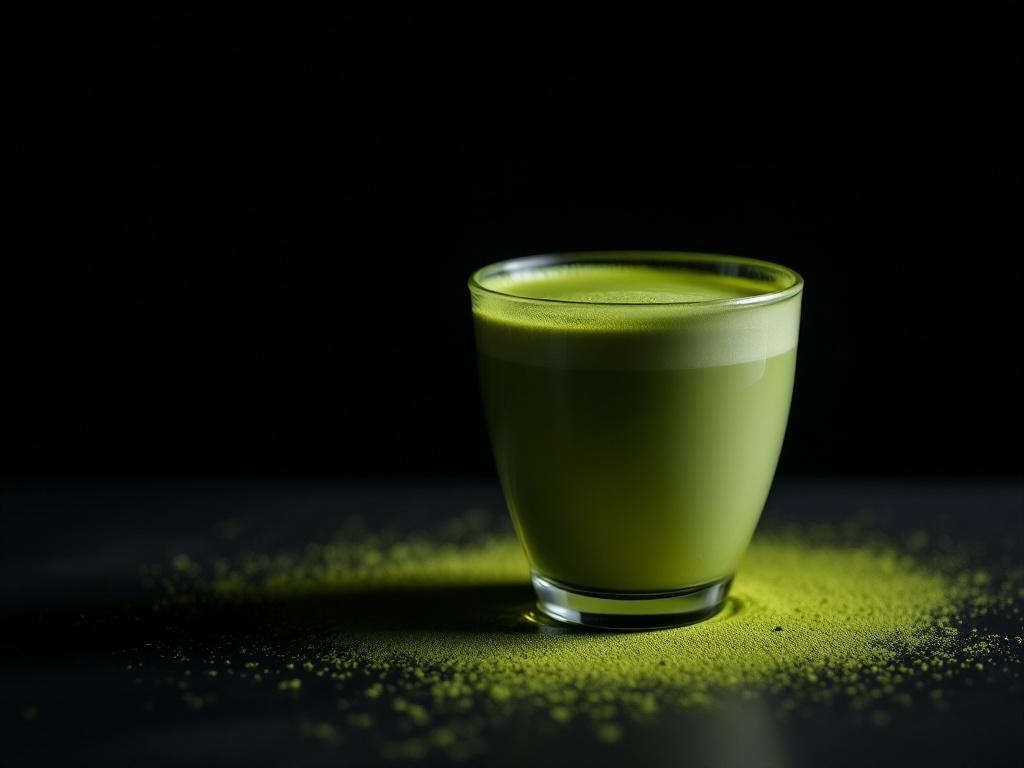
Matcha Latte
Japan, adapted from the traditional Japanese tea ceremony (chado). The modern matcha latte emerged in the early 2000s as Japanese-influenced coffee culture spread globally, notably through Cha For Tea cafes in the UK and the spread of Japanese milk tea aesthetics.
A matcha latte is not an iced green tea with milk. It is a preparation that requires ceremony: ceremonial-grade matcha whisked with a small amount of hot water to a smooth paste before milk is added. The quality of the matcha determines the quality of the drink — cheap culinary-grade matcha produces a dull, slightly bitter drink. Ceremonial-grade matcha from Uji, Kyoto, produces a vivid green, intensely sweet-umami drink.
Matcha latte is the beverage. If a food companion is appropriate: wagashi (Japanese confection) — specifically yokan (sweet bean jelly) or higashi (dry pressed sweet) in the traditional tea ceremony context. In a modern cafe context: a simple white butter cake or plain croissant.
{"Matcha grade: ceremonial-grade (Uji or Kagoshima, first or second harvest) — the youngest leaves, shade-grown to maximise chlorophyll and L-theanine content, stone-ground to a very fine powder. Culinary grade is for baking; ceremonial grade is for drinking","Sifting: pass the matcha through a fine-mesh sieve before whisking — matcha clumps in storage and sifting is the only way to produce a lump-free preparation","The paste method: add 1 teaspoon sifted matcha to a chawan (ceramic bowl), add 2 tablespoons hot water (70C, not boiling — boiling water bitters the chlorophyll), whisk in a brisk W-pattern with a chasen (bamboo whisk) until a smooth, frothy paste forms","Milk: full-fat oat milk or whole dairy milk, steamed to 60C with a fine foam. Barista-edition oat milk froths more consistently than standard oat milk","Pour the steamed milk over the matcha paste while tilting the cup — the flow of milk through the paste integrates the two without needing to stir","Iced version: add 30ml cold water to the whisked matcha paste, pour over ice, add cold milk"}
RECIPE: Serves: 2 | Prep: 8 min | Total: 8 min --- 4 g culinary-grade matcha powder (Encha or similar ceremonial quality) 240 ml whole milk (warm, 60°C) 20 ml hot water 15 g honey or agave syrup 2 g sea salt --- 1. Sift matcha powder into a small bowl to remove lumps; add 20 ml hot water. 2. Whisk with a traditional bamboo matcha whisk in a zigzag motion until matcha fully dissolves and a light foam forms (30–45 seconds). 3. Warm milk to 60°C (steaming or gentle heating); do not exceed 65°C to preserve matcha's delicate flavour. 4. Pour warm milk slowly into matcha mixture while whisking gently to incorporate; top with a thin layer of foam. 5. Sweeten with honey and salt; whisk briefly to combine. 6. Divide between two warmed cups; serve immediately. The moment where matcha latte lives or dies is the paste formation — the pre-whisked paste is the technique that separates a smooth, integrated matcha latte from a clumpy green drink with floating patches of undissolved powder. The paste should be completely smooth with no specks of dry matcha visible. If lumps remain after whisking, add a few more drops of water and continue. The paste should be the colour of fresh spring grass — vivid, electric green. Brown-green paste indicates oxidised, old matcha.
{"Boiling water on the matcha: destroys the delicate chlorophyll compounds and produces bitterness","Not sifting: lumps of matcha powder are unavoidable without sifting","Using culinary-grade matcha for drinking: the dull, bitter, coarse quality is immediately apparent in a drink prepared without heat to mask it"}
Common Questions
Why does Matcha Latte taste the way it does?
Matcha latte is the beverage. If a food companion is appropriate: wagashi (Japanese confection) — specifically yokan (sweet bean jelly) or higashi (dry pressed sweet) in the traditional tea ceremony context. In a modern cafe context: a simple white butter cake or plain croissant.
What are common mistakes when making Matcha Latte?
{"Boiling water on the matcha: destroys the delicate chlorophyll compounds and produces bitterness","Not sifting: lumps of matcha powder are unavoidable without sifting","Using culinary-grade matcha for drinking: the dull, bitter, coarse quality is immediately apparent in a drink prepared without heat to mask it"}
What dishes are similar to Matcha Latte?
Indian masala chai (spiced milk tea prepared with the same paste-then-milk technique for some preparations); Korean barley tea latte (dongascha latte — the Korean milk tea parallel); Taiwanese taro latte (paste-method milk drinks using root vegetable powders).