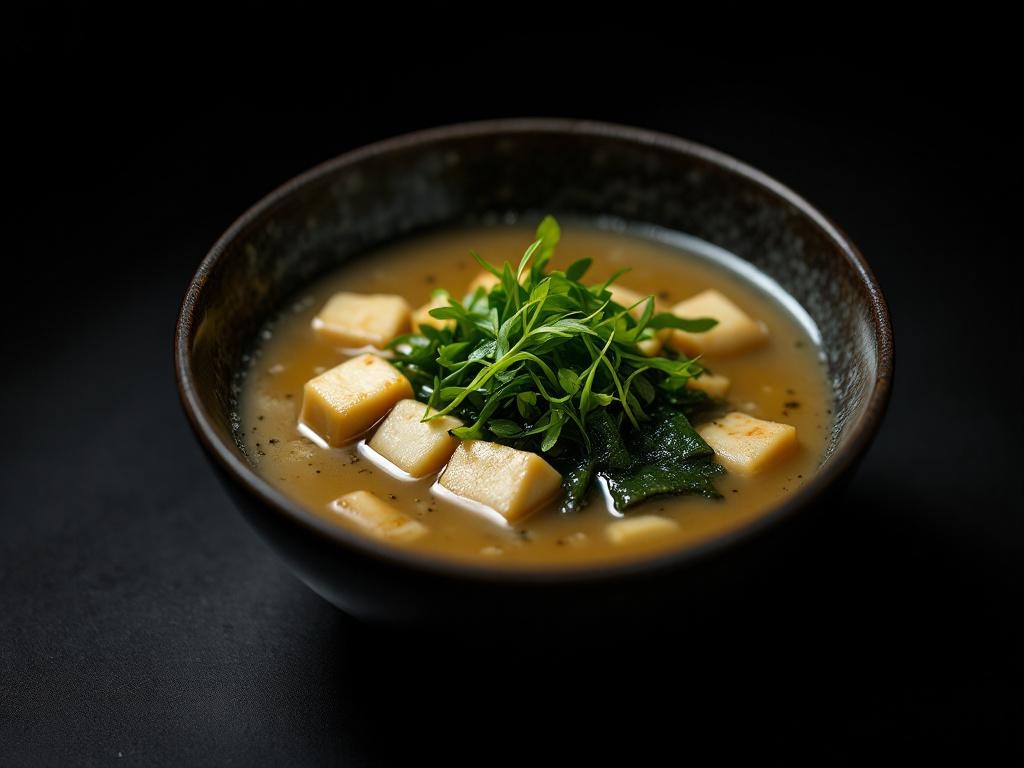
Miso Soup with Tofu and Wakame (Naturally Vegan)
Japan; kombu-based dashi predates fish-based dashi; shojin ryori (Buddhist vegetarian cuisine) preserved the plant-based tradition; miso documented c. 7th century CE.
Traditional miso soup is made with dashi from katsuobushi (fish flakes) and kombu. By using kombu-only dashi (or a shiitake-kombu blend), the soup becomes fully vegan without losing the umami depth that makes it satisfying. This kombu dashi approach is in fact the more ancient one — fish flakes only entered Japanese dashi-making relatively recently, and the kombu-only tradition persists in Buddhist shojin ryori cuisine, which is entirely plant-based. Vegan miso soup demonstrates a fundamental principle: glutamates, the source of umami, are abundant in the plant world. Kombu contains the highest naturally occurring concentration of free glutamic acid of any food. Combined with the nucleotides in shiitake, the synergistic umami effect rivals or exceeds fish-based dashi. The soup's three components — kombu dashi, miso, and garnish (soft tofu, wakame, spring onion) — each require attention: the dashi should be properly extracted, the miso should not boil after adding (boiling destroys live cultures and aromatics), and the garnish should be added at the last moment to preserve texture.
Cold-start extraction for kombu — place in cold water and bring to just below boiling (80°C); remove before boiling to avoid sliminess Shiitake addition doubles the umami through nucleotide synergy — add 2–3 dried shiitake to the cold water with the kombu Miso goes in at the very end, off heat — dissolve in a small amount of hot dashi before adding to prevent clumping Soft tofu added last — heat from the soup warms it through without cooking it to crumbles Wakame should be soaked, squeezed dry, and added at serving — it needs only the residual heat Never boil after adding miso — the living cultures and delicate aromatics are destroyed above 80°C
RECIPE: Serves: 4 | Prep: 20 min | Total: 25 min --- 1200ml Dashi stock — kombu and shiitake, homemade 60g White miso — aged 24 months 40g Firm tofu — block, cubed 1cm 30g Wakame seaweed — dried 25g Green onion — sliced thin 20g Ginger — minced 15g Garlic — minced 10ml Mirin — hon-mirin 8ml Soy sauce — Kikkoman tamari 4g Aleppo pepper 1 sheet Nori — toasted, julienne --- 1. Bring dashi stock to gentle simmer; add minced ginger and garlic, infuse 3 minutes. 2. Rehydrate dried wakame in 50ml warm water for 4 minutes; drain and reserve. 3. Ladle 120ml hot dashi into separate bowl; dissolve white miso completely using back of spoon, then strain through fine sieve. 4. Gently pour miso mixture back into simmering dashi, stirring slowly to avoid breaking emulsion. 5. Add cubed tofu and rehydrated wakame; simmer gently 4 minutes without boiling. 6. Season with hon-mirin, Kikkoman tamari, and Aleppo pepper; adjust depth of flavour. 7. Pour into warmed bowls; garnish with sliced green onion and toasted nori julienne. 8. Serve immediately at 70°C. White (shiro) miso produces a sweeter, milder soup; red (aka) miso produces a deeper, more complex, saltier result; blending the two (awase) is the most versatile approach A few drops of sesame oil stirred in just before serving adds fragrance and richness without adding animal products For maximum umami: a ratio of 1 part dried shiitake liquid to 3 parts kombu dashi is the professional shojin ryori approach
Boiling kombu — produces sliminess and a harsh, slightly bitter flavour; steep below the boil Adding miso and then simmering — ruins the fresh, complex flavour of the miso Using firm tofu — soft tofu is the correct texture; firm tofu has the wrong mouthfeel for this preparation Over-salting after miso — miso itself is already salty; taste before adding any additional salt Pre-hydrating wakame too long — it becomes slimy; 5 minutes is sufficient
Common Questions
What are common mistakes when making Miso Soup with Tofu and Wakame (Naturally Vegan)?
Boiling kombu — produces sliminess and a harsh, slightly bitter flavour; steep below the boil Adding miso and then simmering — ruins the fresh, complex flavour of the miso Using firm tofu — soft tofu is the correct texture; firm tofu has the wrong mouthfeel for this preparation Over-salting after miso — miso itself is already salty; taste before adding any additional salt Pre-hydrating wakame too