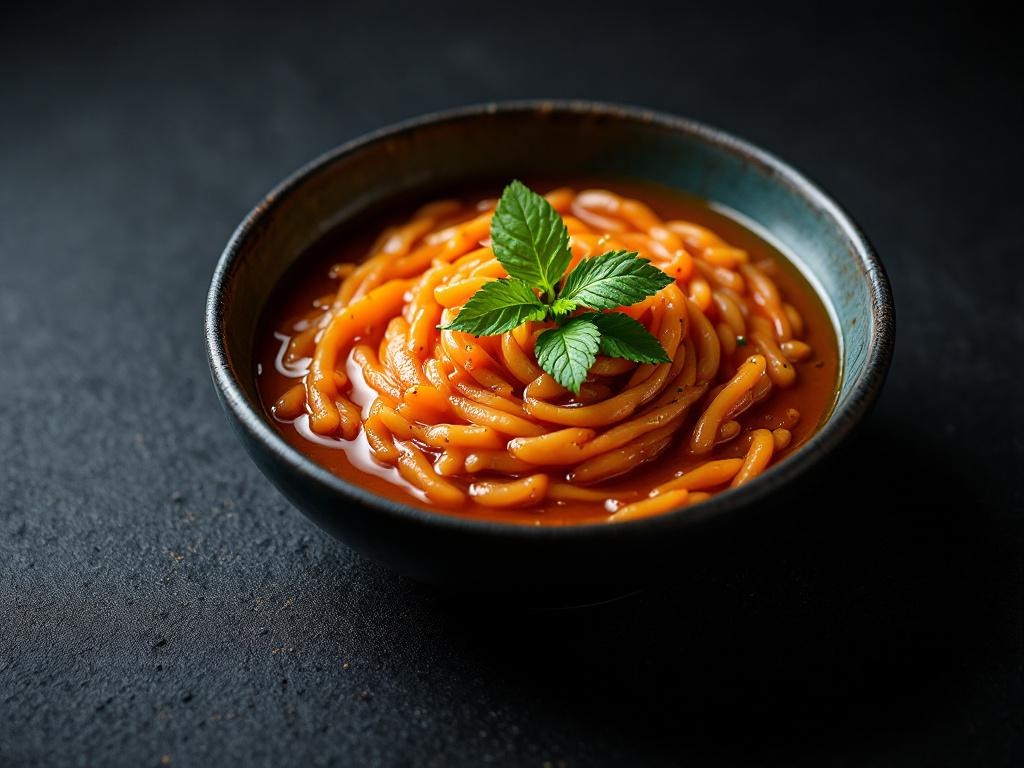
Nam Jim (Thai Dipping Sauce — Garlic, Chilli, Fish Sauce, Lime)
Thai, part of the extensive family of Southeast Asian dipping sauces that developed in tandem with grilled and boiled protein dishes. The specific nam jim jaew style is associated with northeastern Thai (Isan) cuisine and its grilling traditions.
Nam jim is Thailand's family of dipping sauces — not a single sauce but a category of preparations that share the common logic of Thai flavour balance: hot, sour, salty, and sweet in varying proportions depending on the specific application. Where Vietnamese nuoc cham is harmonious and relatively mild, the standard Thai nam jim jaew or nam jim seafood is bolder, more aggressive, and often significantly spicier — the Thai palate traditionally accommodates a higher heat level and a more assertive sourness. The most fundamental nam jim (nam jim kai, for grilled chicken) is built from garlic, fresh bird's eye chillies, fish sauce, lime juice, palm sugar, and sometimes a small amount of ground toasted rice (khao khua) which thickens the sauce and adds a nutty dimension. The roasted rice is a uniquely Thai technique — raw rice toasted dry in a pan until golden, then ground — that appears across multiple Thai preparations (including larb) as a textural and flavour addition. Nam jim seafood — the dipping sauce for grilled prawns, steamed crab, and other seafood — is the most acid-forward version: heavy on lime, heavy on garlic, with galangal and coriander root sometimes added for an additional Thai aromatic dimension. Nam jim jaew — for grilled meats like moo ping (pork skewers) and gai yang (grilled chicken) — is sweeter, with tamarind or palm sugar more prominent. The mortar-and-pestle method gives the best result: the garlic and chilli are pounded together first (releasing volatile oils more effectively than blending), then the liquid ingredients are added. The texture should be slightly chunky — visible garlic and chilli fragments — not a smooth liquid.
Hot, sour, salty, and sweet in bold combination — the aggressive Thai flavour balance in a dipping sauce
Pound garlic and chilli first in a mortar before adding liquids — releases volatile oils for superior aroma Balance is the foundation: hot from chilli, sour from lime, salty from fish sauce, sweet from palm sugar Ground toasted rice (khao khua) thickens and adds a distinctive nutty note — do not skip in nam jim jaew Fresh coriander root (not just the leaves) is the Thai aromatic that elevates seafood nam jim Adjust balance for the protein: sweeter for grilled chicken, more acidic for seafood
RECIPE: Yield: 200 ml | Prep: 10 min | Total: 12 min --- 80 ml fish sauce — Thai, premium grade 50 ml fresh lime juice 30 ml water 20 g palm sugar — or light brown sugar 6 cloves garlic — minced 4 Thai red chillies — fresh, sliced thin (seeds optional, adjust for heat) 2 stalks cilantro — finely chopped --- 1. Pound garlic and salt (pinch) in a mortar and pestle to form a paste. 2. Add chillies; bruise lightly to release oils and seeds. 3. Combine fish sauce, water, and palm sugar in a bowl; stir until sugar dissolves. 4. Transfer garlic-chilli paste to sauce; add lime juice and cilantro; stir thoroughly. 5. Taste and adjust sweetness/heat/acidity. Use immediately or refrigerate for up to 1 week. Khao khua (toasted rice powder): dry toast raw jasmine rice in a wok until golden, grind in a spice grinder — keeps for weeks For seafood nam jim: pound 6 bird's eye chillies, 4 cloves garlic, 1 tsp coriander root, then add 4 tbsp lime juice, 2 tbsp fish sauce, 1 tbsp palm sugar, fresh coriander The sauce sits and softens over 15–30 minutes — make it just before serving for the most vibrant result For a less fierce version, reduce bird's eye chillies and increase lime — still within the nam jim family Nam jim paired with kao man gai (Hainanese chicken rice) is one of Thailand's perfect combinations
Blending rather than pounding — loses the texture and aromatic release of the mortar method Omitting palm sugar and using white sugar instead — palm sugar has a caramel depth that white sugar lacks Skipping toasted rice in nam jim jaew — the texture and nutty note are significant Not tasting before serving — the balance changes as the sauce sits; adjust at service Using only dried chilli — fresh bird's eye chillies are essential for the specific bright heat of authentic nam jim
Common Questions
Why does Nam Jim (Thai Dipping Sauce — Garlic, Chilli, Fish Sauce, Lime) taste the way it does?
Hot, sour, salty, and sweet in bold combination — the aggressive Thai flavour balance in a dipping sauce
What are common mistakes when making Nam Jim (Thai Dipping Sauce — Garlic, Chilli, Fish Sauce, Lime)?
Blending rather than pounding — loses the texture and aromatic release of the mortar method Omitting palm sugar and using white sugar instead — palm sugar has a caramel depth that white sugar lacks Skipping toasted rice in nam jim jaew — the texture and nutty note are significant Not tasting before serving — the balance changes as the sauce sits; adjust at service Using only dried chilli — fresh b