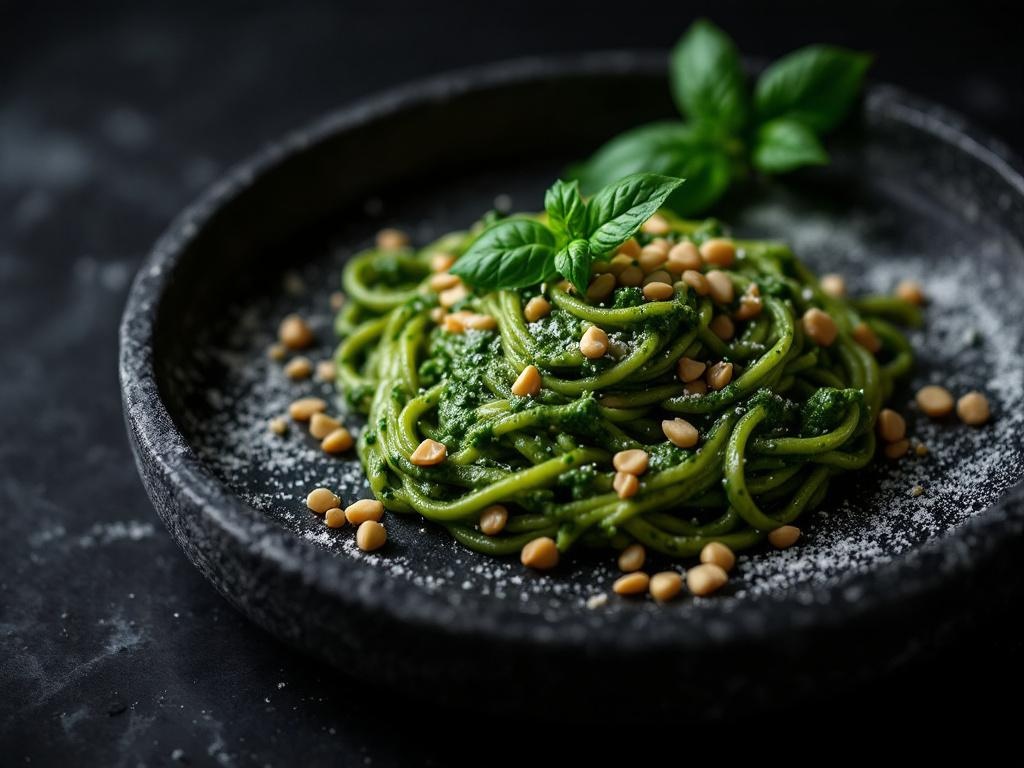
Pesto alla Genovese (Ligurian — Marble Mortar Cold Method)
Genoa and the Ligurian Riviera — documented from the 19th century; the mortar technique predates recorded history; Basilico Genovese DOP formalised in 2005
Pesto alla Genovese is one of the most replicated and most debased preparations in world cuisine — a cold sauce of fresh basil, Ligurian extra-virgin olive oil, pine nuts, Parmigiano Reggiano, Pecorino Sardo, garlic, and coarse sea salt, pounded in a marble mortar until emulsified into a vibrant green paste of vivid flavour and extraordinary aromatic intensity. The debasement comes from the food processor, which shreds rather than bruises the basil leaves, generating heat that oxidises the chlorophyll and produces a darker, more bitter, less perfumed sauce. The marble mortar is not a romantic affectation. It matters chemically. The pestle crushes the basil cells gently, releasing the aromatic essential oils without the tearing action of steel blades and without the heat friction that destroys them. The resulting pesto is greener, more fragrant, and noticeably sweeter than any machine-made version. The marble also remains cool, protecting the temperature-sensitive compounds in the basil. Basil for authentic pesto alla Genovese must be the small-leafed, tender Ligurian variety — Basilico Genovese DOP, grown in the coastal strip between Genoa and the Riviera di Ponente. Grown under particular conditions of soil alkalinity and coastal humidity, it has a sweeter, less anise-like character than the large-leafed Neapolitan or Sicilian varieties. Young leaves of 6–8 leaves are the standard — older leaves have more camphor and bitterness. The pounding sequence is critical: garlic with salt first, ground to a paste; pine nuts added and ground to a cream; basil leaves added in batches, bruised with a circular motion rather than pounded vertically; then the grated cheeses (70% Parmigiano, 30% Pecorino Sardo); finally the oil poured in gradually and worked in. The finished pesto should coat a spoon thickly and be a vivid, intense emerald colour.
Vivid, fragrant basil sweetness with garlic heat, nutty pine, and salty-sharp cheese — intensely aromatic and bright
Use a marble mortar — a food processor tears and heats the basil, oxidising the chlorophyll and destroying aromatics Basil must be young, small-leaved, and very fresh — older leaves are more camphorated and bitter Work with a circular bruising motion, not aggressive vertical pounding — the goal is cell rupture, not destruction Add ingredients in sequence: garlic, pine nuts, basil, cheeses, oil — order matters for texture and emulsification Never heat pesto — add to pasta off the heat, always reserving pasta water to loosen
RECIPE: Yield: 240 ml | Prep: 15 min | Total: 15 min --- 30 g Genovese basil — DOP protected, young leaves 50 g Parmigiano Reggiano DOP — aged 24 months, finely grated 25 g Pecorino Romano DOP — finely grated 30 g pine nuts — Italian, lightly toasted 2 cloves garlic — Ligurian white, peeled 90 ml extra virgin olive oil — Ligurian DOP, cold-pressed 2 g sea salt — Maldon 1 pinch Tellicherry black pepper — freshly ground --- 1. Toast pine nuts in a dry pan over medium heat for 2 minutes until fragrant; cool completely. 2. Pound garlic and sea salt together in a marble mortar with pestle until a fine paste forms. 3. Add basil in small handfuls, gently bruising and folding against the mortar wall to avoid oxidation. 4. Fold in cooled pine nuts, crushing slightly to release oils. 5. Add Parmigiano Reggiano and Pecorino Romano in three additions, folding gently between each. 6. Drizzle cold olive oil slowly while folding with circular motions until emulsified into a thick, loose paste. 7. Season with Tellicherry black pepper and taste for salt balance. 8. Transfer to a glass jar and store covered with a thin layer of olive oil. Blanch one third of the basil leaves very briefly (5 seconds) in boiling water and refresh in ice water — this fixes the chlorophyll and keeps the pesto bright green for service Toast pine nuts very lightly — raw pine nuts are traditional, but a brief, gentle toast adds subtle sweetness For restaurant service, make pesto in large batches and freeze in small portions covered with a film of olive oil to prevent oxidation A small clove of garlic rather than a full one produces a more elegant pesto — Ligurian pesto is not aggressively garlicky Reserve pasta cooking water and loosen pesto with it before tossing — the starch prevents the oil from separating
Using a food processor — the sauce is categorically different in colour, aroma, and texture Using large-leafed basil — the essential oil profile is wrong and the anise character overpowers Adding basil all at once — batches allow each addition to be properly bruised before the next is added Using only Parmigiano and no Pecorino — the Pecorino Sardo adds a piquant, slightly tangy note that balances the sweetness Adding oil too quickly — pesto should be a loose emulsion, not a separated oily mess
Common Questions
Why does Pesto alla Genovese (Ligurian — Marble Mortar Cold Method) taste the way it does?
Vivid, fragrant basil sweetness with garlic heat, nutty pine, and salty-sharp cheese — intensely aromatic and bright
What are common mistakes when making Pesto alla Genovese (Ligurian — Marble Mortar Cold Method)?
Using a food processor — the sauce is categorically different in colour, aroma, and texture Using large-leafed basil — the essential oil profile is wrong and the anise character overpowers Adding basil all at once — batches allow each addition to be properly bruised before the next is added Using only Parmigiano and no Pecorino — the Pecorino Sardo adds a piquant, slightly tangy note that balances