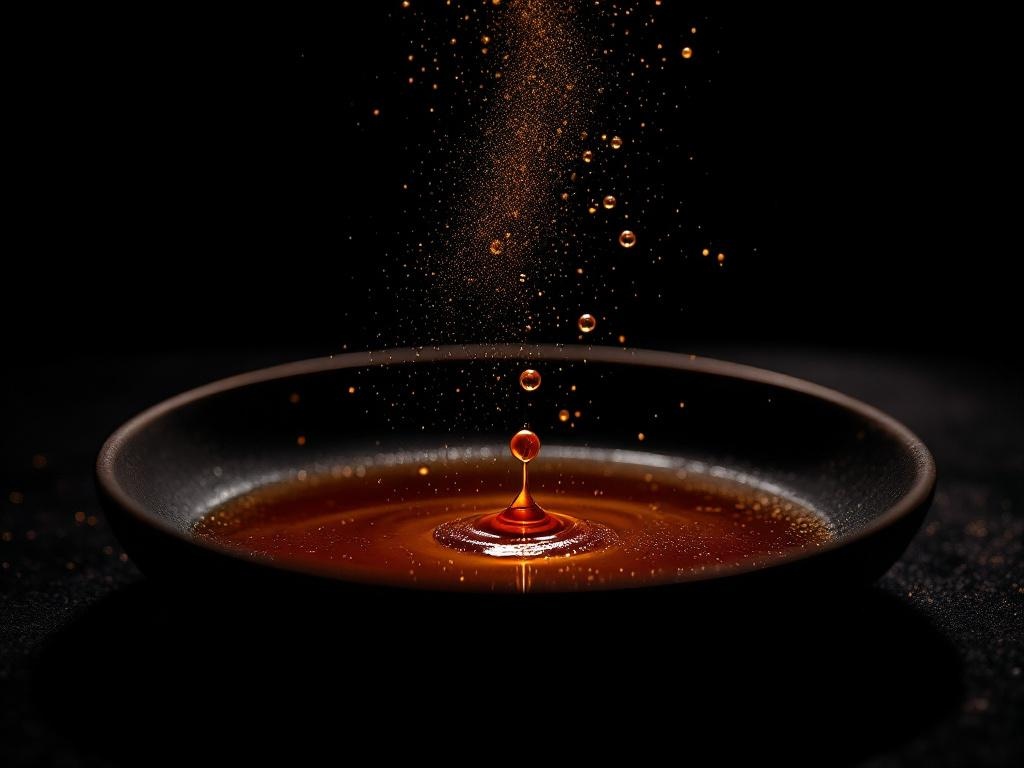
Reduction Sauce (Braising Liquid into Sauce — Concentration Point)
Reduction as a cooking method predates recorded culinary history — the logic of concentrating flavour through evaporation is universal. The precise, technique-driven approach to sauce reduction was codified in the classical French kitchen from the 17th century onwards.
Reduction is not merely a technique for thickening — it is the primary mechanism by which cooking concentrates, intensifies, and transforms liquid into sauce. When a braising liquid, stock, or wine is reduced, water evaporates and every other compound — sugars, proteins, acids, aromatic molecules — becomes more concentrated. The result is not simply less liquid but a different substance: more intense, more complex, stickier, and more flavourful. The most common application in the restaurant kitchen is taking a braising liquid and reducing it to a sauce. After a long-cooked braise of beef cheeks, short ribs, or oxtail, the cooking liquid is strained, degreased, and returned to high heat. As it reduces, it transforms: at 50% reduction it has developed gloss; at 75% it coats a spoon; at 90% it becomes syrupy and sticky — approaching a glaze. At each stage, the flavour character changes. Finding the right concentration point for a given dish is a matter of judgement that experience alone teaches. Thickening mechanisms in reduction sauces include natural gelatin (from bones in stock), natural sugars, and sometimes starch additions (arrowroot slurry for a clear, glossy finish; cornstarch for a more opaque thickening). Pure reduction without thickeners, relying on collagen-rich stocks, produces the most elegant sauces — they coat naturally and cling rather than gloop. Degreasing is a critical step: fat must be removed before or during reduction, either by skimming the surface, using a fat separator, or refrigerating overnight so the solidified fat can be lifted off cleanly. Fat left in the reduction creates an oily, murky sauce rather than a glossy one. Once reduced and degreased, mounting with cold butter, adding aromatic herbs, or finishing with a splash of acid completes the sauce.
Intensified, complex, and increasingly sticky as water leaves — concentration is transformation
Degrease the liquid before or during reduction — fat clouds the sauce and adds nothing Reduce at a vigorous simmer, not a rolling boil — violent boiling causes emulsification of fat Skim constantly during reduction to remove surface proteins and maintain clarity Know your concentration target — 50% for a jus, 75% for a sauce, 90% for a glaze Finish with cold butter (mount) for gloss, or acid for brightness, always off the heat
RECIPE: Yield: 300 ml | Prep: 5 min | Total: 40 min --- 800 ml braising liquid (from braised meat or vegetables), strained and defatted 1 shallot, sliced (optional) 1 thyme sprig (optional) 1 bay leaf (optional) 30 g cold unsalted butter (optional, for finishing) Salt and Tellicherry black pepper to taste --- 1. Pour strained braising liquid into a wide, heavy-bottomed saucepan and place over medium-high heat. 2. If using aromatics, add shallot, thyme, and bay leaf; bring to a full rolling boil. 3. Reduce heat to medium and simmer, skimming impurities occasionally, until the liquid has reduced by 60% and reaches a syrupy consistency that coats the back of a spoon (30–35 minutes); the concentration point is reached when a line drawn through sauce on the spoon does not run. 4. Remove aromatics and herbs with a skimmer. 5. If finishing with butter, remove from heat and whisk in cold butter cubes until fully incorporated (for a richer, glossier sauce). 6. Season with salt and black pepper; taste and adjust seasoning. 7. Strain through a fine-mesh sieve if necessary for clarity. 8. Use immediately or hold in a warm water bath at 60–65°C. Refrigerating the braising liquid overnight and lifting the solidified fat gives the cleanest base For a very glossy reduction, add a sheet of gelatine bloomed in cold water per 500ml of liquid Arrowroot slurry (1 tsp per 250ml) added to a barely simmering reduction gives a clear, glossy thickening without the starchy flavour of cornstarch For wine-based reductions, the wine must be added early and reduced separately to eliminate alcohol before the stock goes in A finished braising reduction can be portioned and frozen — it reheats perfectly and is infinitely more useful than commercial gravy
Not degreasing — produces an oily, murky sauce Boiling too hard — emulsifies fat into the liquid creating a cloudy result Not skimming — protein foam incorporated into the reduction creates bitterness Over-reducing — sauce becomes sticky, sweet, and cloying rather than balanced Seasoning before reducing — salt concentrates; always season at the end
Common Questions
Why does Reduction Sauce (Braising Liquid into Sauce — Concentration Point) taste the way it does?
Intensified, complex, and increasingly sticky as water leaves — concentration is transformation
What are common mistakes when making Reduction Sauce (Braising Liquid into Sauce — Concentration Point)?
Not degreasing — produces an oily, murky sauce Boiling too hard — emulsifies fat into the liquid creating a cloudy result Not skimming — protein foam incorporated into the reduction creates bitterness Over-reducing — sauce becomes sticky, sweet, and cloying rather than balanced Seasoning before reducing — salt concentrates; always season at the end