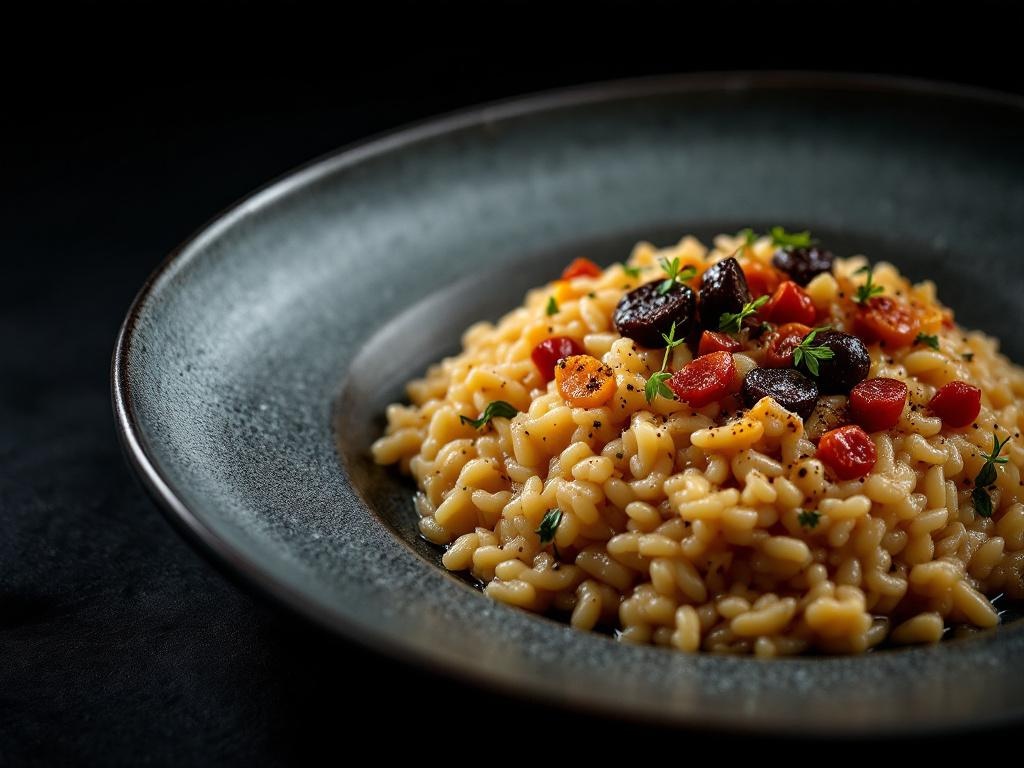
Risotto (Naturally Gluten-Free)
Northern Italy (Lombardy, Piedmont, Veneto); rice cultivation in the Po Valley c. 15th century; risotto technique formalised in Milanese cooking c. 18th century.
Risotto is naturally gluten-free — it is made entirely from Arborio, Carnaroli, or Vialone Nano rice, wine, stock, butter, and Parmesan. No flour appears in the classic preparation, making it one of the most luxurious naturally gluten-free dishes in European cooking. The technique is the thing: risotto is not boiled rice finished with cheese; it is a controlled release of starch through continuous agitation, wine and stock absorbed in stages, until the rice grains release enough starch to create a sauce-like consistency without any thickening agent. The result — 'all'onda' (wavy), flowing off the spoon, grains just yielding with a hairline of chalky bite at the centre — is a precise textural goal that takes practice to achieve consistently. Risotto demands presence; it cannot be left. But the 18 minutes of attention it requires produce something that no shortcut or pasta substitute can replicate.
Use Carnaroli for maximum starch release and best structure — it holds the al dente centre longer than Arborio, giving more margin of error Toast the rice in fat before any liquid is added — the fat coating slows starch absorption and prevents mushiness Wine goes in while the pan is hot — it should sizzle and reduce completely before the first ladle of stock Warm stock only — cold stock shocks the rice and slows the cooking; always keep stock at a gentle simmer Stir continuously but not obsessively — constant agitation releases starch; a gentle folding motion is more effective than aggressive stirring Mantecatura: finish off heat with cold butter and Parmesan beaten in vigorously — this emulsification creates the creamy sauce
RECIPE: Serves: 4 | Prep: 10 min | Total: 35 min --- 750 ml vegetable or light chicken stock 200 g Carnaroli or Arborio risotto rice 75 ml dry white wine 1 small yellow onion, finely diced 2 cloves garlic, minced 30 ml extra virgin olive oil 50 g unsalted butter, cubed 75 g Parmigiano Reggiano DOP aged 24 months, finely grated 5 g fresh thyme leaves Salt and Tellicherry black pepper to taste --- 1. Bring stock to a gentle simmer in a separate pot and maintain at a bare simmer throughout cooking. 2. Heat olive oil in a heavy-bottomed risotto pot over medium heat; add onion and sauté 3 minutes until translucent; add garlic and cook 1 minute. 3. Add rice and stir constantly 2 minutes, coating grains with oil, until edges become translucent. 4. Pour in white wine and stir until nearly absorbed; begin adding stock one ladle at a time, stirring frequently, waiting until liquid is mostly absorbed before adding the next ladle (approximately 18 minutes total). 5. When rice is tender but still al dente, remove from heat; stir in butter and Parmigiano Reggiano until creamy. 6. Season with salt, pepper, and fresh thyme; serve immediately in warm bowls. Resting for 2 minutes after mantecatura, covered, allows the emulsification to stabilise — don't serve immediately after beating in the butter Carnaroli has a higher percentage of amylose (a stiffer starch) than Arborio, which is why professionals prefer it — it holds the al dente centre while releasing enough amylopectin to create the sauce For maximum flavour: make a concentrated stock from the same ingredient as the risotto's primary flavour (mushroom stock for mushroom risotto, asparagus stock for asparagus risotto)
Adding all the stock at once — the gradual addition is the technique; bulk addition produces porridge, not risotto Using cold stock — the temperature shock interrupts the cooking process Skipping the wine — wine provides acidity that balances the richness; non-alcoholic preparation requires a substitute acid Over-cooking — risotto continues cooking after leaving the heat; pull it 2 minutes before it seems done Skipping mantecatura — the final butter emulsification is what creates the silky consistency; without it, risotto is merely cooked rice
Common Questions
What are common mistakes when making Risotto (Naturally Gluten-Free)?
Adding all the stock at once — the gradual addition is the technique; bulk addition produces porridge, not risotto Using cold stock — the temperature shock interrupts the cooking process Skipping the wine — wine provides acidity that balances the richness; non-alcoholic preparation requires a substitute acid Over-cooking — risotto continues cooking after leaving the heat; pull it 2 minutes before