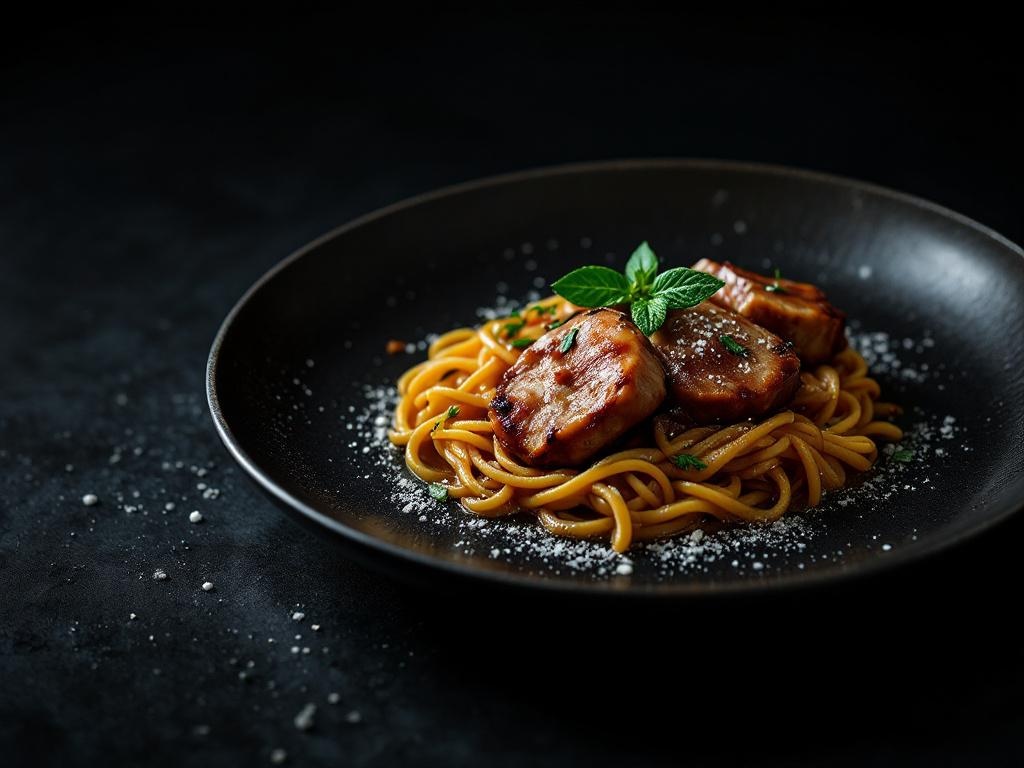
Saltimbocca alla Romana (Veal, Prosciutto, Sage — Pan Sauce)
Rome (likely, with possible Lombard origins) — documented in Roman culinary records from the late 19th century; Ada Boccaccio's recipe of 1900 is the canonical reference
Saltimbocca alla Romana — 'jumps in the mouth' — is a dish of radical simplicity that requires precision of execution to achieve its defining character: a thin escalope of milk-fed veal, layered with a leaf of fresh sage and a slice of prosciutto di Parma, cooked prosciutto-side down in butter until the ham crisps and the veal is just barely cooked through, then finished with dry white wine or Marsala. It is one of Rome's most famous contributions to Italian cuisine and its virtues are inseparable from the quality of its ingredients. The dish's origins are disputed — some attribute it to Brescia in Lombardy, others to the Spanish influence during their occupation of Naples — but it is codified as Roman by Ada Boccaccio's 1900 recipe book and has been embedded in Roman trattoria culture ever since. The prosciutto must be a single, paper-thin slice — not folded or stacked — and the sage leaf must be fresh. The sage leaf is traditionally secured to the veal with a toothpick through the prosciutto, though some Roman cooks skip the toothpick and rely on the prosciutto's fat to adhere during cooking. Technique defines the dish. The veal is very lightly dusted with flour on the flesh side only — the prosciutto side is never floured — to encourage browning and to give the pan sauce something to bind against. Butter, foaming and clear, is the only cooking fat. The escalope goes in prosciutto-side down and is cooked undisturbed for 90 seconds — the prosciutto must render and crisp. A single flip, 30 seconds on the veal side, and it comes out. The pan is deglazed with white wine — a small amount, 50ml, which reduces to a few tablespoons — and swirled with a cold knob of butter to mount the sauce. The saltimbocca returns to the pan only to glaze, not to continue cooking.
Delicate veal, crisp salty prosciutto, and aromatic sage unified by a light buttery pan sauce — elegant and immediate
Veal must be very thin — 5–6mm maximum — and beaten lightly to even thickness Cook prosciutto-side down first and undisturbed for 90 seconds — the rendering and crisping is the dish's defining texture Flour only the veal side, never the prosciutto — flour on prosciutto creates a wet, heavy crust Deglaze with dry white wine and mount with cold butter — the pan sauce must be light and glossy, not thick Do not overcook — the veal requires less than 2 minutes total in the pan at high heat
RECIPE: Serves: 4 | Prep: 12 min | Total: 18 min --- 4 veal cutlets (120g each, 8mm thick) — from the loin 8 slices San Daniele DOP prosciutto 8 fresh sage leaves — whole 50g unsalted butter 30ml extra virgin olive oil 60ml dry white wine — Frascati or Pinot Grigio 100ml veal stock — high-grade Salt and Tellicherry black pepper --- 1. Lay veal cutlets on a work surface and season lightly with salt; lay 1 sage leaf on each, then 2 prosciutto slices, overlapping slightly; fold in half and secure with a toothpick through the sage. 2. Heat butter and olive oil in a large shallow pan over medium-high heat until foam subsides. 3. Place saltimbocca in the pan, sage and prosciutto side down; sear for 2 minutes without moving, then turn and sear the veal side for 2 minutes until golden; transfer to a plate. 4. Deglaze the pan with wine, scraping up fond, and simmer for 1 minute to reduce by half; add veal stock and return to simmer. 5. Return saltimbocca to pan, prosciutto side up, and cook in the gentle sauce for 1–2 minutes until the veal reaches an internal temperature of 62°C (medium-rare). 6. Transfer saltimbocca to a warm serving platter; season sauce with salt and pepper; spoon sauce over meat and serve immediately. Use vitello di latte (milk-fed veal) for the authentic pale, delicate character — rose veal has a stronger flavour that unbalances the dish Some Roman cooks add a thin slice of provolone between the veal and the prosciutto — this is the Campanian variant and adds a slightly funkier character For a restaurant service, cook in batches in clarified butter rather than whole butter — it tolerates higher heat without burning Fresh sage from June to September is sweetest — winter sage is more camphorous and should be used sparingly A squeeze of lemon over the finished plate replaces the wine if serving for guests who avoid alcohol — it performs the same acid-cutting role
Using thick prosciutto — it will not render or crisp, and overwhelms the veal with salt Cooking the veal side first — the prosciutto will steam rather than crisp Using dried sage — the essential oils in fresh sage are the aromatic bridge between veal and ham Overcooking the escalope — milk-fed veal is delicate and dries out in seconds at high heat Adding too much wine and reducing to a concentrated, heavy sauce rather than a light glaze
Common Questions
Why does Saltimbocca alla Romana (Veal, Prosciutto, Sage — Pan Sauce) taste the way it does?
Delicate veal, crisp salty prosciutto, and aromatic sage unified by a light buttery pan sauce — elegant and immediate
What are common mistakes when making Saltimbocca alla Romana (Veal, Prosciutto, Sage — Pan Sauce)?
Using thick prosciutto — it will not render or crisp, and overwhelms the veal with salt Cooking the veal side first — the prosciutto will steam rather than crisp Using dried sage — the essential oils in fresh sage are the aromatic bridge between veal and ham Overcooking the escalope — milk-fed veal is delicate and dries out in seconds at high heat Adding too much wine and reducing to a concentrate