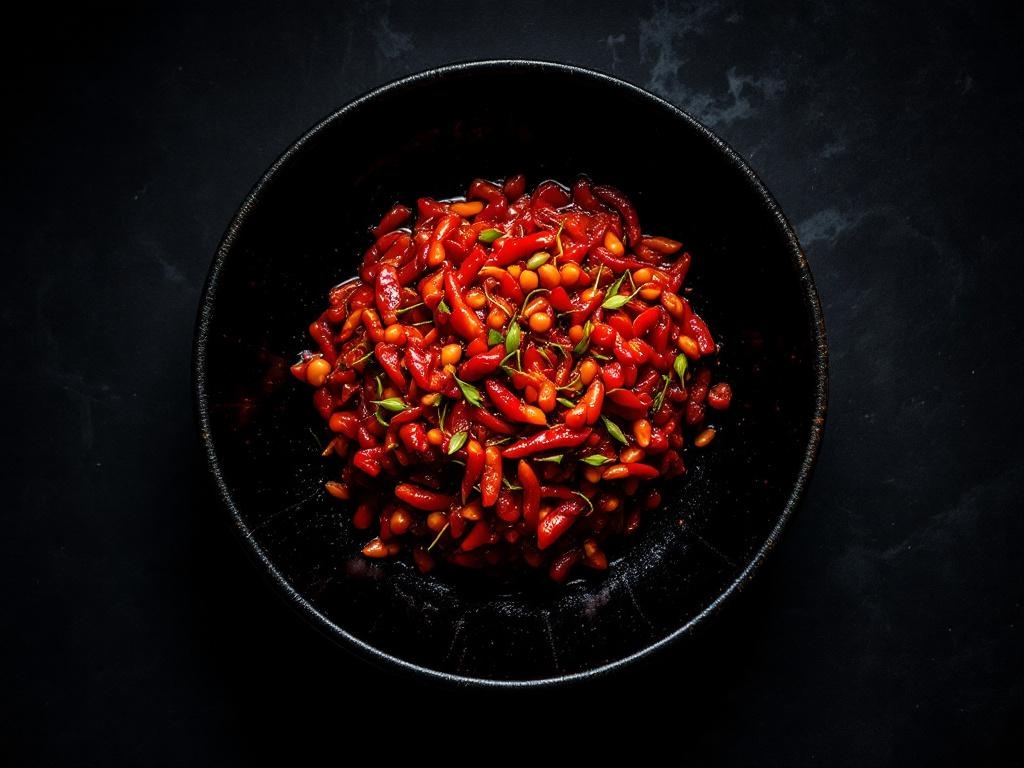
Sambal Oelek (Indonesian — Raw Chilli Paste — No Cook Method)
Indonesian, with the sambal family of condiments spread across the Indonesian archipelago and Malaysian peninsula. The mortar-and-pestle method of grinding chillies is ancient; the specific preparation was documented by Dutch colonial-era writers in the 18th century.
Sambal oelek is the simplest and most elemental of the vast sambal family — the raw, fresh chilli paste that is the starting point for dozens of cooked and uncooked sambal variations across Indonesia, Malaysia, and the broader Southeast Asian archipelago. Where other sambals are cooked, sweetened, or fermented, sambal oelek is raw: fresh red chillies, salt, and sometimes a little vinegar, ground in a stone mortar (the cobek, or ulekan — the oelek in its name) to a rough, vivid red paste. The name references the tool: oelek means 'to grind' or 'the grinding stone,' and the texture of authentic sambal oelek — rough, varied, with visible seeds and chilli fragments — reflects the mortar process. Blending produces a finer, more uniform paste that lacks the textural identity of the traditional version. The seeds are left in, not removed: they contribute heat, texture, and a raw vegetable quality. Sambal oelek functions as both a condiment and an ingredient. As a condiment, it sits on the table alongside Indonesian meals — nasi goreng, mie goreng, grilled fish, satay — and is added according to individual heat preference. As an ingredient, it provides the fresh chilli base for cooked sambals: sambal terasi (with fermented shrimp paste), sambal tomat (with tomato), sambal kecap (with kecap manis), and dozens of regional variations. In Western kitchens, sambal oelek has become valued as a clean, unflavoured heat source — unlike sriracha (which includes garlic and sugar) or harissa (which includes spices), sambal oelek contributes pure chilli heat with no additional flavour direction, making it exceptionally versatile across cuisines.
Pure, fierce, raw chilli heat with no additional flavour direction — the elemental expression of fresh red chilli
Grind in a mortar, not a blender — the rough texture is part of the sauce's identity Keep seeds in — they contribute both heat and the characteristic raw chilli texture Salt is the only essential addition beyond fresh chilli — the simplicity is the point Freshness is everything — make small batches frequently rather than large batches stored long As a base, sambal oelek should be raw — cooking transforms it into a different sambal
RECIPE: SAMBAL OELEK (Indonesian — Raw Chilli Paste — No Cook Method) Yield: 400 ml | Prep: 15 min --- 350 g fresh red chillies — bird's eye or Thai long (stems removed) 3 g sea salt 15 ml lime juice (fresh) --- 1. Pound chillies to a coarse paste using a mortar and pestle — work in two batches if necessary; texture should remain slightly chunky, not smooth. 2. Add salt; continue pounding until combined, 1–2 minutes. 3. Fold through lime juice; taste and adjust salt or lime balance. 4. Transfer to sterilised jars; press surface with the back of a spoon to expel air pockets. --- STORAGE: Refrigerate up to 4 weeks; or seal with a thin layer of neutral oil and store cool/dark for 8 weeks. USE: 1 tbsp (15 g) per serving as condiment for grilled fish, vegetables, or rice; raw heat profile remains bright and vegetal. SAMBAL OELEK (Indonesian Raw Chilli Paste) Yield: 400 ml jar | Prep: 15 min | Total: 15 min --- 300 g fresh red chillies (bird's eye or Thai — ripe, glossy) 25 g garlic cloves (peeled) 15 g sea salt 10 ml lime juice (fresh, acid-forward citrus) 5 ml neutral oil (optional, for preservation) --- 1. Destem and roughly chop fresh chillies; combine with garlic cloves in mortar and pestle or food processor. 2. Pound or pulse until rough paste forms; avoid over-processing — texture should remain coarse and uneven. 3. Fold in sea salt and lime juice; taste and adjust salt as needed. 4. Transfer to sterilized glass jar; top with thin layer of neutral oil if storing (creates anaerobic seal). 5. Refrigerate; consume within 2–3 weeks, or freeze in portions for longer storage. NO-COOK METHOD: Raw heat and acid preserve paste without fermentation. Use fresh daily for maximum brightness. Ideal in sambals, drizzles, curries, and as table condiment. Fresh sambal oelek: 200g fresh red chillies, 1 tsp salt, 1 tsp white vinegar — pound to desired texture As a base for sambal terasi: fry sambal oelek with palm sugar and terasi (shrimp paste) until caramelised — one of the most complex quick sauces in existence For a milder version, use a mix of red bell pepper and chilli — maintains colour and texture while reducing heat Sambal oelek freezes well in ice cube trays for on-demand fresh chilli Use directly: stirred into noodle soups, mixed into rice, alongside grilled meats
Over-blending — loses the rough texture that defines sambal oelek Removing seeds — reduces heat and changes the texture fundamentally Adding garlic or other aromatics — creates a different sambal, not oelek Making large batches — sambal oelek at its best is fresh; the bright chilli character fades quickly Confusing with sriracha — very different products; sriracha is sweetened and garlicked, sambal oelek is raw and clean
Common Questions
Why does Sambal Oelek (Indonesian — Raw Chilli Paste — No Cook Method) taste the way it does?
Pure, fierce, raw chilli heat with no additional flavour direction — the elemental expression of fresh red chilli
What are common mistakes when making Sambal Oelek (Indonesian — Raw Chilli Paste — No Cook Method)?
Over-blending — loses the rough texture that defines sambal oelek Removing seeds — reduces heat and changes the texture fundamentally Adding garlic or other aromatics — creates a different sambal, not oelek Making large batches — sambal oelek at its best is fresh; the bright chilli character fades quickly Confusing with sriracha — very different products; sriracha is sweetened and garlicked, samba