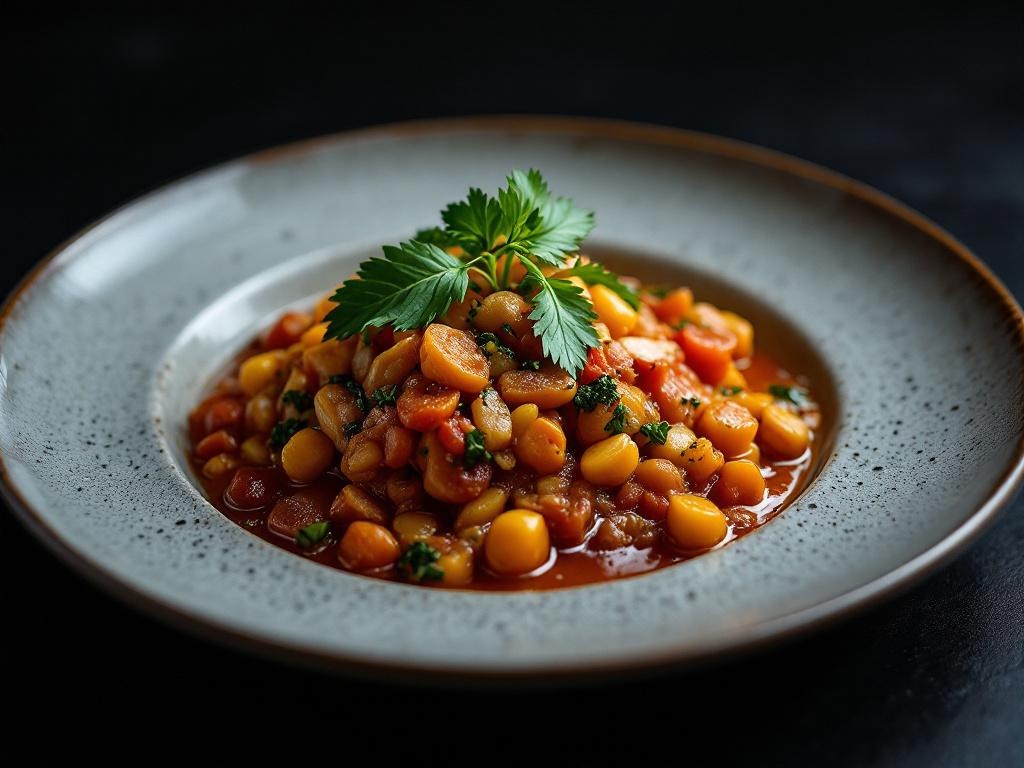
Sofrito
Spain and Latin America — derived from medieval Arabic cooking traditions via Catalonia; spread through the Spanish colonial world
Sofrito is the foundational flavour base of Spanish and Latin American cooking — a slowly cooked paste or sauce of tomatoes, onions, garlic, and peppers that forms the aromatic backbone of countless dishes. It is the Latin equivalent of French mirepoix or Italian soffritto, but while those are starting bases that are usually subsumed into a dish, Spanish-style sofrito is often cooked to a deep, jammy concentrate that can be stored and used as a flavour shortcut. The technique is deceptively simple: aromatics are finely chopped or blended, then fried slowly in olive oil until they lose all their raw character and collapse into a sweet, concentrated paste. The Maillard reaction and caramelisation do the work over 30–45 minutes of patient cooking. A rushed sofrito tastes of fried onions; a properly cooked sofrito tastes of something much deeper — almost meaty in its savouriness. Caribbean sofrito (recaíto or recado) adds recao (culantro), ají dulce, and sometimes annatto oil, making it a more verdant, herbal preparation. Cuban sofrito emphasises cumin and sazón. Puerto Rican sofrito is green-herb forward. Spanish sofrito is tomato-red and Mediterranean in character. Sofrito is the first thing cooked in a paella, the base of Spanish bean stews, the foundation of Puerto Rican rice and beans. Understanding sofrito is understanding the flavour logic of the entire Latin food tradition.
Sweet, deeply savoury, concentrated tomato-onion — the flavour foundation of Latin cooking
Cook slowly on medium-low heat for at least 30 minutes — rushing produces a fried-onion flavour, not a deep base Chop or blend fine — large pieces won't melt into the unified paste that a proper sofrito achieves Use tomato at a ratio of roughly 2:1 over onion for a Spanish-style sofrito Let the paste dry slightly in the pan at the end of cooking — excess moisture prevents the concentration needed Sofrito should smell like something far beyond its ingredients when finished
RECIPE: Yield: 500 ml | Prep: 15 min | Total: 45 min --- 150 g yellow onion, finely diced 100 g red bell pepper, finely diced 75 g garlic, minced 60 ml extra virgin olive oil 30 g tomato paste 5 g Aleppo pepper 3 g fine sea salt 1 g black pepper, freshly ground --- 1. Heat olive oil in a heavy-bottomed saucepan over medium heat until shimmering. 2. Add diced onion and red pepper; sauté for 8–10 minutes, stirring occasionally, until softened and beginning to caramelize. 3. Stir in minced garlic and cook for 1 minute until fragrant. 4. Add tomato paste and cook, stirring constantly, for 2 minutes to deepen colour and remove raw flavour. 5. Season with Aleppo pepper, sea salt, and black pepper; stir to combine. 6. Reduce heat to low and simmer for 20 minutes, stirring occasionally, until deeply concentrated and oil separates slightly from solids. 7. Cool to room temperature before transferring to a sterilised glass jar; refrigerate up to 2 weeks. Make sofrito in bulk and freeze in tablespoon portions in ice cube trays — it keeps for 3 months Adding a splash of wine to the pan halfway through cooking adds depth The smell test: properly cooked sofrito should smell almost caramelised and deeply sweet For Puerto Rican style, blend everything raw — recaíto is used raw as a flavouring, not a cooked base A pinch of smoked paprika (pimentón) stirred into the finished sofrito before storing adds a smoky note
Cooking on high heat — rapid browning produces bitterness, not the sweet depth of a slow sofrito Undercooking — a sofrito that still tastes of raw tomato or onion has not been cooked long enough Adding too much oil — sofrito should absorb the oil, not swim in it Using unripe tomatoes — ripe, sweet tomatoes are essential for the correct flavour Not adjusting for the dish — a sofrito for seafood should be lighter than one for slow-braised pork
Common Questions
Why does Sofrito taste the way it does?
Sweet, deeply savoury, concentrated tomato-onion — the flavour foundation of Latin cooking
What are common mistakes when making Sofrito?
Cooking on high heat — rapid browning produces bitterness, not the sweet depth of a slow sofrito Undercooking — a sofrito that still tastes of raw tomato or onion has not been cooked long enough Adding too much oil — sofrito should absorb the oil, not swim in it Using unripe tomatoes — ripe, sweet tomatoes are essential for the correct flavour Not adjusting for the dish — a sofrito for seafood sho