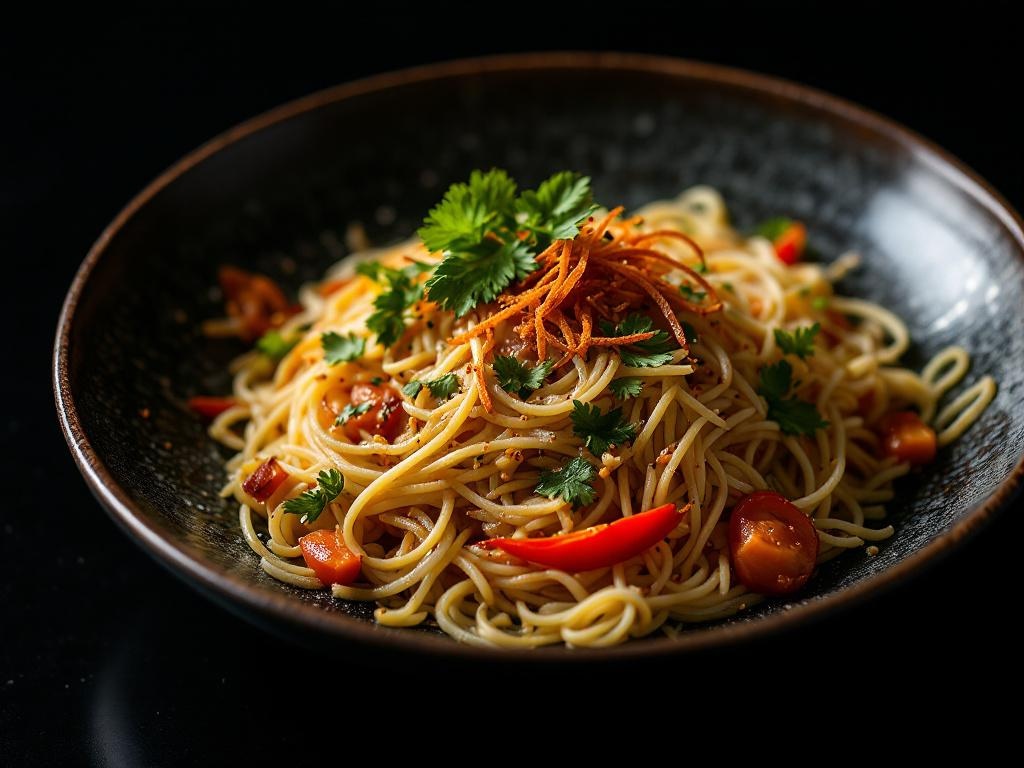
Som Tam
Northeastern Thailand (Isan) and Laos. Som tam originated in Isan (the northeastern plateau), where the dish was made with green papaya — introduced from Southeast Asia centuries earlier. The Isan version (som tam Thai) is the most internationally known; the Laotian version (tam som) uses fermented fish (padaek) for a more pungent profile.
Som Tam (papaya salad) is Thailand's most widely consumed dish — green papaya shredded and pounded with tomatoes, long beans, dried shrimp, peanuts, bird's eye chillies, garlic, lime juice, fish sauce, and palm sugar. The pounding in a clay mortar is not optional — it bruises the papaya to create texture and extracts the juices from each ingredient, creating a unified dressing. The balance of hot, sour, sweet, and salty must be perfect.
Chang lager or cold Singha — the carbonation and slight sweetness of Thai lager buffer the chilli heat of a properly made som tam. Or sugarcane juice (nam oi) for the authentic Isan street food accompaniment.
{"Green papaya: firm, unripe papaya, peeled and shredded to fine julienne (2-3mm) using a som tam peeler or box grater. The papaya must be completely unripe — any softness indicates ripening and the texture becomes mushy","The clay mortar (khok din): the correct tool — a deep, rough-interior clay mortar with a wooden pestle. The rough surface bruises rather than pulverises, creating the characteristic semi-crushed texture","Build in order: garlic and chillies pounded first, then long beans, tomatoes halved, dried shrimp, then the papaya — each addition is gently pounded and mixed before the next is added","Seasoning: fish sauce (Tiparos), palm sugar, lime juice — added in small quantities and tasted constantly. The balance is personal: some prefer more lime, some more chilli","Peanuts and dried shrimp: added last, given a brief pound to crack rather than pulverise","The ratio: roughly 200g green papaya per person, with 3-4 bird's eye chillies for medium heat"}
RECIPE: Serves: 4 | Prep: 15 min | Total: 15 min --- 1 medium green papaya — about 400 g, peeled, seeded, cut into thin matchsticks 3 shallots — sliced thin 4 cloves garlic — minced 3 Thai bird's eye chilies — minced, or to taste 2 tablespoons tamarind paste 3 tablespoons fish sauce — nam pla 10 ml palm sugar 2 tablespoons fresh lime juice 50 g roasted unsalted peanuts — coarsely crushed 25 g dried shrimp — pounded coarse 2 long beans — cut 2 cm lengths (optional) Tellicherry black pepper — to taste --- 1. In large mortar, combine shallots, garlic, and minced chilies; pound lightly to release oils and break down aromatics, 30 seconds; do not pulverize. 2. Add green papaya matchsticks; gently pound 5–8 times with pestle, rolling mortar to bruise papaya slightly and begin expressing juices; do not crush. 3. Add long beans if using; pound gently 3 times to partially soften. 4. Add tamarind paste, fish sauce, palm sugar, and lime juice; toss and fold mixture using pestle and spoon, 30 seconds, until ingredients are evenly coated and dressing is absorbed into papaya. 5. Transfer to serving plate; top with crushed peanuts and pounded dried shrimp; finish with cracked Tellicherry pepper; serve immediately. The moment where som tam lives or dies is the final taste and adjust — after all ingredients are in the mortar, taste the salad. In this sequence: first the heat (chilli), then the sour (lime), then the sweet (palm sugar), then the salt and umami (fish sauce and dried shrimp). If the heat dominates, add more palm sugar. If the sour dominates, add more palm sugar and fish sauce. If it tastes flat, add more lime. The balance should be present but no single element should dominate.
{"Using a granite mortar: the smooth surface does not bruise the papaya the same way — the texture is different","Ripe papaya: produces a soft, sweet salad that is a different dish","Not tasting constantly: som tam is about balance — the cook must taste and adjust throughout"}
- Vietnamese goi du du (green papaya salad — very similar in technique and ingredient profile); Burmese lahpet thoke (fermented tea leaf salad — similar mortar-based mixing technique with complex seasoning balance); Filipino atchara (pickled green papaya — the same ingredient, pickled rather than fresh).
Common Questions
Why does Som Tam taste the way it does?
Chang lager or cold Singha — the carbonation and slight sweetness of Thai lager buffer the chilli heat of a properly made som tam. Or sugarcane juice (nam oi) for the authentic Isan street food accompaniment.
What are common mistakes when making Som Tam?
{"Using a granite mortar: the smooth surface does not bruise the papaya the same way — the texture is different","Ripe papaya: produces a soft, sweet salad that is a different dish","Not tasting constantly: som tam is about balance — the cook must taste and adjust throughout"}
What dishes are similar to Som Tam?
Vietnamese goi du du (green papaya salad — very similar in technique and ingredient profile); Burmese lahpet thoke (fermented tea leaf salad — similar mortar-based mixing technique with complex seasoning balance); Filipino atchara (pickled green papaya — the same ingredient, pickled rather than fresh).