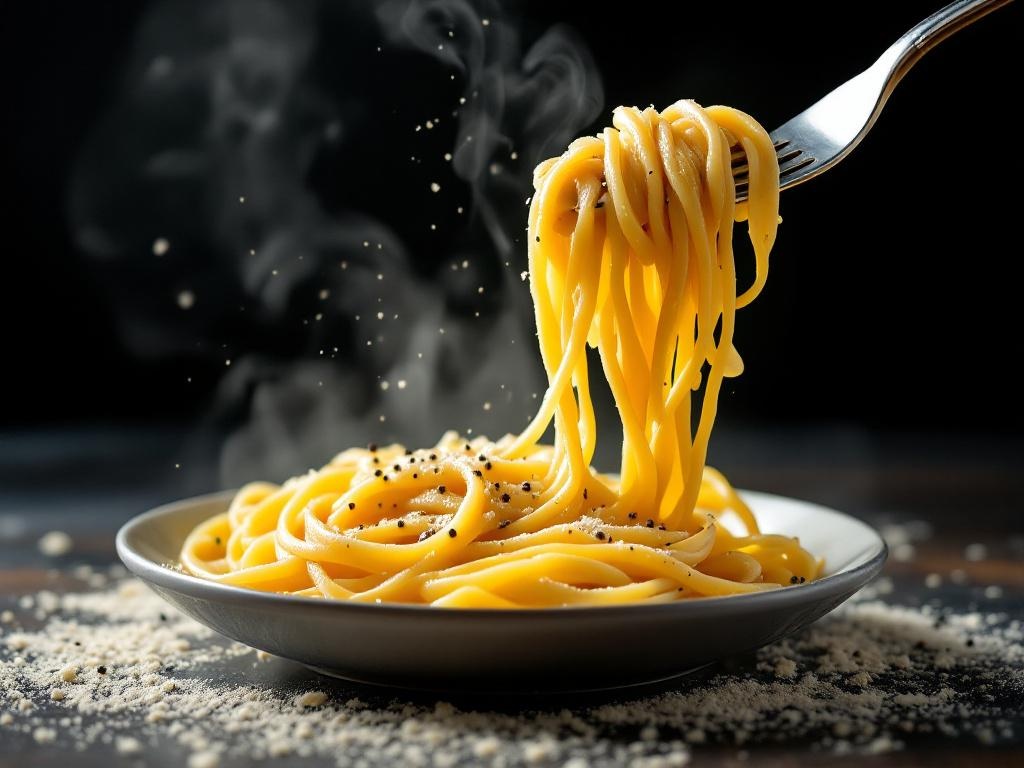
Cacio e Pepe
One of 70 entries · Provenance 1000 — Italian
Rome, Lazio, and the shepherding culture of the Apennine mountains. A shepherd's dish — Pecorino and pepper were shelf-stable provisions carried on transumanza (seasonal migration with the flocks). Predates carbonara by centuries.
Three ingredients. One technique. Infinite precision. Tonnarelli or spaghetti, Pecorino Romano DOP, and black pepper. The sauce is not a sauce — it is an emulsion formed in real time between pasta starch water, cheese fat, and black pepper oils. Nothing is added except technique.
- Swiss cheese fondue (same emulsion science — starch from wine acid stabilises cheese fat); Sichuan mapo tofu (aromatic oils as the defining flavour compound, paralleling black pepper's role); Japanese mazesoba (dry-tossed noodles with fat-based coating sauces built at service).
Vermentino di Sardegna for its bright acidity and slight bitterness cutting through the cheese fat. Or a bone-dry sparkling Franciacorta, where the bubbles physically cleanse the palate between bites. The dish needs high-acid, unoaked whites. Never a butter-textured wine alongside a butter-less sauce.
Minimally salt the pasta cooking water — Pecorino Romano is powerfully saline; heavily salted water creates an over-seasoned dish Toast whole black peppercorns dry in the pan until fragrant, then crush coarsely — pre-ground pepper lacks the volatile oils that give cacio e pepe its bite and floral character Use two-thirds Pecorino Romano DOP, one-third Parmigiano-Reggiano aged 24 months — the blend gives sharp salinity from Pecorino and deeper umami from Parmigiano Grate cheese on a Microplane to a snow-fine powder — this is not optional; coarser grating creates clumped, grainy sauce Build the emulsion in a wide, flat pan: toss drained pasta with a ladleful of starchy cooking water, then add the cheese off direct heat, tossing constantly If the sauce breaks (becomes grainy), add more hot pasta water and toss vigorously — the emulsion will recover
Over-salting the pasta water: the most common reason cacio e pepe comes out inedibly salty Adding oil or butter: both interrupt the starch-cheese emulsion and produce a greasy, separated sauce Using pre-ground pepper: the volatile aromatic compounds have off-gassed; you get heat without the floral, piney complexity of freshly cracked peppercorns Adding the cheese while the pasta is on high heat: the proteins in the cheese seize, producing grainy, clumped strands instead of a cream
Kitchen membership opens the full Library.
- 400 g spaghetti
- 200 g Pecorino Romano DOP, finely grated
- 3 g Tellicherry black pepper, freshly ground
3 ingredients · 7 steps
Common Questions
Why does Cacio e Pepe taste the way it does?
Vermentino di Sardegna for its bright acidity and slight bitterness cutting through the cheese fat. Or a bone-dry sparkling Franciacorta, where the bubbles physically cleanse the palate between bites. The dish needs high-acid, unoaked whites. Never a butter-textured wine alongside a butter-less sauce.
What are common mistakes when making Cacio e Pepe?
Over-salting the pasta water: the most common reason cacio e pepe comes out inedibly salty Adding oil or butter: both interrupt the starch-cheese emulsion and produce a greasy, separated sauce Using pre-ground pepper: the volatile aromatic compounds have off-gassed; you get heat without the floral, piney complexity of freshly cracked peppercorns Adding the cheese while the pasta is on high heat: the proteins in the cheese seize, producing grainy, clumped strands instead of a cream
What dishes are similar to Cacio e Pepe?
Swiss cheese fondue (same emulsion science — starch from wine acid stabilises cheese fat); Sichuan mapo tofu (aromatic oils as the defining flavour compound, paralleling black pepper's role); Japanese mazesoba (dry-tossed noodles with fat-based coating sauces built at service).