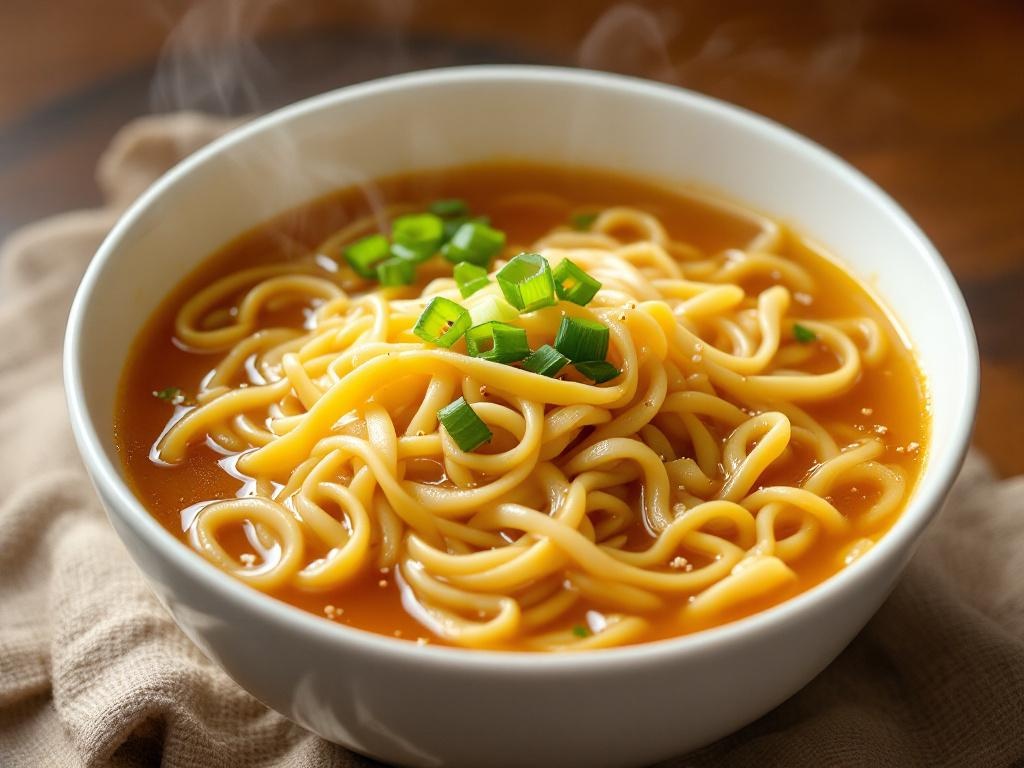
Egg Drop Soup (Viral Restaurant Style — Cornstarch and Pour Method)
Chinese classical and Chinese-American restaurant cuisine; viral TikTok attention 2021–2022 for the cornstarch-ribbon technique
Egg drop soup experienced a notable viral moment on TikTok in 2021 and 2022, with content creators demonstrating the technique for achieving the silky, golden ribbons of egg characteristic of restaurant-style Chinese-American egg drop soup. The dish itself is ancient — variations of egg-ribbon soups appear across East Asian cuisines — but the viral interest focused specifically on the restaurant-quality texture and the specific techniques that achieve it at home. The foundation of a good egg drop soup is a flavourful, clear stock. Chicken stock — ideally homemade with ginger and a small amount of Chinese cooking wine — provides the savoury base. Commercial stock can work but frequently produces a too-salty or too-pale result. The stock is brought to a gentle simmer and seasoned with soy sauce, a touch of white pepper, and sesame oil. The cornstarch step is critical and widely misunderstood. A slurry of cornstarch and cold water (typically 2 tablespoons cornstarch to 3 tablespoons water per litre of stock) is stirred into the simmering stock and allowed to cook for 2 minutes until the broth thickens slightly and becomes glossy. This thickening is what allows the beaten egg to form ribbons rather than clumping — the viscosity suspends the egg as it cooks. The egg pour must be done with the broth at a rolling simmer, not a boil, and using a slow, steady circular motion with a fork or chopstick held just above the surface of the soup. The thicker the cornstarch base, the larger and silkier the ribbons; a lighter cornstarch base produces finer, cloudier threads. A beaten egg mixed with a small amount of sesame oil before adding pours more smoothly and produces a richer colour. Garnishes are functional: sliced green onion cuts richness, white pepper adds aromatic heat, and a final drizzle of sesame oil adds fragrance.
Clean savoury chicken stock, silky egg ribbons, white pepper warmth, sesame oil fragrance
Build a flavourful stock base with ginger and soy — the soup has only three main elements Thicken with cornstarch slurry before adding the egg — this creates the ribbon-forming viscosity Pour the beaten egg in a slow, steady circle at a rolling simmer — never at a full boil Beat the egg with a small amount of sesame oil before pouring for richness and colour Season with white pepper and finish with sesame oil just before serving — both are garnish not base
RECIPE: Serves: 4 | Prep: 10 min | Total: 15 min --- 1000 ml premium chicken stock — or dashi for umami depth 8 g cornstarch 30 ml cold water — for slurry 4 large eggs 60 ml light soy sauce 15 ml Chinkiang black vinegar 5 g Sichuan pepper — toasted and ground 30 g spring onions — thinly sliced 1 pinch white pepper --- 1. Bring chicken stock to rolling boil in 2 litre saucepan over high heat; skim any impurities from surface. 2. Mix cornstarch with 30 ml cold water to form smooth slurry; pour in thin stream into boiling stock while stirring constantly with wooden spoon to prevent clumping. 3. Simmer 2 minutes until soup thickens and becomes translucent; reduce heat to gentle simmer. 4. In small bowl, beat 4 eggs lightly; hold fork 15 cm above soup surface and pour beaten egg in thin stream while stirring soup in figure-eight pattern to create ribbon-like strands. 5. Season with soy sauce, Chinkiang vinegar, and white pepper; stir to combine. 6. Ladle into serving bowls; garnish with spring onions and toasted Sichuan pepper; serve immediately. For deeper colour, add a small amount of turmeric (1/4 teaspoon) to the stock — it provides golden colour without altering the flavour significantly A very slow pour from a ladle rather than directly from a bowl gives the most controlled ribbon formation For a vegetarian version, use a dashi-style stock of kombu and shiitake for umami depth Add frozen corn and baby tofu for a simple extension that is still true to the format The ratio of 2:3 cornstarch to water for the slurry is the restaurant standard — do not increase beyond this
Adding the egg to unthickened stock — it clumps and disperses into tiny fragments rather than ribbons Pouring egg into a fully boiling stock — it disperses too fast and cooks into a cloudy foam Using cold stock — the egg hits the broth before the thickened viscosity can suspend it Over-thickening with cornstarch — the soup becomes gelatinous and loses its clarity Skipping the sesame oil and white pepper finish which are the signature flavour elements
Common Questions
Why does Egg Drop Soup (Viral Restaurant Style — Cornstarch and Pour Method) taste the way it does?
Clean savoury chicken stock, silky egg ribbons, white pepper warmth, sesame oil fragrance
What are common mistakes when making Egg Drop Soup (Viral Restaurant Style — Cornstarch and Pour Method)?
Adding the egg to unthickened stock — it clumps and disperses into tiny fragments rather than ribbons Pouring egg into a fully boiling stock — it disperses too fast and cooks into a cloudy foam Using cold stock — the egg hits the broth before the thickened viscosity can suspend it Over-thickening with cornstarch — the soup becomes gelatinous and loses its clarity Skipping the sesame oil and white