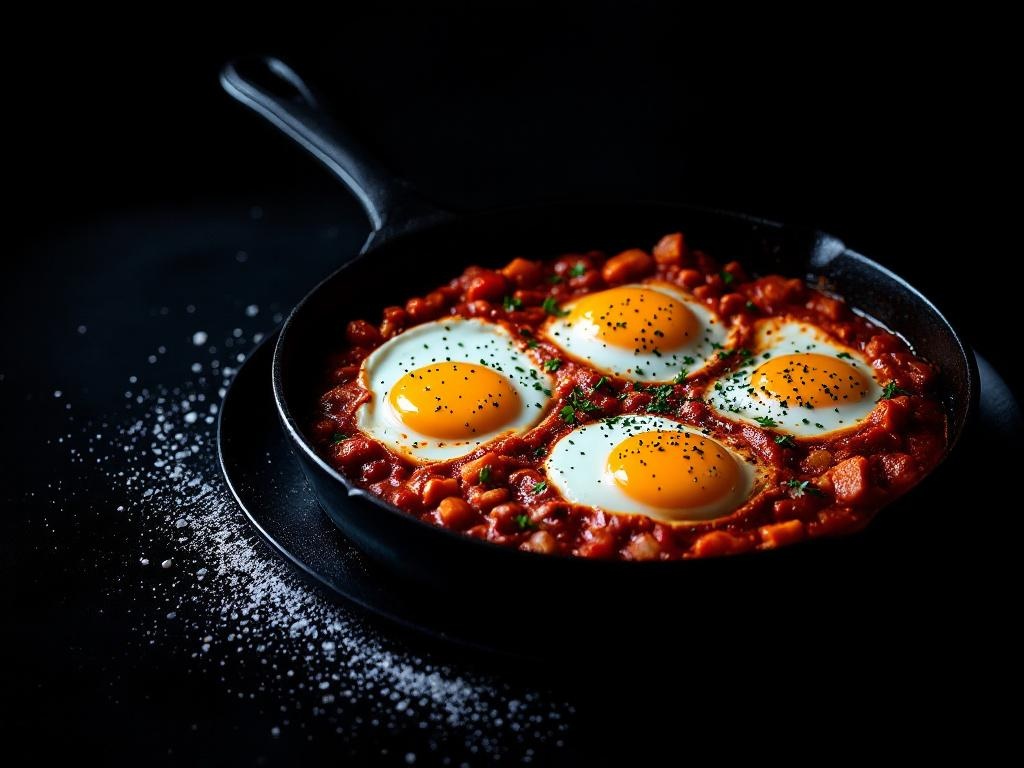
Shakshuka (Second Wave Viral — Middle East Backstory and Method)
North Africa (Tunisia, Libya) and Middle Eastern Jewish communities; popular as Israeli national dish; viral internationally via food media 2012–2020
Shakshuka experienced its international viral moment through food media, restaurant menus, and eventually TikTok across the 2010s, presenting itself to Western audiences as a novel brunch dish of eggs poached in spiced tomato sauce. The dish's roots are genuinely ancient and widespread: shakshuka appears across North African cuisine, the Middle East, and the Maghreb, with strong associations with Tunisia and Libya as well as Israel, where it became a national dish of sorts. The viral moment brought cultural attention to a dish that had existed for centuries. The correct shakshuka technique begins with a quality tomato base. Canned whole tomatoes — San Marzano if possible — crushed by hand, form the foundation. Fresh tomatoes can work in peak summer but rarely produce the depth of a good canned product for this purpose. The base aromatics — onion, garlic, and red bell pepper — are cooked slowly over medium-low heat for at least 15 minutes until completely soft and sweet. This is the step most shortcuts eliminate: rapid-cooked aromatics produce a sharper, less complex sauce. The spice architecture is the identity of the dish: cumin, smoked paprika, and cayenne are the constants. Harissa paste — a North African chilli-spice condiment — is the best single upgrade, adding complexity and heat in one addition. The tomatoes are added, the sauce simmers for 10–15 minutes to develop, and then wells are created with a spoon for each egg. The eggs must be added gently — cracked into a small cup first, then tipped — to avoid breaking the yolk. They cook with a lid on over low heat for 5–7 minutes for a set white and runny yolk. The finish is as important as the base: crumbled feta, fresh parsley or cilantro, and warm flatbread for serving.
Rich smoky tomato base, cumin-harissa warmth, runny egg richness, feta salt, herb freshness
Cook the aromatics slowly for at least 15 minutes — rushed shakshuka lacks the sweet, complex base the dish requires Use canned whole tomatoes crushed by hand — they provide better body and flavour than pre-crushed Build a layered spice profile — cumin, smoked paprika, and harissa are the foundation trio Create wells for the eggs and cook with a lid on low heat — steaming is what sets the whites while keeping yolks runny Finish with crumbled feta and fresh herbs at the table — these are not optional garnishes but flavour components
RECIPE: Serves: 4 | Prep: 20 min | Total: 35 min --- 600 g San Marzano DOP canned tomatoes (or 500 g fresh summer tomatoes, quartered) 1 medium yellow onion, diced 4 cloves garlic, minced 60 ml extra virgin olive oil 8 eggs 10 g cumin seeds, toasted 5 g Aleppo pepper 5 g Tellicherry black pepper 8 g Maldon sea salt 150 ml chicken or vegetable stock 15 g fresh coriander, chopped 10 g fresh flat-leaf parsley, chopped --- 1. Heat olive oil in a heavy-bottomed 30 cm skillet or shallow braising pan over medium heat; add diced onion and cook 4 minutes until translucent and softened. 2. Add minced garlic and toasted cumin seeds; bloom 1 minute until fragrant. 3. Stir in crushed tomatoes and stock; bring to simmer and cook 10 minutes until sauce reduces slightly and thickens (sauce should coat back of spoon). 4. Season tomato sauce with Aleppo pepper, black pepper, and Maldon salt; taste and adjust. 5. Make 8 shallow wells in sauce with back of spoon; crack one egg into each well, keeping yolk intact. 6. Cover skillet with lid or foil; reduce heat to medium-low and cook 8–10 minutes until egg whites set but yolks remain runny (or adjust to preference). 7. Scatter fresh coriander and parsley over top; serve directly from skillet with warm bread for dipping or over couscous. --- BACKSTORY: Shakshuka originates from Levantine and North African cuisines (Tunisia, Egypt, Palestine, Syria); method dates to Ottoman-era poached egg preparations. Tomato adoption occurred post-16th century New World exchange. A small amount of tomato paste (1 tablespoon) added with the aromatics deepens the tomato flavour significantly For a green shakshuka version, replace the tomato base with tomatillos, green peppers, and spinach For a restaurant service format, make the sauce ahead and store it — add eggs to order in individual pans A spoonful of labneh or Greek yoghurt on top at serving cuts the richness and adds a cooling dairy element For the most visually impressive service, use a carbon steel pan that can go from stove to table — the eggs continue to cook in the residual heat, so serve immediately
Rushing the aromatic base — bitter, sharp onion and garlic produce an under-developed sauce Using fresh tomatoes out of season — the acidity and water content produce a watery, pale sauce Cooking eggs on high heat without a lid — the whites are rubbery before the yolks begin to set Cracking eggs directly into the sauce and breaking the yolk — pre-crack into a cup for control Skipping the harissa or fresh chilli — without heat the dish lacks the essential dimension of North African cuisine
Common Questions
Why does Shakshuka (Second Wave Viral — Middle East Backstory and Method) taste the way it does?
Rich smoky tomato base, cumin-harissa warmth, runny egg richness, feta salt, herb freshness
What are common mistakes when making Shakshuka (Second Wave Viral — Middle East Backstory and Method)?
Rushing the aromatic base — bitter, sharp onion and garlic produce an under-developed sauce Using fresh tomatoes out of season — the acidity and water content produce a watery, pale sauce Cooking eggs on high heat without a lid — the whites are rubbery before the yolks begin to set Cracking eggs directly into the sauce and breaking the yolk — pre-crack into a cup for control Skipping the harissa o